
Date: August 14, 2026
Venue: Online
Watch the Recording
Nilima Bhat, founder of Shakti Leadership, initiated the Truth & Reconciliation from the Inside-Out movement which serves as a platform for peacebuilders, therapists, trauma healers, and anyone passionate about truth and reconciliation to engage in meaningful dialogues around healing and leading.
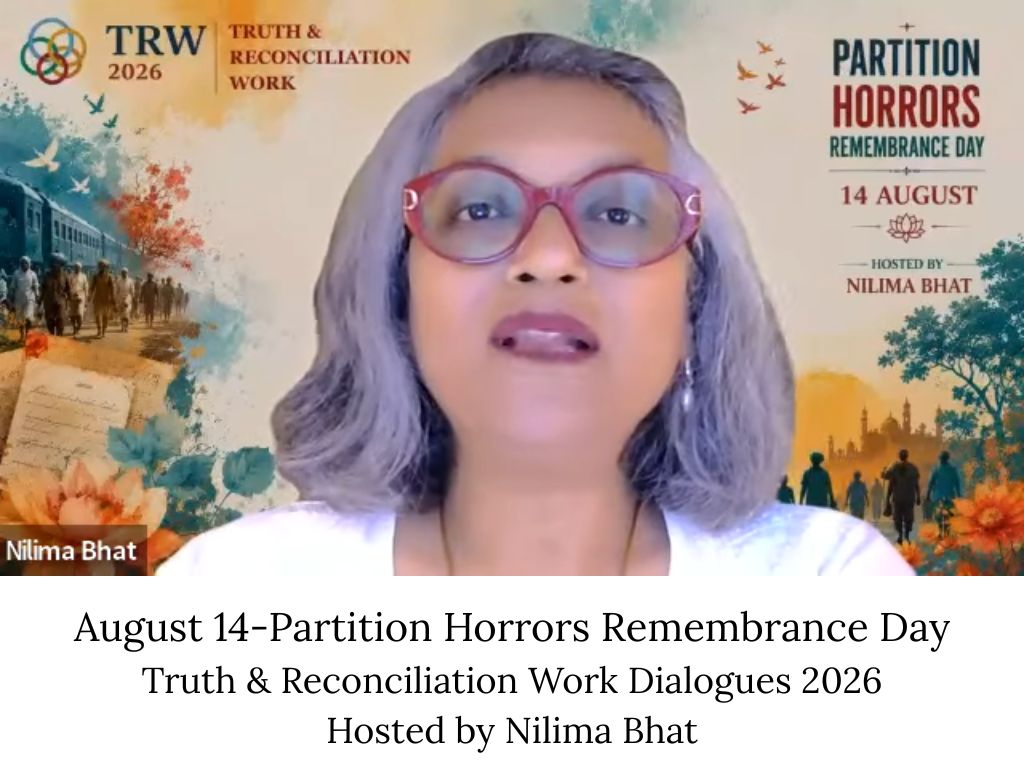
Every year Ms. Bhat hosts the Truth & Reconciliation Dialogues week virtually around the auspicious occasion of Guru Purnima. This year, the TRW Dialogues 2026 focused on theme ‘From Silence to Story: Truth-Telling, Healing, and Reconciliation after Partition’.
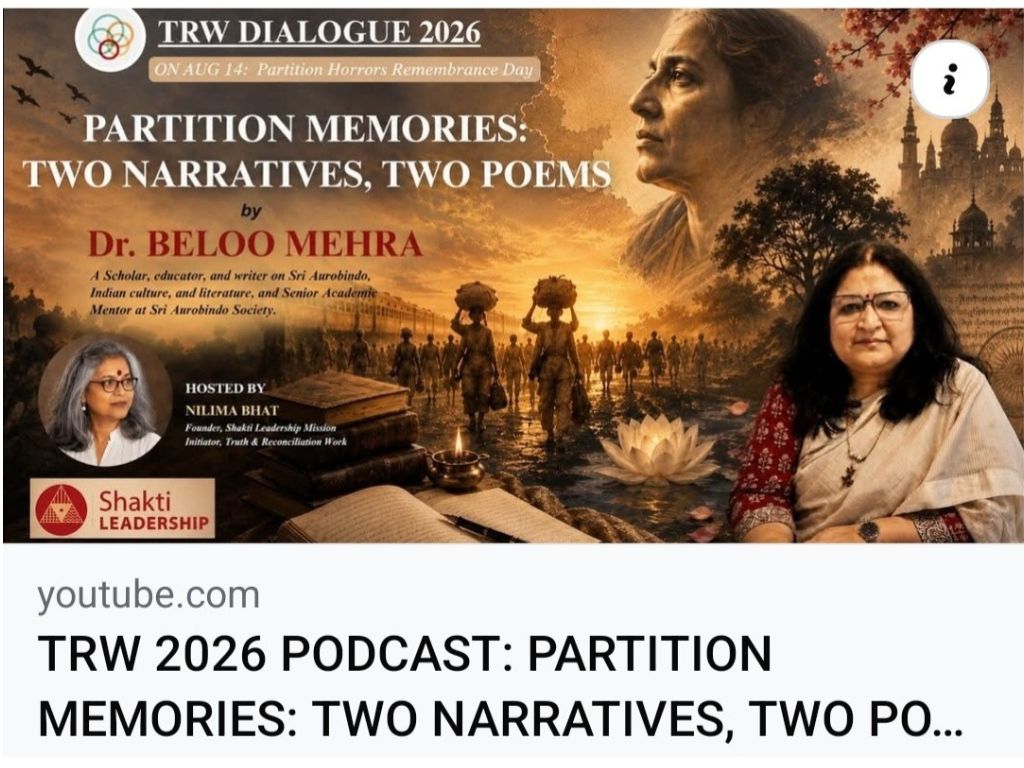
On 14th of August which is observed in India as the Partition Horrors Remembrance Day to honor the memory of those who endured immense suffering and made profound sacrifices during the partition of India in 1947, Dr. Beloo Mehra, Director, BhāratShakti, was invited to speak on the topic – ‘Partition Memories: Two Narratives, Two Poems’.
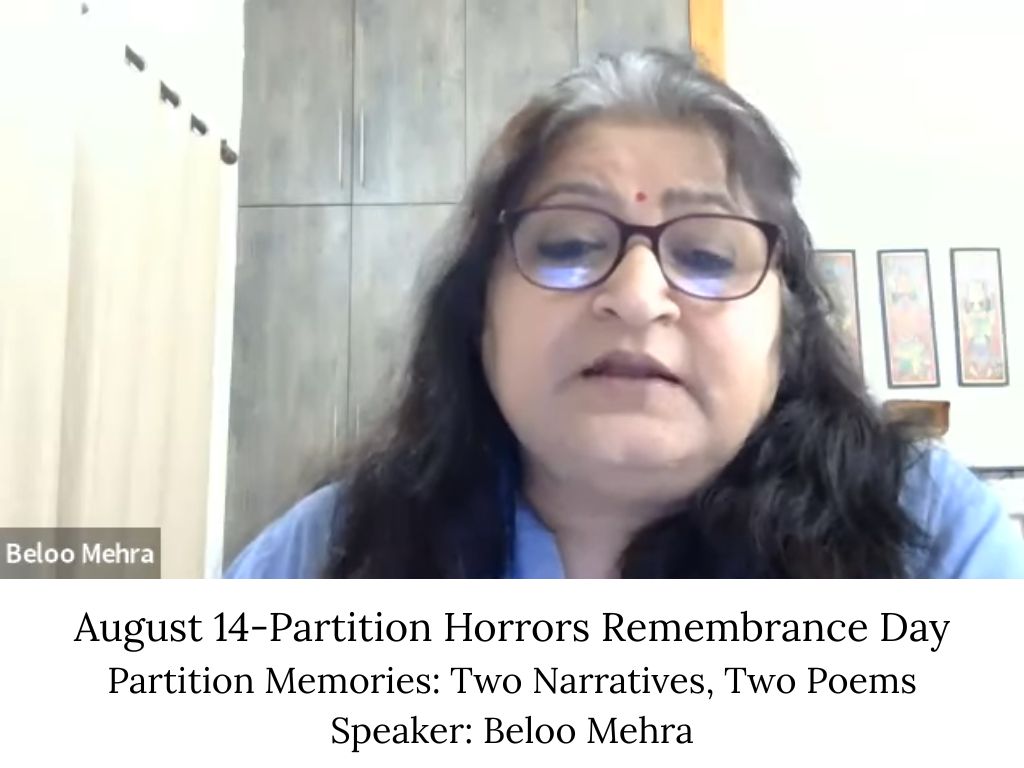
In her talk, Dr. Mehra reflected on the Partition of India through the interwoven lenses of literature, personal memory, family history, and national self-examination. She opened with W. H. Auden’s poem “Partition,” which presents the political and bureaucratic detachment behind Cyril Radcliffe’s hurried drawing of the boundary line that divided the subcontinent. Dr. Mehra spoke of Auden’s ironic portrayal of a continent divided in seven weeks provides a stark contrast to the decades-long trauma endured by those whose lives were uprooted by that decision.
She then turned to intimate family narratives, presenting Partition not as an abstract historical event but as a lived inheritance. As the daughter and granddaughter of refugees from Partitioned India which is now known as Pakistan, she recalled stories heard from her parents and grandmothers: memories of homes left behind, childhood games, school routes, domestic objects, religious visits, courtyards, havelis, and ordinary routines suddenly broken by displacement.
Dr. Mehra read out a transcription of her mother’s recorded recollection which described the family’s anxious departure from what became Pakistan, the hurried packing of trunks, hidden jewellery, attempts to preserve household belongings, frightening encounters with mobs, the long walk across the border, life in a refugee camp, and the uncertain resettlement in Jalandhar.
Dr. Mehra then read out a narrative bsed on her father’s memories, especially the haunting image of two teenage brothers repeatedly going to the railway station near Haridwar, waiting for their widowed mother to arrive amid rumours of trains filled with slaughtered refugees. His silence and hesitation become part of Dr. Mehra’s testimony, suggesting how Partition memories are fragmented, painful, and often only partially spoken.
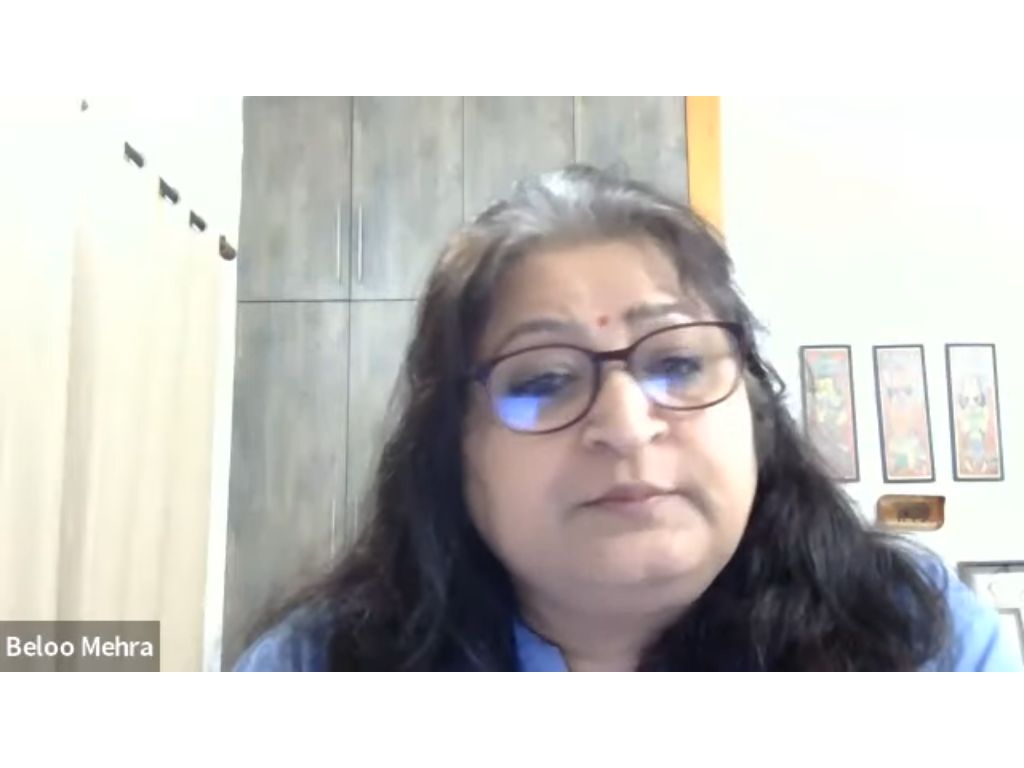
The next section of Dr. Mehra’s talk was focused around legendary Punjabi writer Amrita Pritam’s iconic poem “Aj Aakhan Waris Shah Nu,” situating it within her own experience of uprooting and within her larger literary concern for women’s suffering during Partition, also seen in her novel Pinjar. Pritam’s appeal to Waris Shah becomes a cry for Punjab’s violated daughters and a plea for historical remembrance grounded in love, said Dr. Mehra in her talk.
Yet Dr. Mehra said that love alone cannot heal if it is severed from truth. She then connected Partition’s unresolved wounds to later crises, including Kashmir and the exodus of Kashmiri Pandits, and critiqued religion-based nationalism and appeasement politics as causes of continuing division. Drawing on Sri Aurobindo, she concluded that genuine unity must rest on truth, mutual understanding, patriotism, and a harmony of love, wisdom, and strength.
WATCH
For more talks by BhāratShakti team, see HERE.