
Date: August 10, 2026
Venue: Sri Aurobindo Society, Pondicherry
Watch the Recording
See the Photo Gallery
To commemorate 150 years of India’s National Song, Vande Mataram, and its unique role in the history of India, BhāratShakti, Sri Aurobindo Society organised a special event — A Homage to Indian Revolutionaries on August 10, 2026.
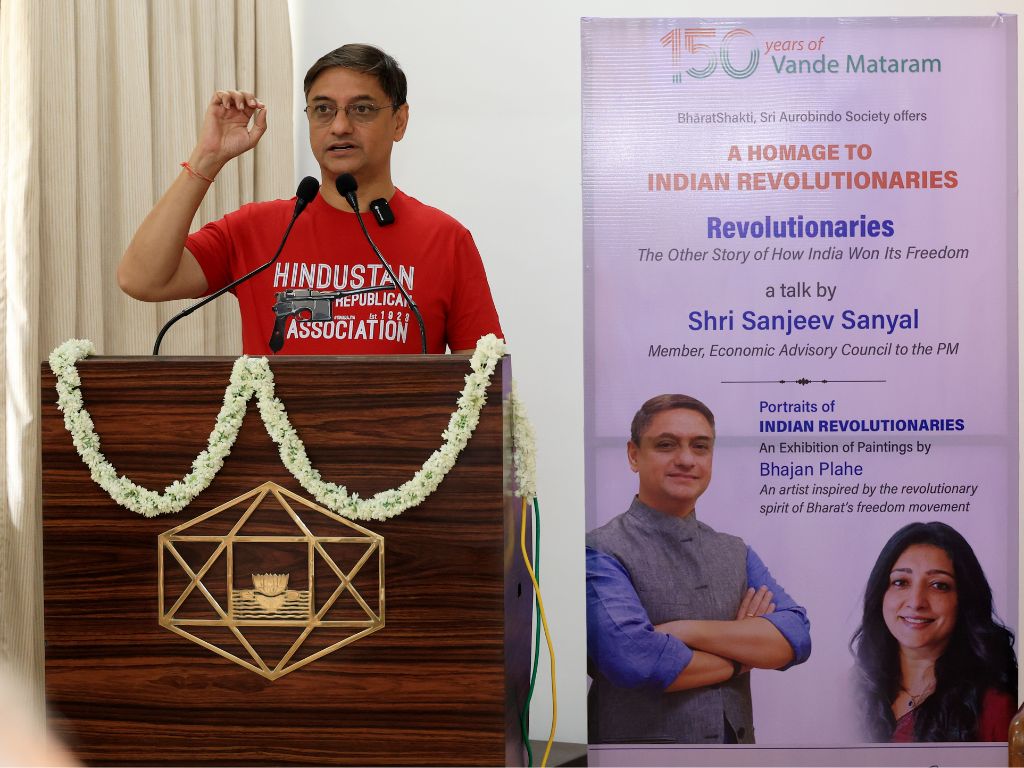
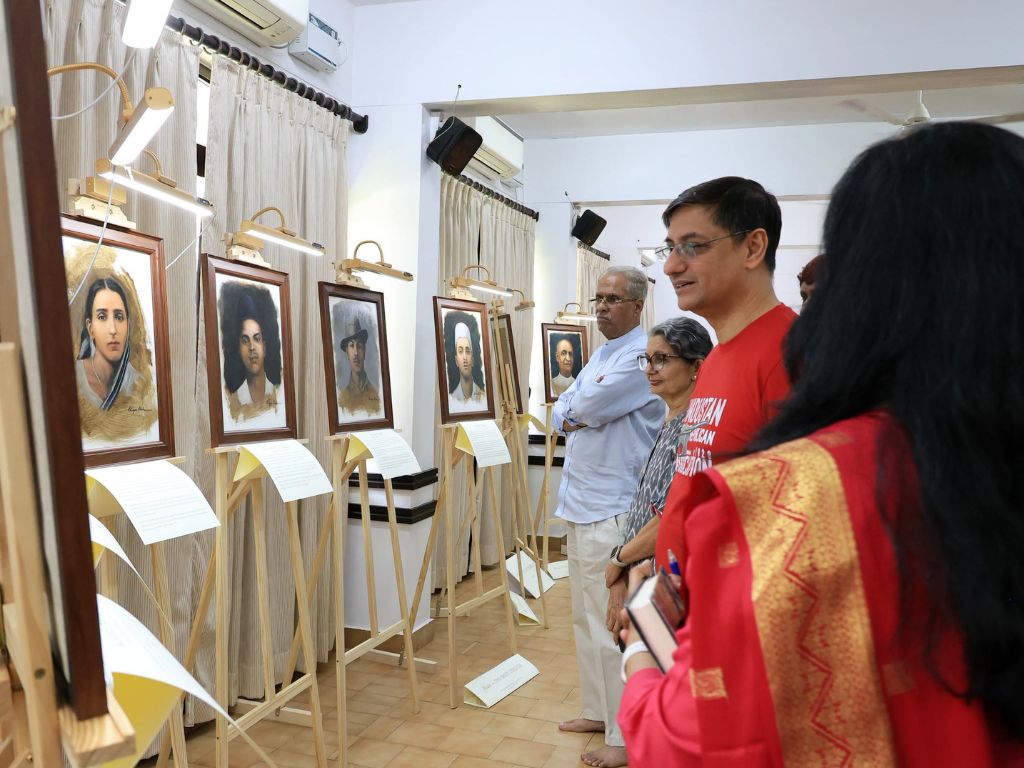
The highlight of the event was a special talk by Shri Sanjeev Sanyal, Member, Economic Advisory Council to the Prime Minister of India and bestselling author of ‘Revolutionaries: The Other Story of How India Won Its Freedom‘. This was followed by the inauguration of an Exhibition of Portraits of 15 Revolutionaries painted by Ms Bhajan Plahe.
The programme began with a Welcome Address by Dr. Beloo Mehra, wherein she welcomed the Chief Guest Professor Prakash Babu, Vice Chancellor, Pondicherry University; the Honourable Chief Secretary of Puducherry Government, Dr. Sharat Chauhan, and our special invitee Mr. Sanjeev Sanyal. After this all the dignitaries were felicitated and given mementos.
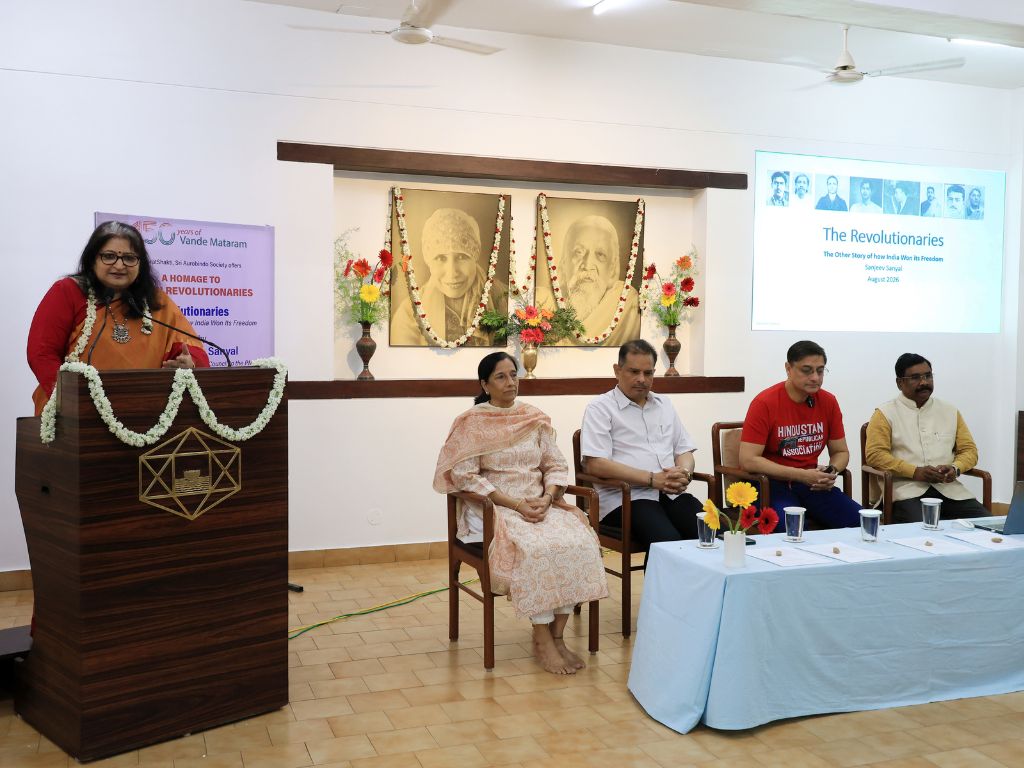
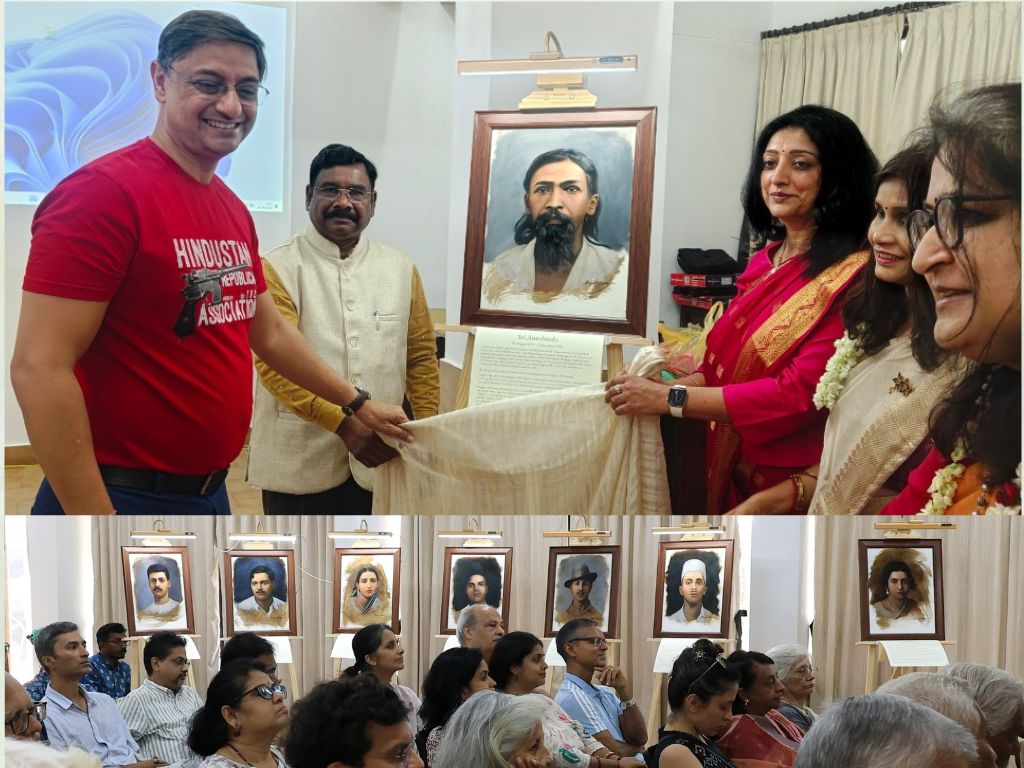
Our special invitee was gifted with a portrait of Sachindranath Sanyal, who happened to be his great-grand uncle, painted by the artist Bhajan Plahe. Thereafter the Chief Guest gave a short address about the importance of Vande Mataram and how this slogan and song united Indian freedom fighters across the land.
Dr. Mehra then read out a short introduction of Shri Sanyal invited him to deliver his key note address based on his book Revolutionaries: The Other Story of How India Won Its Freedom.
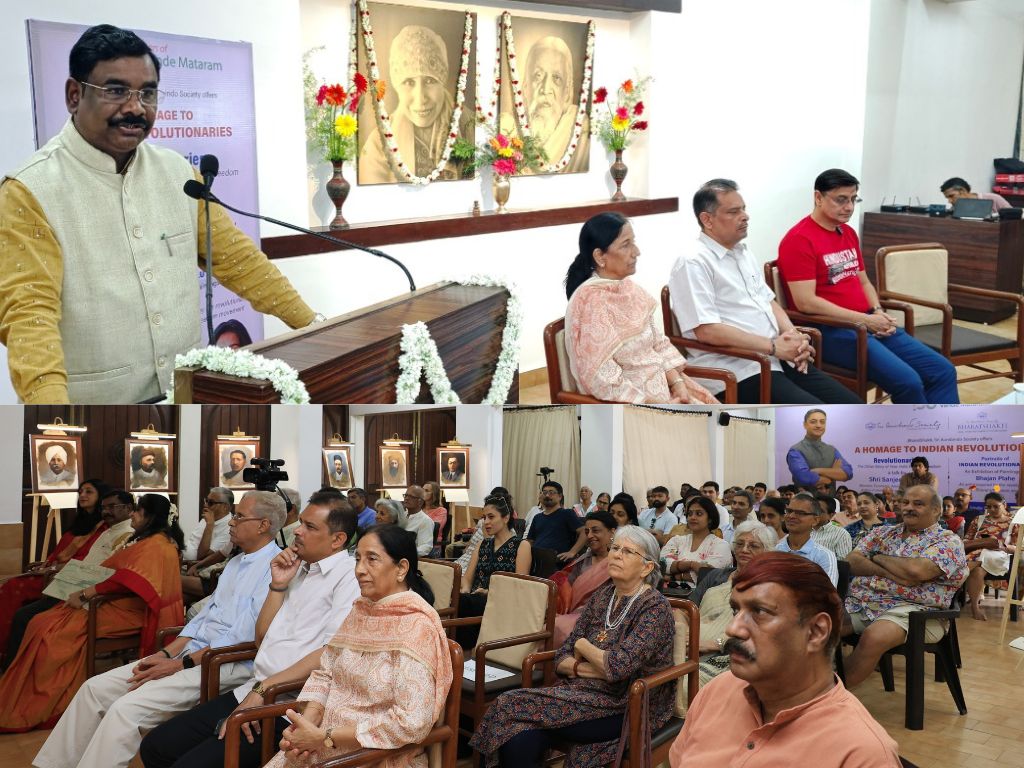
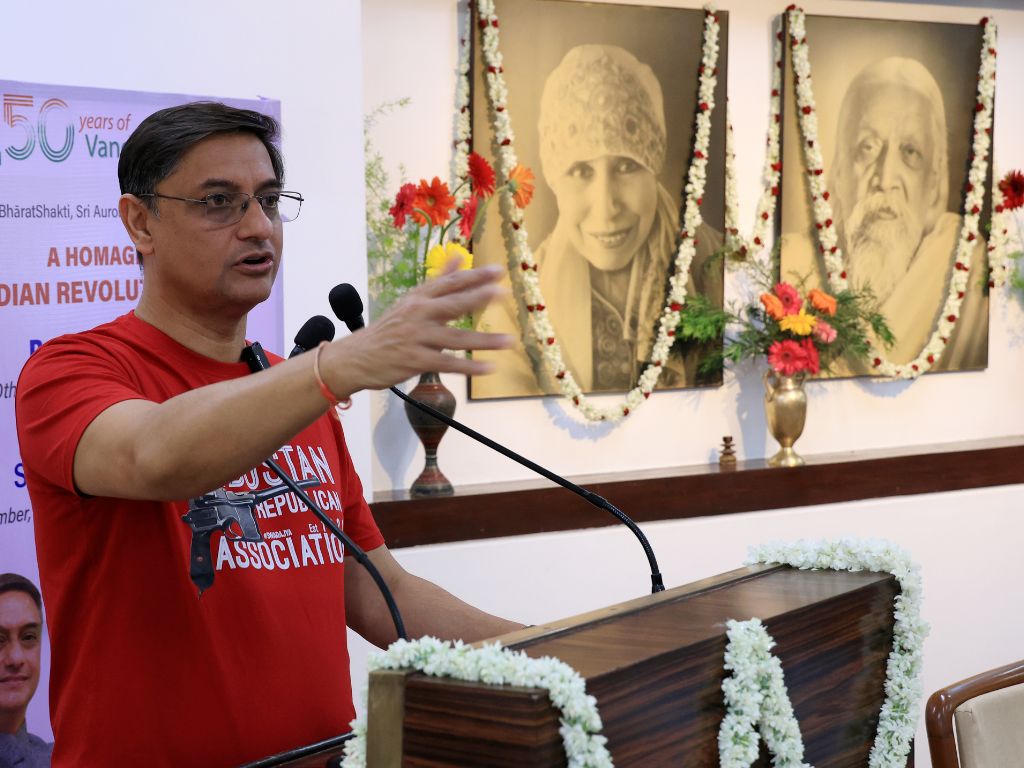
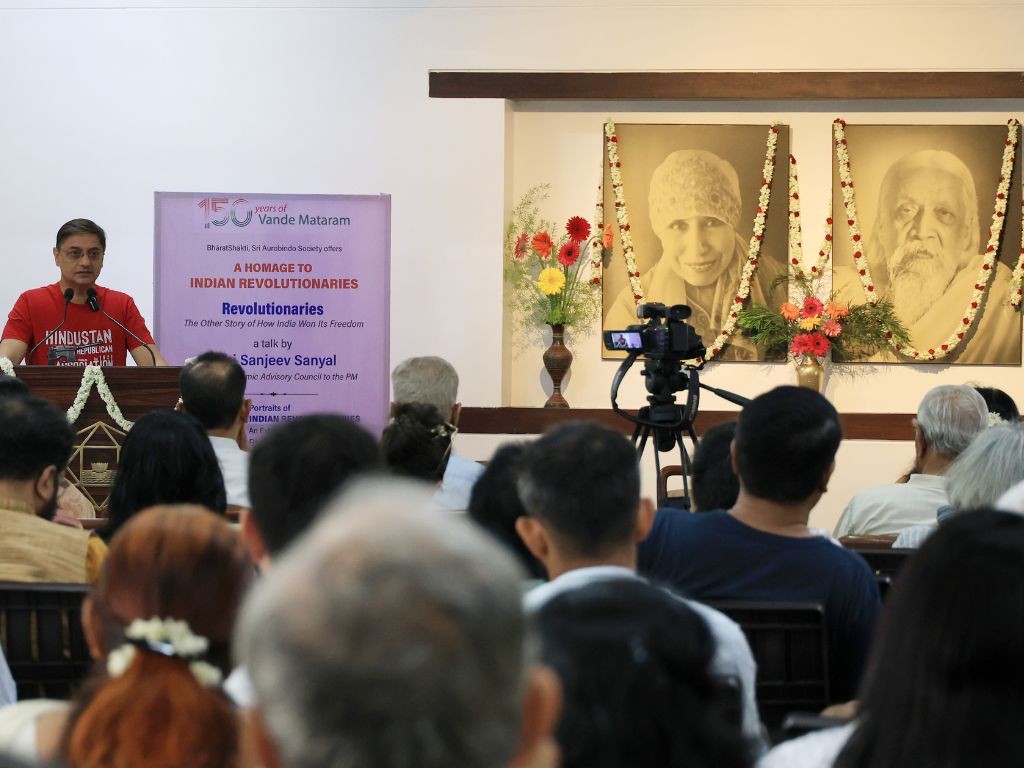
Shri Sanjeev Sanyal for the next hour and a half had the audience spellbound recounting the extraordinary tale of the long history of armed struggle for the freedom of this nation.
He spoke about how this reality was deliberately distorted by giving a broad impression that India won its freedom mainly through a Gandhian non-violent struggle. And if at all there were some armed insurrections, they were aberrations and stray incidents. He exposed the falsity of this theory by giving a decade wise break-up of the regular and consistent violent attacks on the British rulers by death defying revolutionaries who didn’t care one bit for their lives.
See the Photo Gallery
The Chapekar Brothers in the last decade of the 19th century followed by the revolutionary network of the Anushilan Samiti under the leadership of Aurobindo Ghosh and Barin Ghosh in the first decade of the 20th century and till the achievement of freedom in 1947, there was a continuous, violent pressure on the colonial government exerted by the revolutionaries.
Shri Sanyal explained how the traditional akhadas or gymnasiums became the network for revolutionary activities because the word Anushilan itself meant training for all kinds of martial arts and warfare. All the facets of armed struggle from the India House – a hostel in London, the Ghadar movement in Canada and the US, the incarceration and torture of revolutionaries in Andaman, the network set up by Rashbehari Bose in South East Asia and Japan – the armed struggle manifested across nations and continents.
These were not stray incidents of violence by some local patriots. Important events like the raiding of the Chittagong armoury, the Kakori train robbery, Jalianwalla Bagh massacre, the assassinations carried out by youngsters like Madanlal Dhingra and Udham Singh, the formation of INA, the role of Subhas Bose, the Naval Revolt – nothing was left out in Shri Sanyal’s mesmerizing presentation.
The conclusion that was drawn was this: Rebellion, armed struggle, “the Other Story” was just as important as the non-violent movement, if not more.
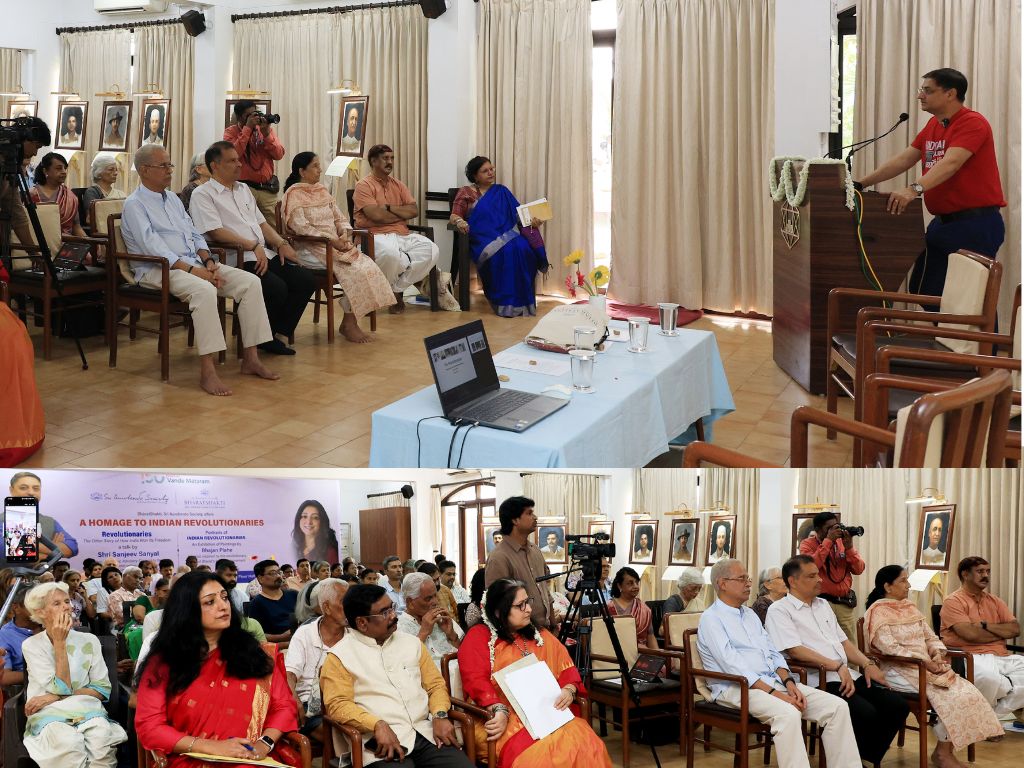
Shri Sanyal explained that his book is an attempt to fill a huge gap in our history books that largely ignores armed struggle as a movement and presents it as stray, individual acts of violence. It is also an attempt to reclaim the history and legacy of such forgotten heroes who have been deliberately reduced to being footnotes in the pages of history by some historians with an agenda.
The entire audience were spellbound, and engaged with the speaker with a round of questions which he answered with lot of insight and clarity.
After this Shri Sanyal and Prof. P. Prakash Babu along with Ms. Gita Patel from Sri Aurobindo Society Executive Committee inaugurated the exhibition on Portraits of Indian Revolutionaries.
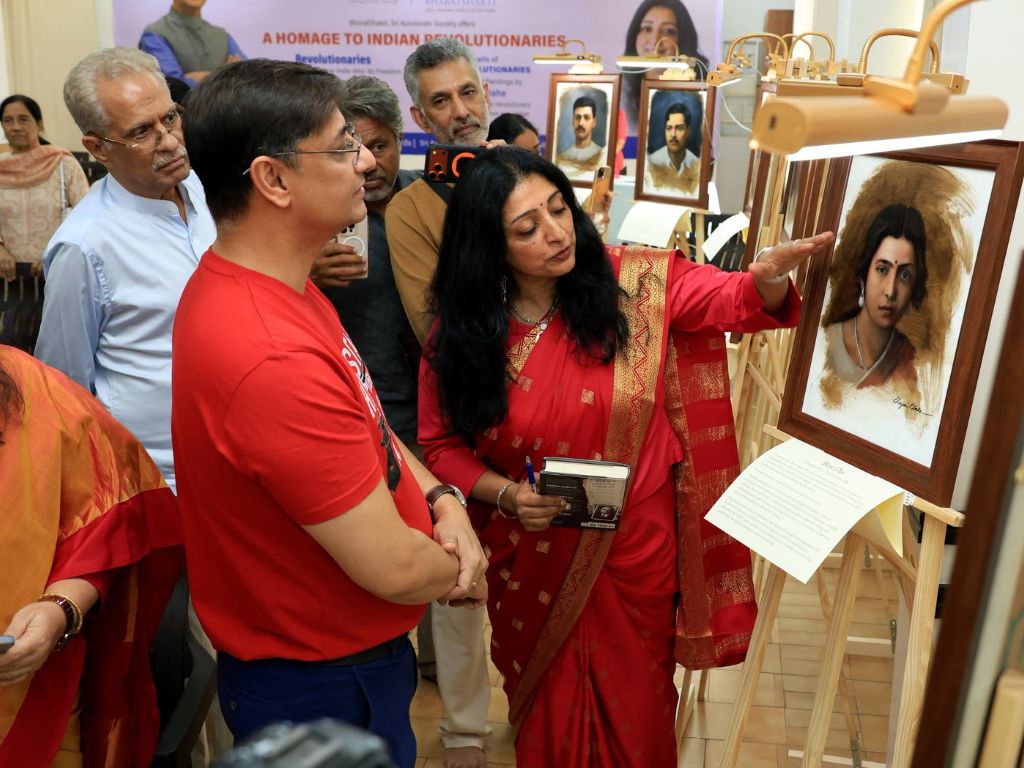
Following this, the artist Ms. Bhajan Plahe spoke about her motivation and inspiration which finally culminated in the remarkable portraits of the revolutionaries. She also spoke about her journey of learning about the style called Classical Realism under Maestro Michael John Angel in Florence, Italy.
Thereafter the programme ended with a vote of thanks by Dr. Beloo Mehra.