
Date: September 23, 2026
Venue: Online
Watch the Recording
As part of two of its ongoing project series – India, Our Mother and Art and Spirituality, BhāratShakti, Sri Aurobindo Society ushered in the Sharadiya Navaratri 2026 by organising an online guest lecture on September 23, 2026 focused around exploring the dharmic and spiritual significance of Garba, a seminal intangible dharmic cultural and spiritual tradition of Gujarat, which has also been inscribed by UNESCO on its Representative List of the Intangible Cultural Heritage of Humanity.
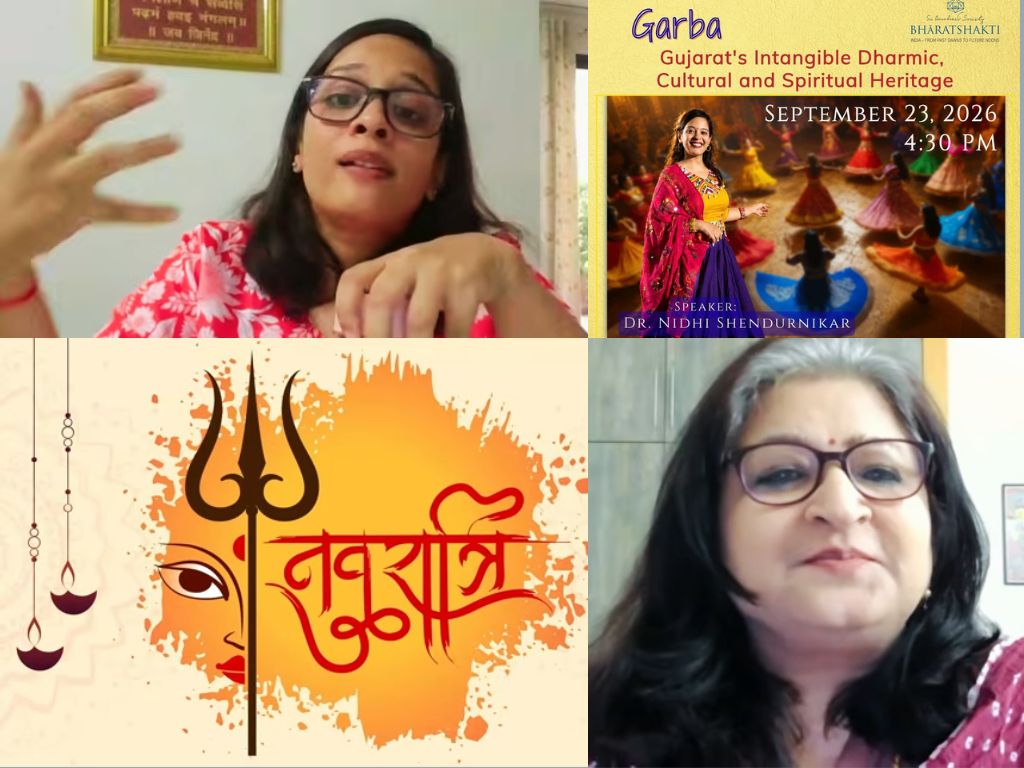
Dr. Nidhi Shendurnikar, a long-time Garba player/dancer from Vadodara, Gujarat was invited to speak on the topic. Drawing both from her lived experience and her study of the cultural meanings and significance of this tradition of devotional practice, she gave an insightful presentation exploring Garba’s dharmic and deeper cultural significance, its varied regional styles, its evolution amidst popular culture, and the challenges of commercialization and secularization.
In addition to being an enthusiastic Garba player, Dr. Nidhi Shendurnikar is equally passionate about research and teaching of Indic perspectives. With a doctoral degree in Political Science from The Maharaja Sayajirao University of Baroda, Gujarat, she has close to a decade of teaching and research experience in media and communication studies having supervised over sixty postgraduate dissertations. She has also co-authored a research paper on Garba, which she shared with the webinar participants.
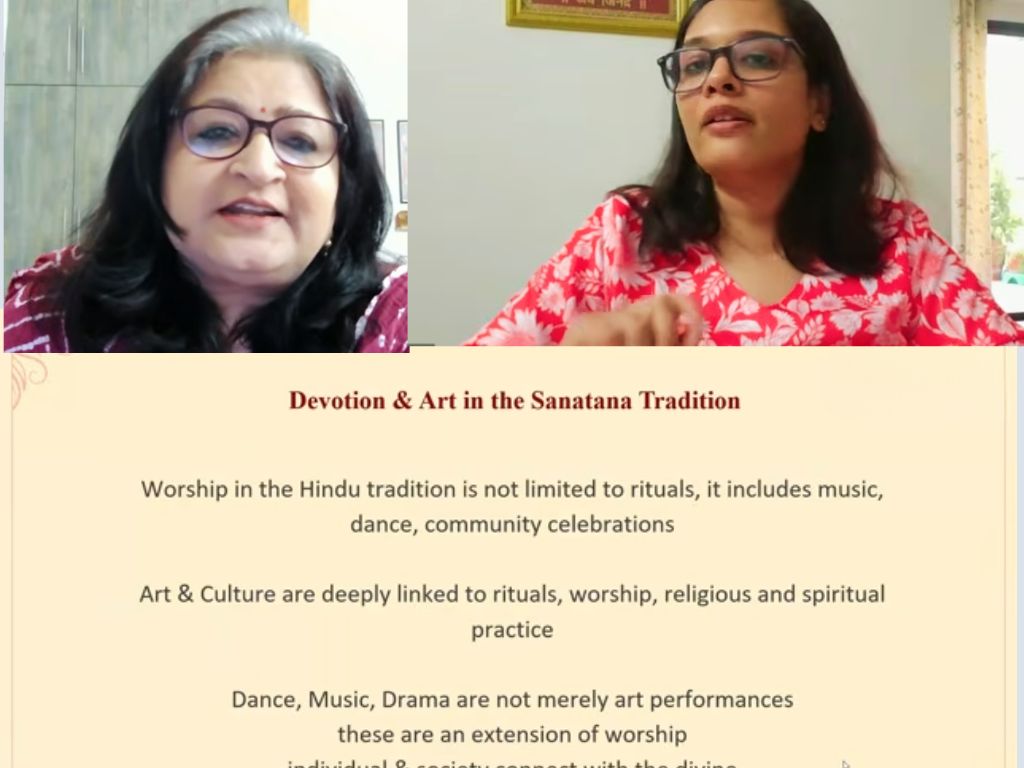
Dr. Beloo Mehra welcomed the webinar participants and briefly contextualised the topic in the larger theme of Art and Spirituality. Dr. Mehra said that for an Indian soul, all human activity when done in the right spirit becomes a means for spiritual pursuit, and his is true of dance also. Is it any wonder then Shiva, the greatest of all Yogis is also the Master of the Dance, the Nataraja?
After briefly introducing the speaker, Dr. Mehra invited Dr. Nidhi Shendurnikar to take over the forum. After invoking the Divine Mother with a small mantra, the speaker began her talk by saying that Garba is a traditional and devotional dance from the state of Gujarat, performed during the nine-night festival of Navaratri. Its very name ‘Garba’, derived from the Sanskrit word garbha (womb), symbolises life and the circle of birth, death, and rebirth. She went on to provide an in-depth exploration of Garba which is deeply intertwined with the worship of the Divine Feminine, Mataji (Mother Goddess).
In her talk, Dr. Shendurnikar touched upon Garba’s rich musical heritage, ritual practices during Navaratri, and its global diaspora presence post UNESCO recognition. Dr. Shendurnikar reminded the audience that Garba is not merely a dance festival but a profound devotional practice embedded in the Sanatan Dharma framework, celebrating the eternal energy, cyclicality of life, and community unity. Her presentation situated Garba within its religious, philosophical, and social contexts, highlighting its spiritual symbolism, ritualistic elements, and communal dimensions.
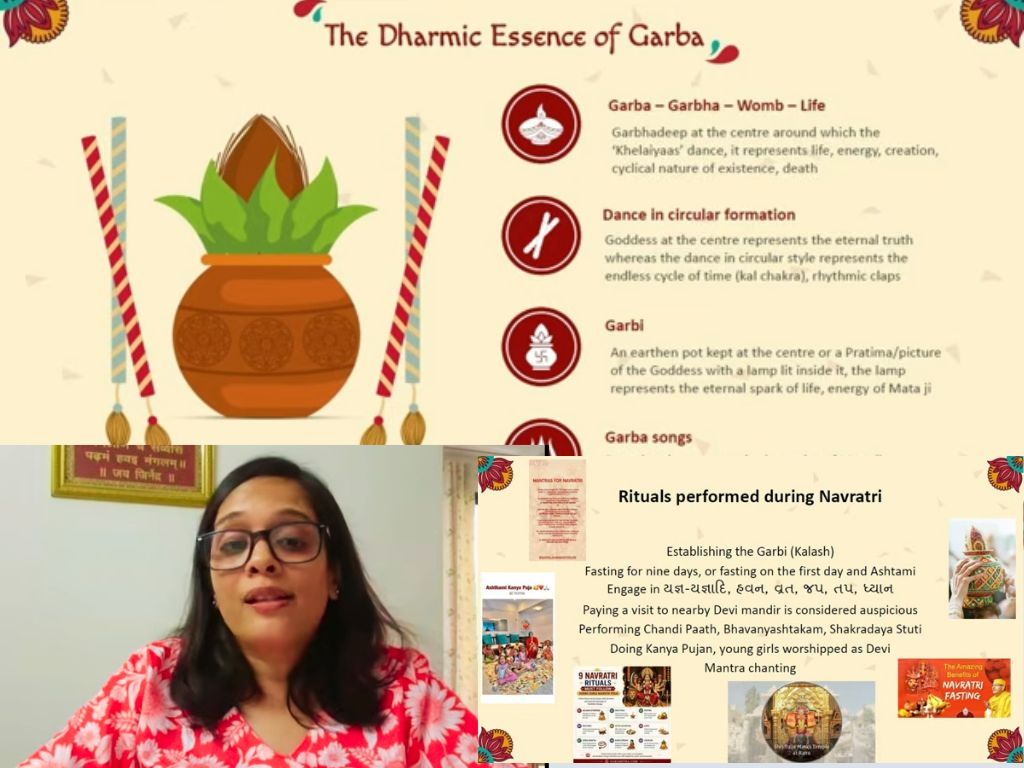
Emphasising the symbolism of circular movements around the Garbha deep, Dr. Shendurnikar said that the circular formation in which Garba is performed embodies the concept of Kala Chakra (the cycle of time). The center, often marked by a diya – lit earthen or metal pot, represents the eternal spark—the divine feminine energy central to existence. The speaker noted that this spatial symbolism teaches participants about constant movement, change, and surrender to cosmic order, reinforcing philosophical lessons of detachment and devotion.
The speaker’s presentation also emphasised Garba’s roles in community bonding, spiritual discipline, and cultural continuity. Garba’s group dynamic requires seamless coordination and collective rhythm, symbolizing larger social and dharmic values such as harmony, unity, cooperation, and mutual respect, said Dr. Shendurnikar. She noted that Garba can help players learn leadership and followership organically — skills that mirror how one should live within a society, balancing individual dedication with collective well-being.
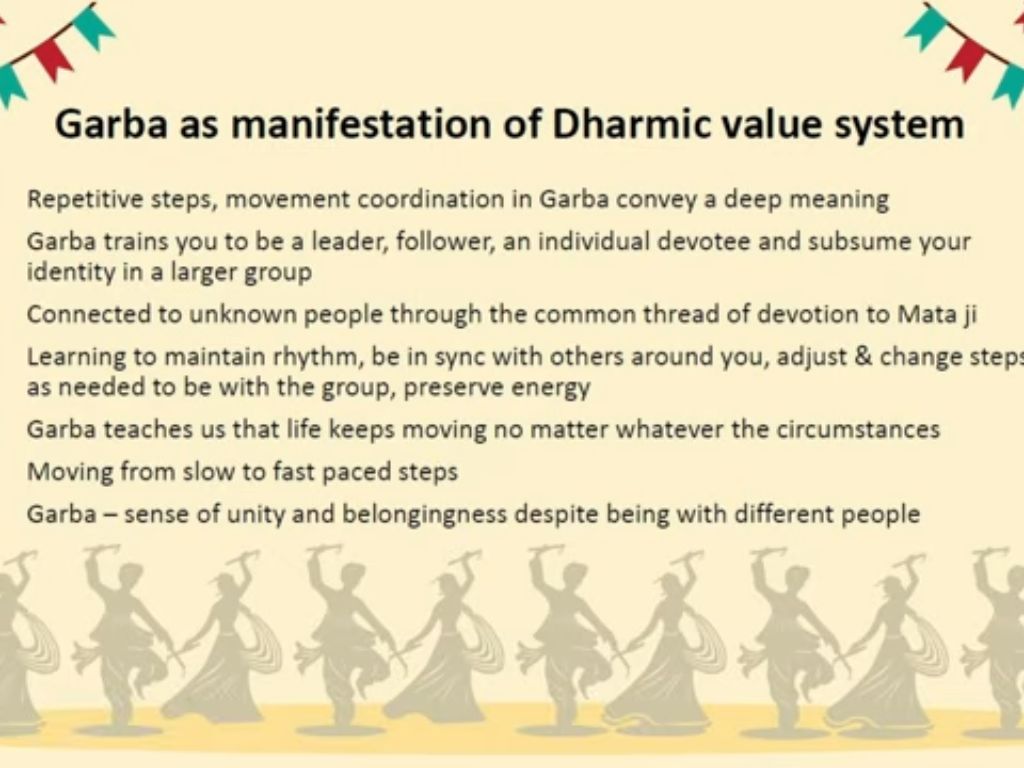
Dr. Shendurnikar pointed out that the dance aligns with the Navaratri festival’s spiritual observances dedicated to the nine avatars of the Goddess — from Ma Shailputri to Ma Siddhi. Each night and day holds specific colors, stories, and qualities representing spiritual growth stages including innocence, knowledge, protection, and wisdom. This structured devotion elevates Garba beyond festivity to a disciplined spiritual journey.
She also noted that Garba occurs during seasonal transitions aligning with natural cycles important to health and rejuvenation in Indian tradition. The ritual fasting, chanting, and night-long dancing collectively enhance participants’ physical stamina, mental focus, and spiritual sanctity, demonstrating the socio-cultural integration of wellness practices embedded in religious observances.
Emphasising a diversity of Garba styles across different parts of Gujarat, she showed a few short videos of different Garba styles, reaffirming its dynamic nature. These variations reflect diverse social identities, professions, folk histories, and ecological relationships, underscoring Garba as a living tradition adapating to local context while maintaining core dharmic principles.
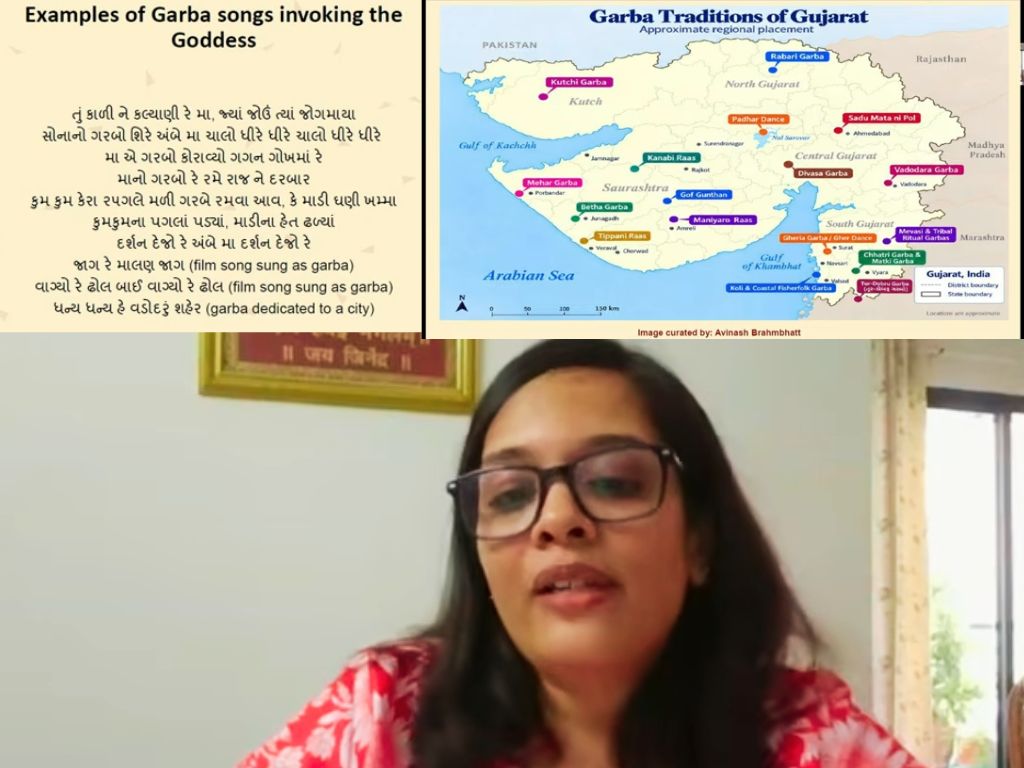
The speaker also struck a note of caution regarding the dilution of Garba’s spiritual essence. The rise of Bollywood-style Garba and large-scale events has introduced performance and fashion elements, shifting focus toward entertainment and spectacle. This poses risks of commodifying and severing Garba from its sacred origins. There is concern about potential secularization or cultural appropriation, akin to what has happened with other Indian festivals, necessitating awareness and preservation efforts to maintain its dharmic core.
But Dr. Shendurnikar also pointed out that to address this growing concern, over the last few years academic and grassroots efforts to study, preserve, and revive traditional Garba forms have gained momentum, particularly in Gujarat’s universities and cultural organizations. Such documentation ensures transmission of indigenous knowledge, oral traditions, and ritual sophistication to future generations, balancing innovation with tradition.
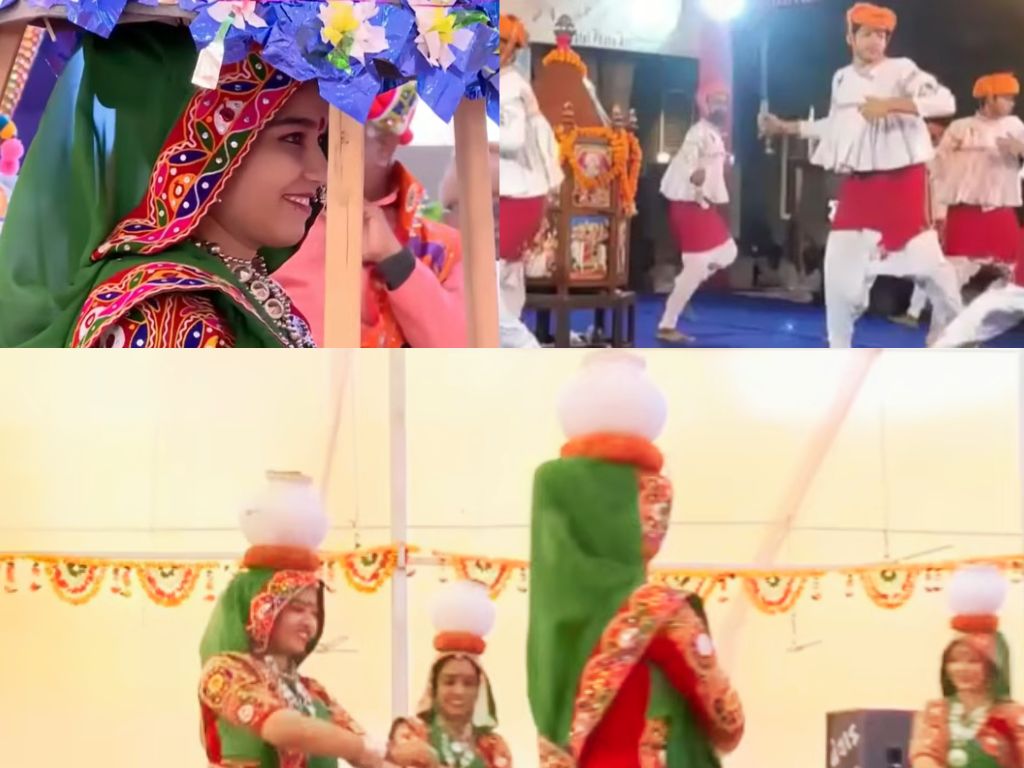
Overall, through the well-formulated and clearly articulated presentation by Dr. Nidhi Shendurnikar, the participants learned that Garba is a sacred, collective devotional art that embodies Gujarat’s dharmic spiritual heritage, its timeless and living tradition through movement, music, and communal worship. Its circular dance movements, accompanied by devotional songs and community participation, connect individuals to the eternal feminine, cosmic cycles, and one other.
Despite modern pressures towards commercialization and changing cultural landscapes, the core of Garba remains a sacred expression of worship, cultural identity, and collective dharmic values. Preserving Garba’s spiritual essence while embracing its inevitable evolution continues to be a vital cultural and religious endeavor.
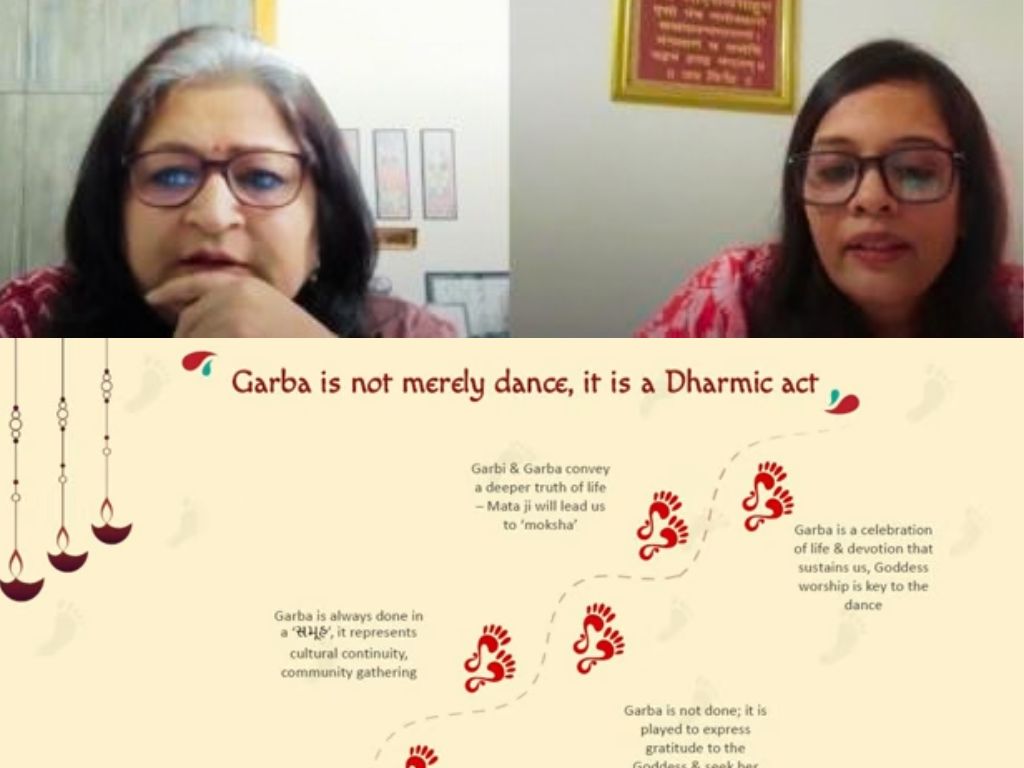
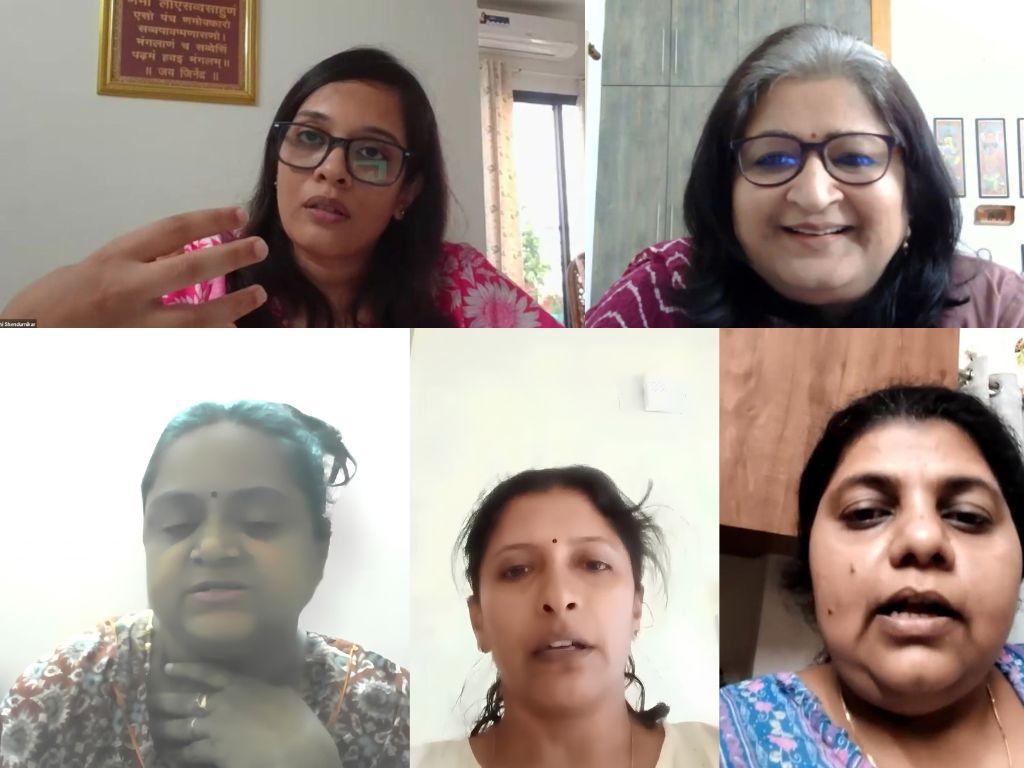
After the presentation, two webinar participants, educators from Tamil Nadu, emphasised the point about the necessity of bringing awareness of such cultural traditions to students in order to foster a feeling of unity and integration through learning about differences and similarities across the diverse regional celebrations which have their basis in collective worship and dharmic roots of Bharat.