
Date: June 15, 2026
Author: Beloo Mehra
“Auroville wants to be a universal town where men and women of all countries are able to live in peace and progressive harmony above all creeds, all politics and all nationalities. The purpose of Auroville is to realise human unity.”
.jpg)
Once upon a time, maybe 500 years ago or more, there lived a highly evolved Siddha, a Yogi known as Kaduveli Siddha. He lived in a small village presently known as Irumbai, about 10 kms from Pondicherry, and near Auroville1, the international township with a deeper aim to realize the inner unity of humankind.
There came a time when for a long duration the village and nearby areas did not receive any rains and the drought condition was making life difficult for people and other creatures. All through this, Kaduvella was busy performing his austerities sitting under a peepal tree. He was so fully concentrated in his tapasya and the intensity of his physical and spiritual heat (tapas) got so strong that soon an anthill started to form around him.
People thought that the drought was getting worse because the tapas generated by the Siddha’s intense austerities. But they didn’t know how to break Kaduvella’s concentration, especially when they saw the anthill grow bigger and bigger with every passing day.
Suffering because of the drought and resulting deprivation, the villagers approached the King who agreed that Kaduvella’s intense concentration and tapasya must be disrupted in order to bring down the intensity of the heat. But he too didn’t know how. A temple dancer, named Valli, a woman of enticing beauty and a devotee of Lord Shiva, decided to do her best to get the attention of the Yogi, and to rescue the King and people from the adverse effects of his tapasya (penance).
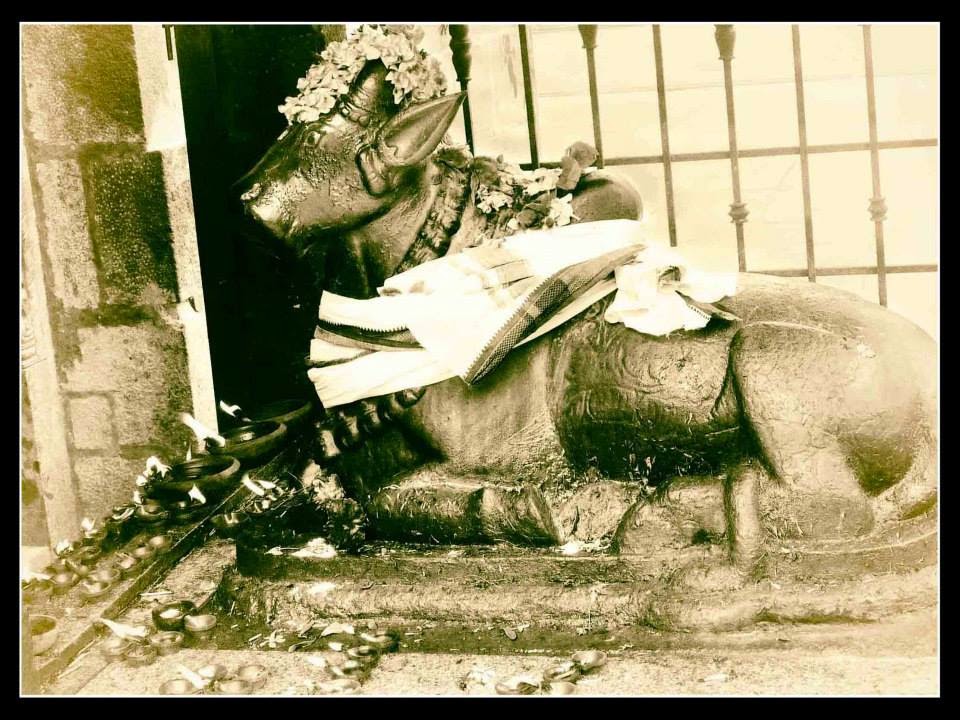
Valli observed that occasionally Kaduveli would, with his eyes shut, put out his hands to catch and consume the falling, withered leaves from the peepal tree where he was sitting. So she prepared a bunch of thin, fried apalam (a flat salty wafer made out of green gram daal), and started placing them in the Yogi’s outstretched hands as he tried to catch the falling leaves. He would eat the apalams; slowly his sense of taste, which had become withdrawn due to intense austerities, revived. In a few weeks he grew fatter until finally the anthill broke and he was once more exposed to the daylight.
One day finally Kaduveli ended his tapasya and opened his eyes. Valli was extremely happy and convinced him to go to her house where she kept him happy with her dedicated service and dancing talents. Meanwhile, the rain gods were relieved from the torture of the heat of the Yogi’s tapasya. The village received plenty of rains and the people were once again happy and on way to become prosperous due to abundant crops.
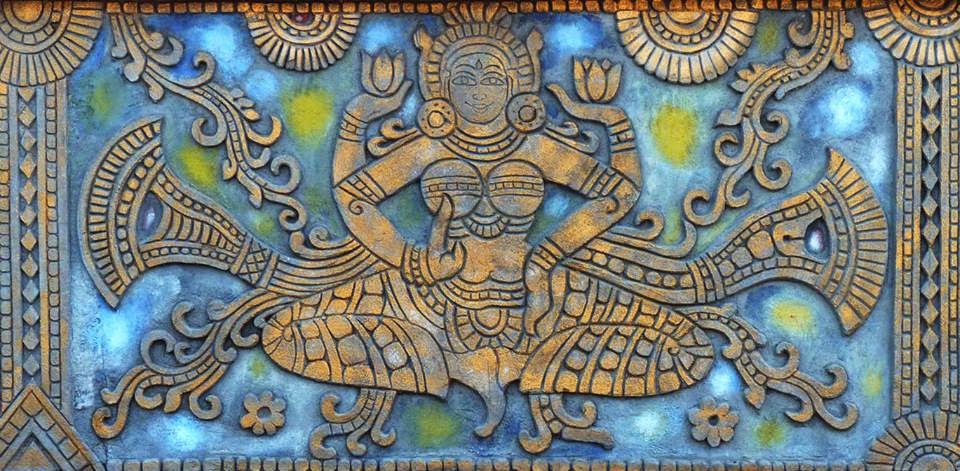
This called for special celebrations and the King arranged a special Puja to be held at Irumbai temple (also known as Mahakaleshwara Temple). As part of the celebrations, Valli performed the cosmic dance of Lord Shiva, the Nataraja. It so happened that while she was dancing one of her anklets fell off, and she lost her balance and rhythm. Kaduveli, who saw the Lord Shiva in Valli, picked up the anklet and put it back on her feet.
The King and other members of the royal court were shocked to see a Self-realized Yogi, a Siddhar, touch the feet of a mere dancing girl. They mocked and ridiculed him and made sneer remarks. Kaduveli got furious and invoked Lord Shiva to come out of his temple and prove his innocence by causing a rain of stones.
Immediately the Shivalingam in the garbhgriha of the temple exploded. Wherever the fragments of the Lingam fell that area became sandy like a desert. Siddha Kaduveli cursed that no greenery will grow in that area.
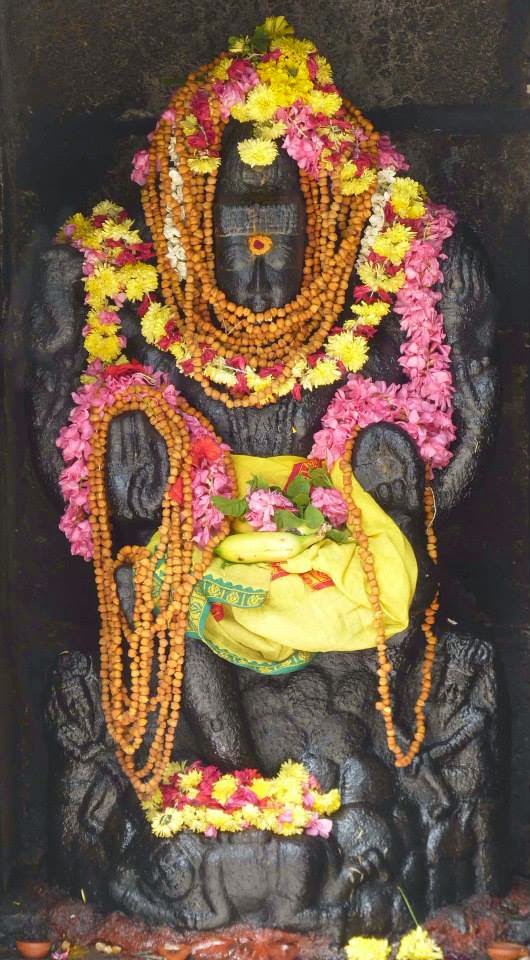
The King was naturally frightened and begged for forgiveness. With all his entourage, he bowed down to Kaduveli Siddhar and pleaded with him to take back his curse. The great Yogi was by now calm enough to realize the devastating impact of his curse. He told the king that the curse could not be taken back, but sometime in the future people from far-off lands would come and make the desert land green and fertile again.
Today, many villagers in Irumbai and nearby villages believe that the curse has been becoming ineffective for the last several decades. They believe that Aurovilians, many of whom hail from many different countries, are the people from far-off lands mentioned by the Kaduveli Siddhar who have helped make the desert land green and fertile again.
Spending a little time in Auroville and seeing all the “green” around one gets a sense that the legend may indeed be true.
To learn more about the ongoing afforestation and other ‘greening’ work going on at Auroville, click here and here.
Love of Nature is usually the sign of a pure and healthy being uncorrupted by modern civilisation. It is in the silence of a peaceful mind that one can best commune with Nature.
~ The Mother, CWSA, 16: 401
All pictures are from Irumbai temple, credits: Suhas Mehra
Notes
- To read more about Auroville, visit: Auroville.org To read Auroville Charter, click here. ↩︎