
Author: Beloo Mehra
Publication: Auroville Tomorrow, May 2026
EXCERPT
Sri Aurobindo and the Mother, the Mahayogis of 20th century, saw India as the spiritual battlefield of the world where the final victory over the forces of the Ignorance and darkness would be achieved.A closer look at the broad cultural shifts happening in the world today reveals two possibilities: a) masses of humanity moving toward a consumerist-materialistic culture sold aggressively by multinational corporations and financial institutions, with a smattering of ‘diversity’ provided as extra topping to slightly ‘season’ the bland mono-culture; b) a vehement rejection of this universalising secular tendency and building of a narrow, separate identity based on a credal religion and rigid religious instinct – which in its worst possible extreme, tends to impose itself forcibly and violently on all as the only alternative to the other possibility which rejects religion altogether.
Sri Aurobindo anticipated both these possibilities, and cautioned against them. That is why he brought forth in his writings – based on his cosmic vision of human history and yogic insight into human psychology – the essential spiritual values of Indian culture which are timeless and relevant for the future age, and indispensable to the conception of a perfect human culture. But Sri Aurobindo is no revivalist, nor a proud nationalist singing past glories. Recognising the distortions and rigidities that inevitably make their way into any culture over the long course of time, he says that completeness or finality cannot be “alleged of no past or present cultural idea or system”[1].
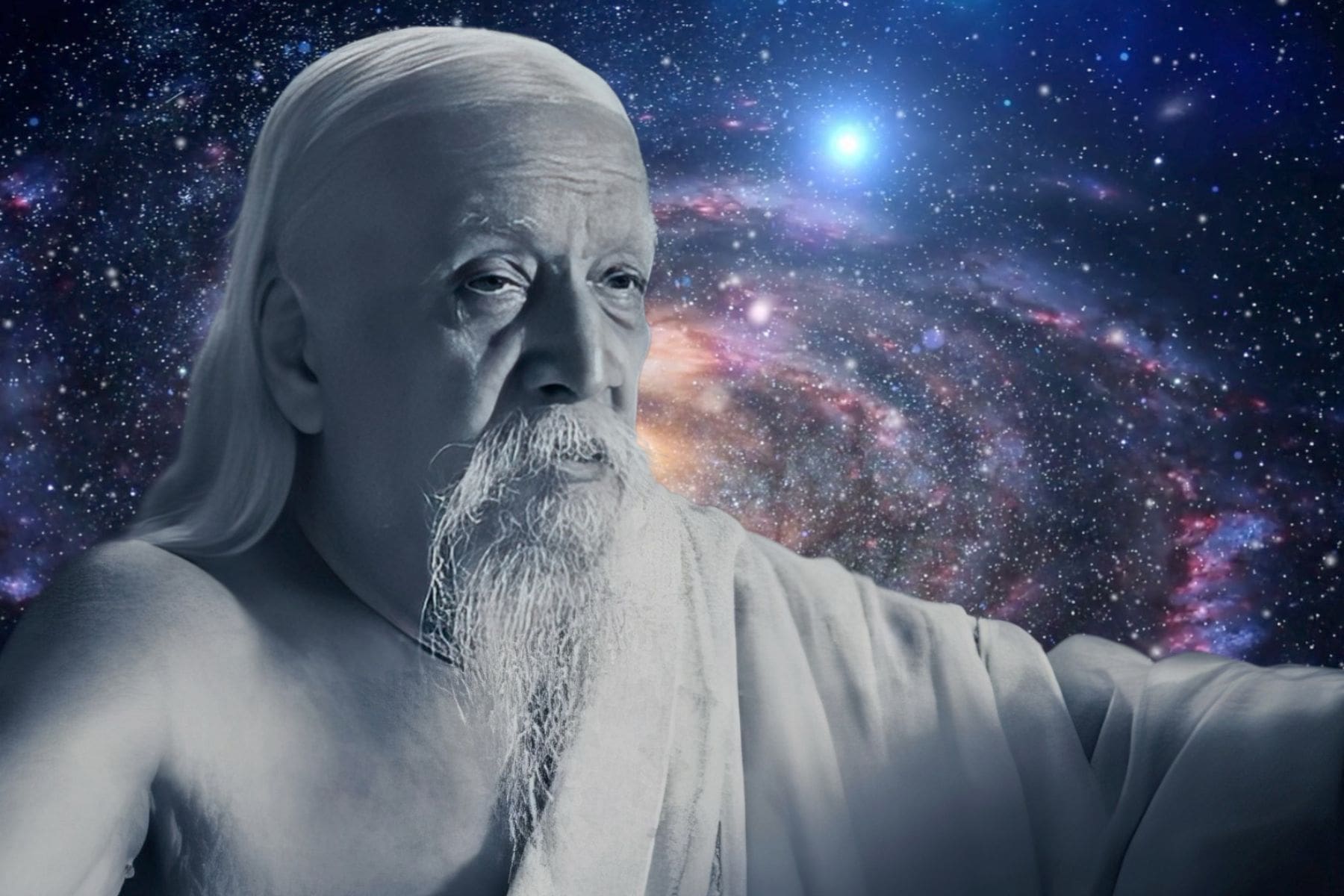
Highlighting the distinct streams of humanity’s quest as reflected in the different emphases given by different civilisations, Sri Aurobindo speaks of a need of divergent lines of advance until humanity can raise its head into “that infinity of the spirit in which there is a light broad enough to draw together and reconcile all highest ways of thinking, feeling and living”[2]. For example, behind the brutal face of European colonialism, particularly of India, Sri Aurobindo in his rishi-drishti could see Nature’s means to synthesise two distinct streams of humanity’s eternal seeking – perfection in the field of matter and of spirit. His cosmic and comprehensive seer-vision points the way to a new creation, one that would necessitate a new world culture, which must base itself on Spirit as the centre and build its forms the way a spiritual culture would do. But this does not automatically imply that everything that Indian civilisation came up with was perfect and nothing useful can be assimilated from others.
“Each [civilisation] has achieved something of special value for humanity in the midst of its general work of culture, brought out in a high degree some potentiality of our nature and given a first large standing-ground for its future perfection”.[3]
Notes
[1] Sri Aurobindo, CWSA, 20: 167
[2] ibid., 139
[3] Sri Aurobindo, CWSA, 20: 235