
Date: May 23, 2026
Venue: Sri Aurobindo Society
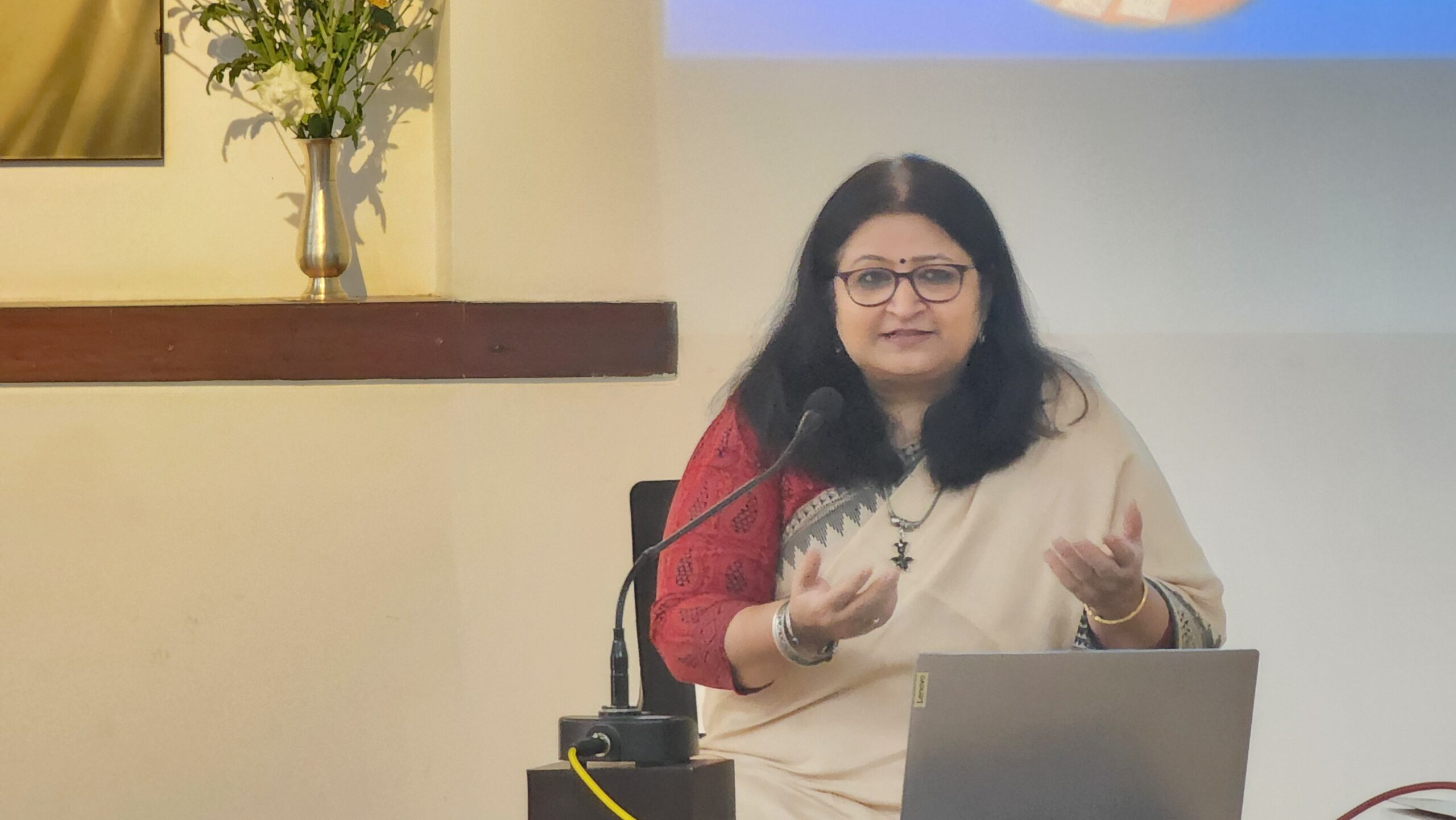
As part of the annual intensive workshop for teachers organised by Sri Aurobindo Foundation for Integral Education and Research (SAFIER), on May 23rd, Dr. Beloo Mehra, Director, BhāratShakti was invited to conduct a 1.5 hour long session on the topic – Indian History and Culture in the Classroom. More than 30 participants from across the country including pre-primary, primary and middle school teachers, administrators and principals attended the session.
In her presentation, Dr. Mehra highlighted that India should be understood, taught, and experienced as something far greater than a geographic or political entity. Drawing insights from Sri Aurobindo and The Mother, she focused on the soul-centric, civilisational view of India that is Bhārat and suggested how this view should reshape what is discussed and taught about India in the classrooms across India.
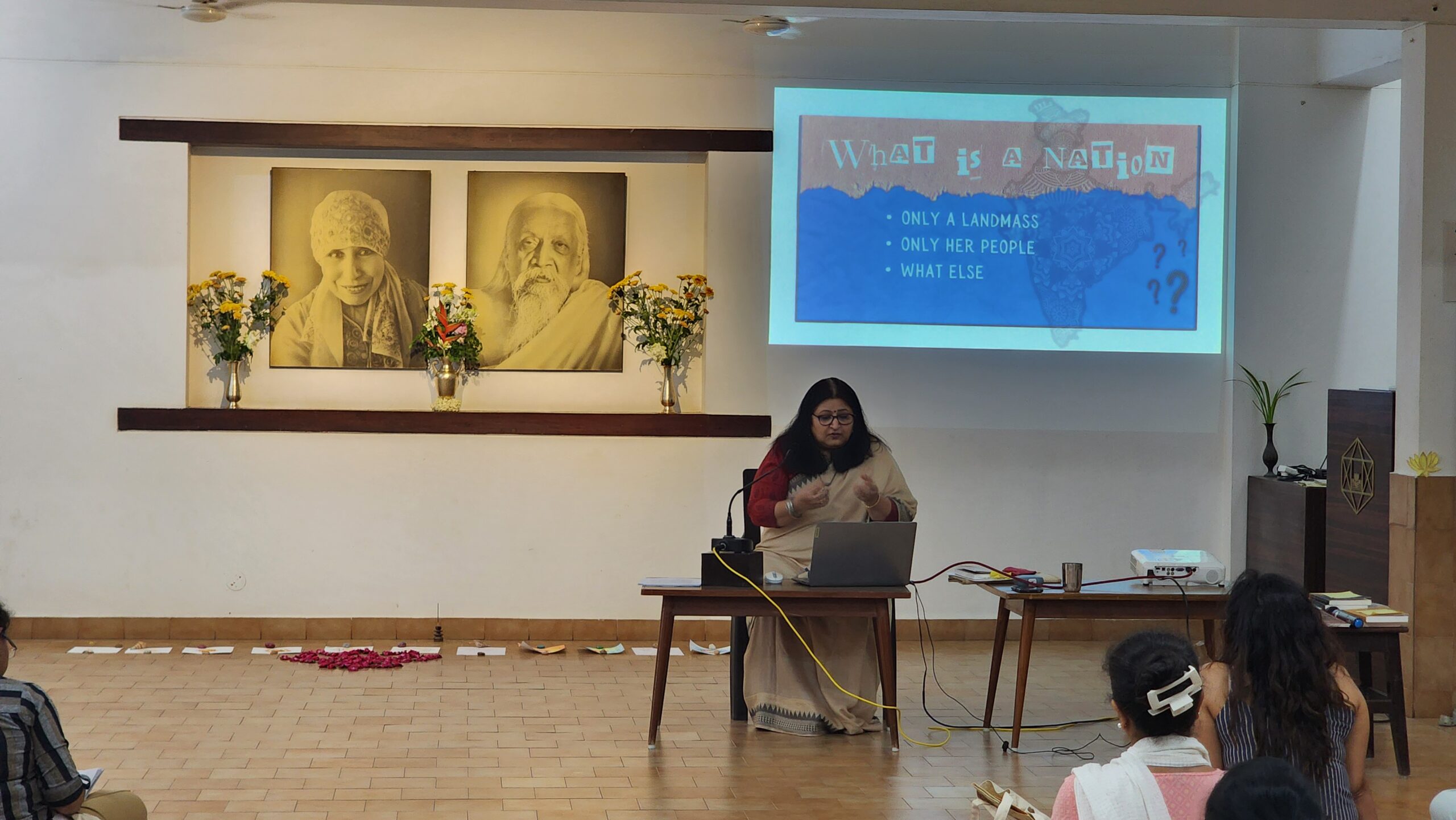
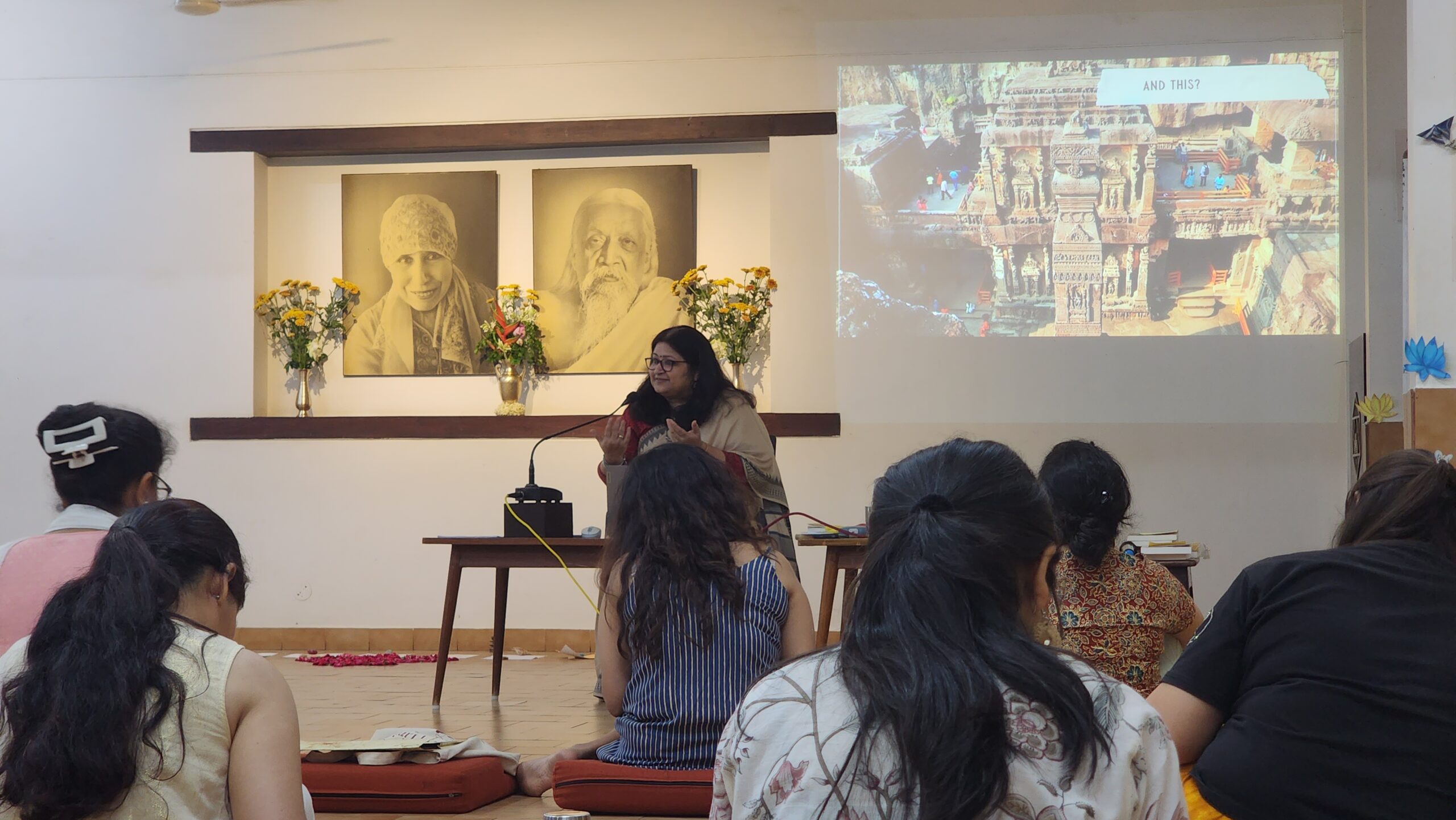
The session began with Dr. Mehra asking the participants to visualise and bring to their conscious mind one or two specific images which they associate with India. She then asked several of the participants what images came to their mind; and a variety of expressions came up ranging from Vedic Rishis, Indian spirituality, the great temples of India, diversity of languages, diversity of textile traditions, variety of cuisine, generosity of people, temple bells, colours, festivals, dances of India, etc. Dr. Mehra said that all these are absolutely valid ways to speak of and identify one or the other aspect of a civilisational nation such as India which has lived in millennia. And yet we also need to find out what is it that binds all these diverse ways to describe and know India.
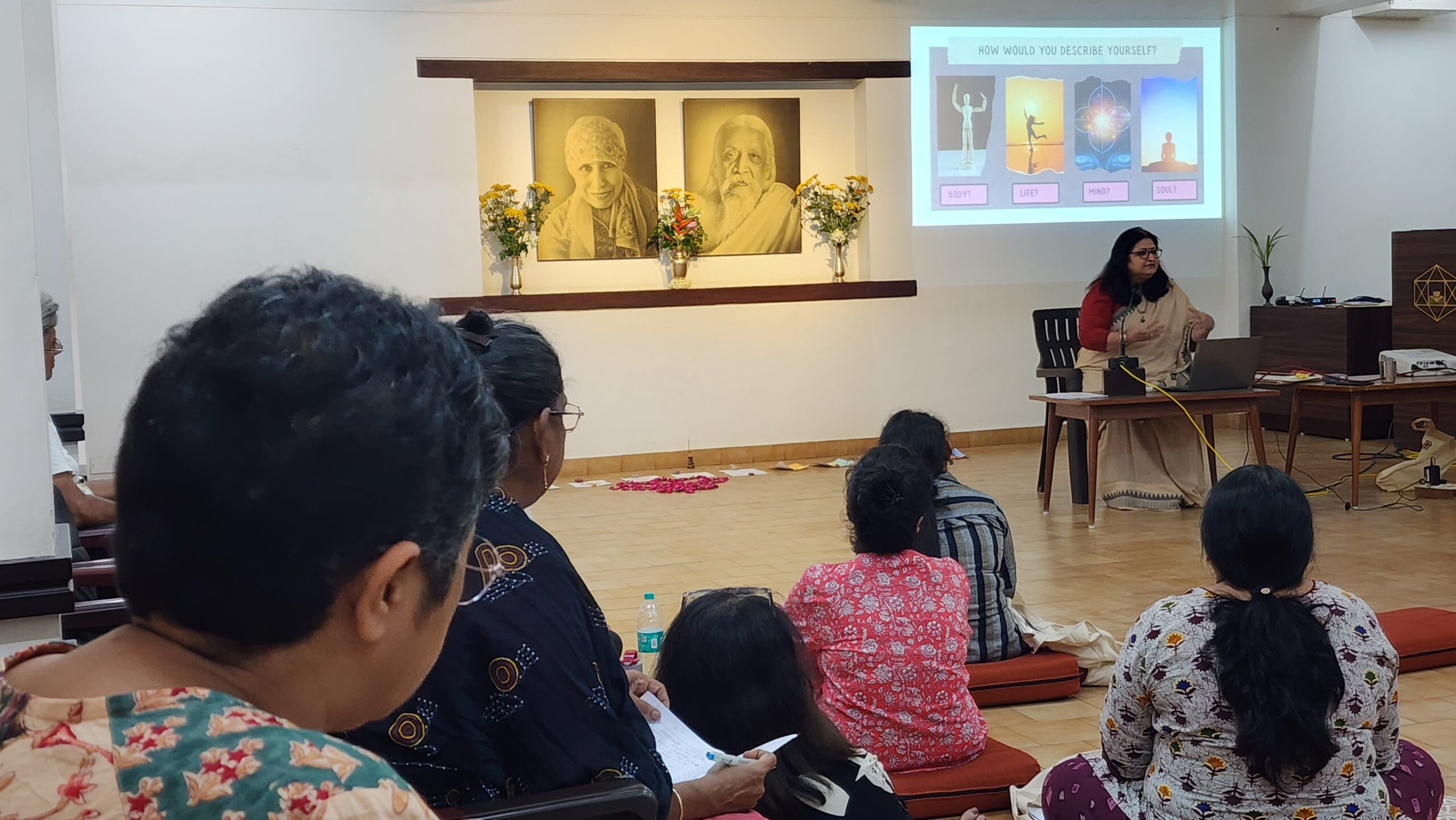
Through her presentation, Dr. Mehra was able to help participants recognise how their initial images of India can be placed in the larger picture of India that is Bharat, especially when we understand what makes India one despite all the outer diversity. She talked about the necessity of becoming aware of India and Indian-ness at the soul, mind and body levels – just as we become aware of ourselves.
Following are some of the key points highlighted by Dr. Beloo Mehra during the session, several of which were elaborated upon through relevant examples.
What Is a Nation?
- A nation is not only a landmass (body), not merely her people (life), but is a distinct group-soul with a unique temperament and a unique approach to reflect on its collective identity (mind).
- India is a living being, says the Mother, as much living as Shiva (soul aspect of a nation).
- Bhārat Shakti — Dr. Mehra informed the participants that this is h ow Sri Aurobindo spoke of Mother India as a Power, a Godhead, the Devi that sustains the nation’s separate existence.
Civilisational Lens
- Importance of knowing India through her long civilisational past — Dr. Mehra said that Indian culture and civilisation must be understood and evaluated by millenniums of greatness, not by a few centuries of weakness.
- The nation-soul as unifier of a highly diverse India — quoting the Mother, Dr. Mehra said that only India’s soul can unify the country, positioning spirituality and shared inner life above social-cultural-political diversity.
- Two key aspects of Indian culture were foregrounded: Spirituality (“the master-key of the Indian mind”) and Dharma as the foundational note of Indian life.
- Briefly touching upon the concept of Dharma, Dr. Mehra spoke of it to as the deepest law of being, that which helps one grow into purity, largeness, light, freedom, power, strength, joy, love, good, unity, and beauty. She highlighted that we should not confuse the Indian concept of Dharma with the English word religion as the two do not represent the same thing.
- Similarly, she said it is important for teachers to spend time understanding how jati and varna are not same as caste and must spend time researching what was the spirit of varnashrama and the right understanding of purushartha in the Indian context.
Rethinking How History Is Taught
- History’s hidden layer — Citing Sri Aurobindo, Dr. Mehra said that history “records the show in front of the curtain” while the decisive things take place behind the veil. Teachers should become interested in reading and researching diverse perspectives on Indian history as this is a highly contested field. Only then they will be able to meaningfully engage students in discussions on Indian history.
- Past as springboard — Dr. Mehra also shared the Mother’s view that the past must be a spring-board towards the future, not a chain, an important perspective which must guide the pedagogical stance.
- Beyond dates and battles — Highlighting a quote from Sri Aurobindo, Dr. Mehra said that students need not memorise the year of the Battle of Plassey; they should understand how Aryans formed the nation, and how Marathas, Bengalis, and Punjabis came to be.
- Dr. Mehra gave the example of the history of Somnath Temple to illustrate that the aspect of strong resistance against cultural erasure, imposition of an external way of life that does not resonate with the core essence of India’s temperament, and constant renewal, reconstruction and rejuvenation of her cultural and civilisational identity are hallmark of Indian story and this should be freely and thoughtfully discussed wit the students.
Stages of Indian Civilisation
- Dr. Mehra briefly mentioned that as per Sri Aurobindo, Indian civilisation can be studied through three broad stages.
- Stage one of loose, creative seed-time of the Veda and Upanishads.
- Stage two when the forms were fixed in shastras, the age of remarkable advancements in philosophy, science, law, art, literature, sculpture, architecture.
- Stage three when the decay began, a stage marked by slumber of the scientific and critical mind, fading vital energy, and spirituality reduced to “intense jets” rather than a clear flame.
Identity, Diversity and the Bhāratiyata
- Dr. Mehra gave a few examples of how temple traditions and many other cultural practices throughout the long history of Bharat have in organic ways emphasised unity in diversity and have helped create a pan-Indian cultural identity.
- She said that it is not birthplace, passport, language, food, dress, religion, allegiance to constitution or flag which make up Indian identity; it is rather about having a certain inward orientation to life and existence and recognising Spirit as the primary reality which gives significance to everything else.
- An Indian is one who has a natural acceptance of spiritual reality, an inborn intuitive sense of a reality beyond Mind.
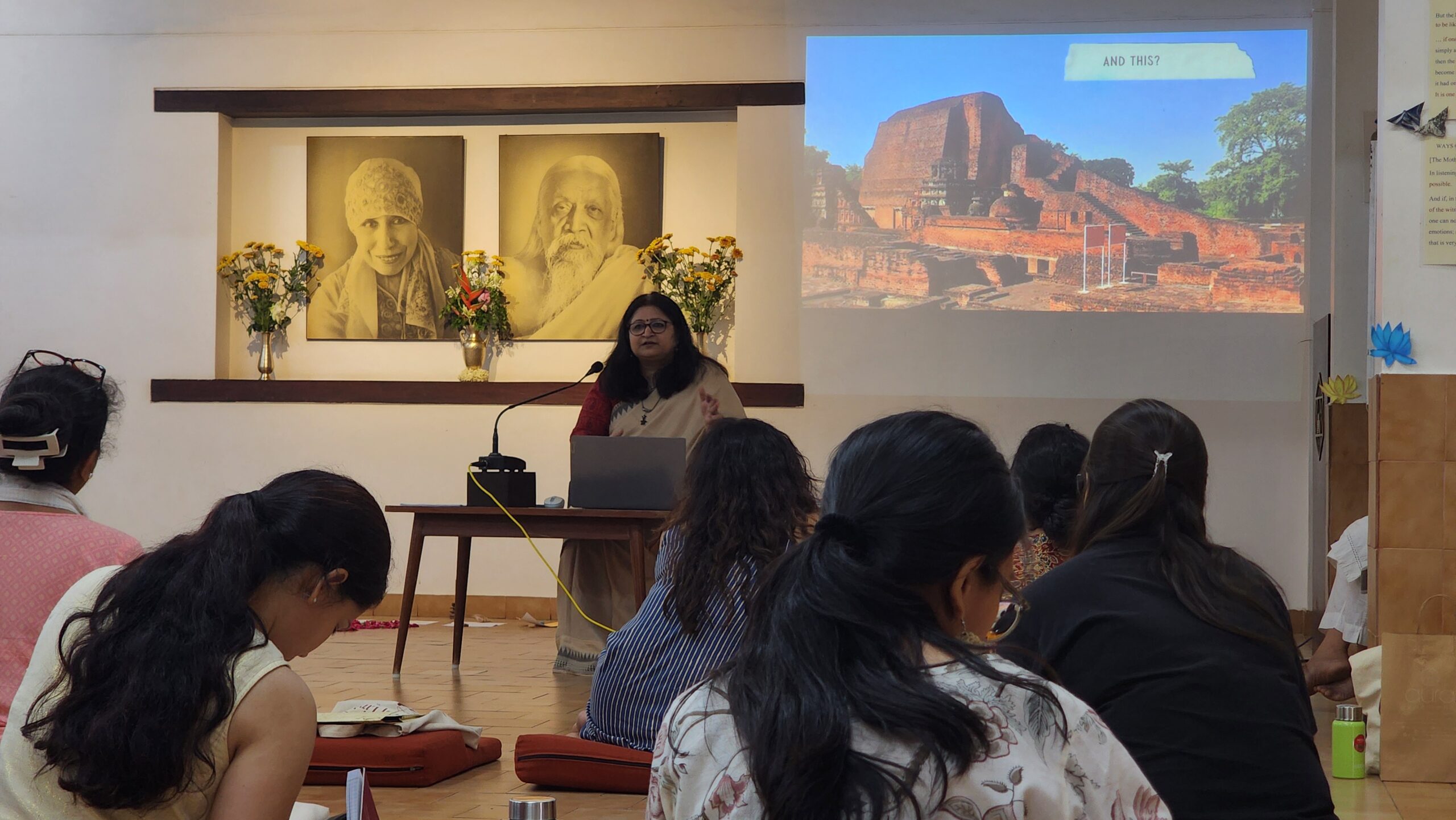
Dr. Mehra concluded the presentation emphasising Sri Aurobindo’s words that “It is the spirit of a nation which determines its history.” And it is this that should be emphasised in the classrooms. But for that, teachers first have to work sincerely toward upgrading their knowledge of Indian civilisational history and the essential foundations of Indian culture and their diverse expressions through art, sciences, literature, philosophy, religion and spirituality.
Click HERE to know more about BhāratShakti’s works under the theme ‘Education for New India’.