
Date: May 28, 2026
Venue: Sri Aurobindo Society
See photo gallery and videos HERE.
India had conceived the whole philosophy of her art, early on in the Vedic period itself, emphasises E.B. Havell in Ideals of Indian Art. The highest vision of the Vedic seers, the vision of the Infinite that is revealed and yet hidden in all the finite forms of the existence, materialised in the later periods in the wonderful forms of all Indian art. Sri Aurobindo reminds us that the “whole basis of Indian artistic creation, perfectly conscious and recognised in the canons, is directly spiritual and intuitive.” (CWSA, 20: 257)
The deep connection between Indian art and sacred ritual, right from the Vedic yajña, continues till today in myriad forms of temple worship. The outer ritual of yajña may be seen as a sacred theatre engaging all the senses. And it facilitates a revelation or a realization or a moment of transcendence. Such experience is also possible when one stands before a great work of art.
The great temples of India are magnificent works of art; so are the countless sculptures that make the temple — inside and outside. The temples were also designed to host various kinds of cultural performances and educational and social activities in the various manadapa-s, further emphasising the sacred dimension of all arts.
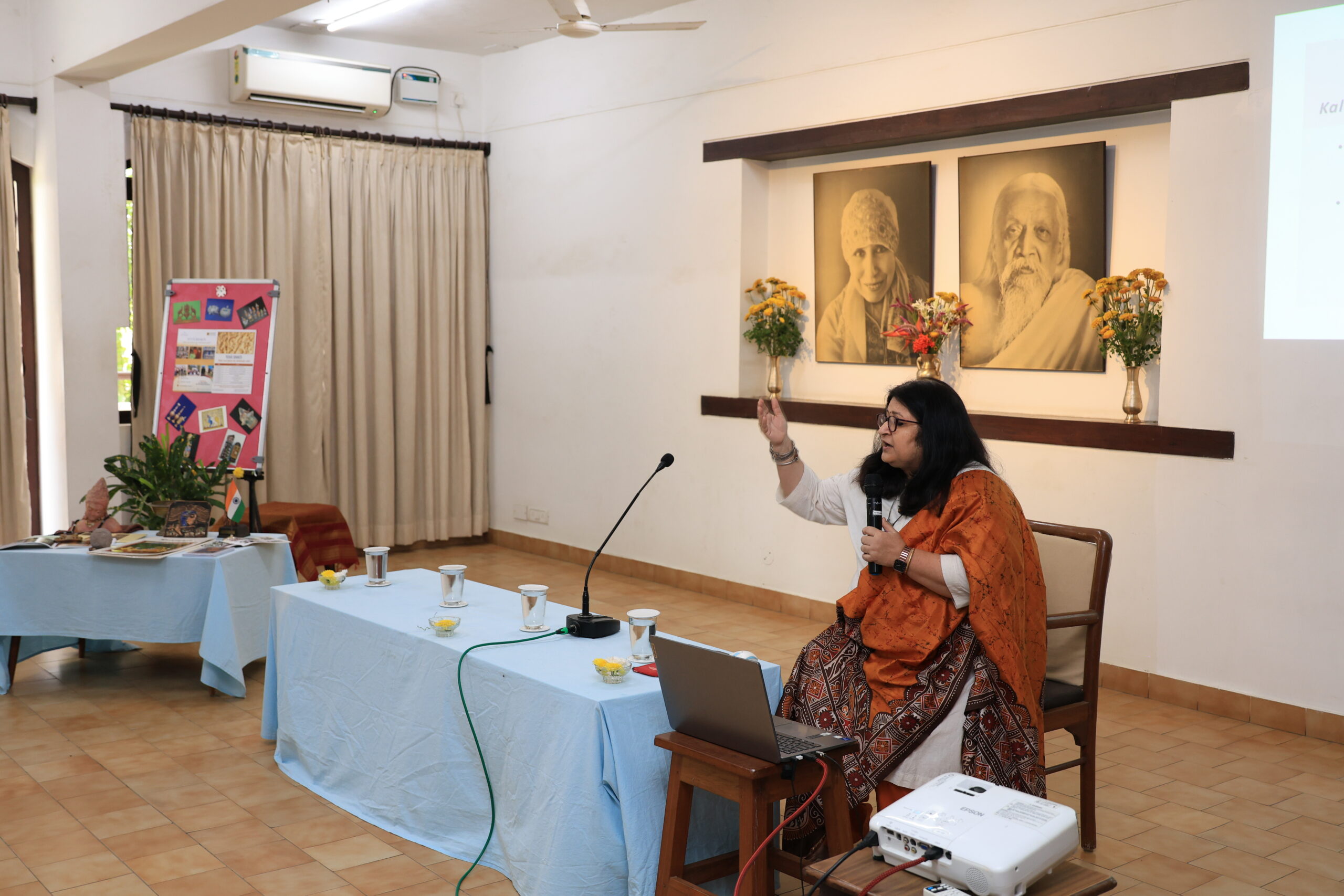
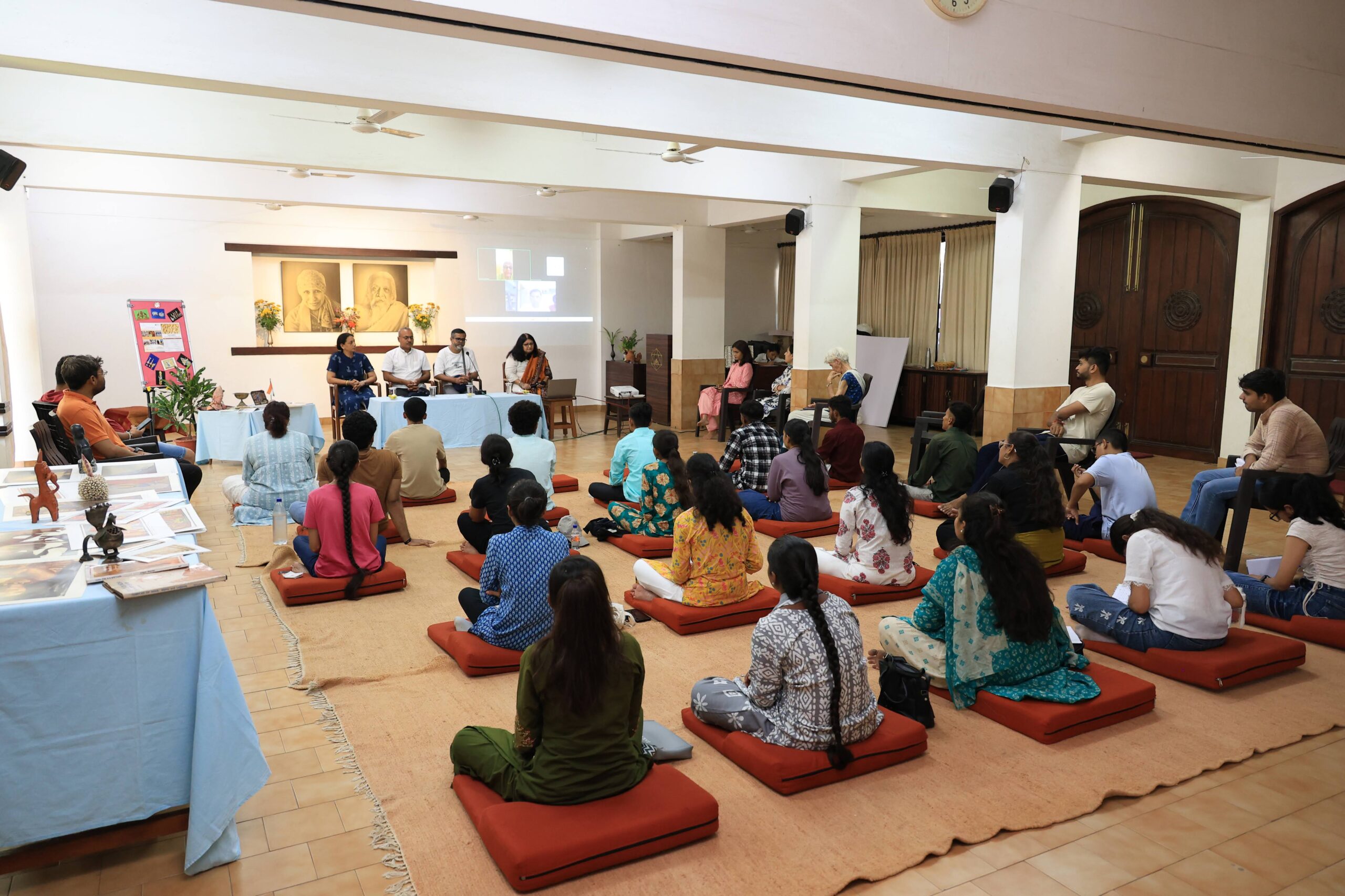
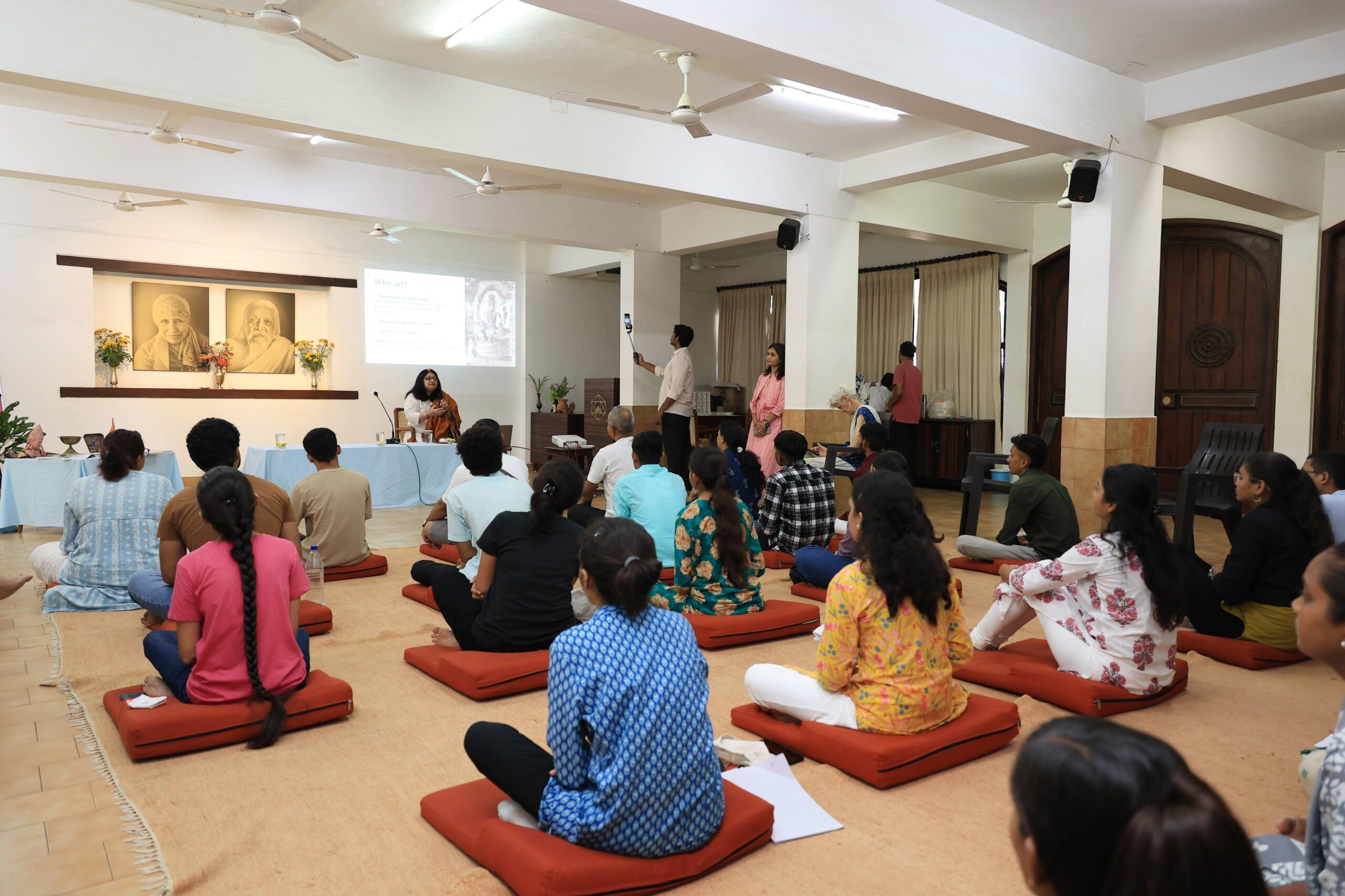
Inspired by these ideas, BhāratShakti, Sri Aurobindo Society conducted a workshop on the theme of ‘The Sacred in Indian Art’ on May 28, 2026. This is part of Yuvā Shakti‘, the learning initiative developed by the department for the youth from Sardar Patel University under which a variety of educational programmes have been conducted for the last three years.
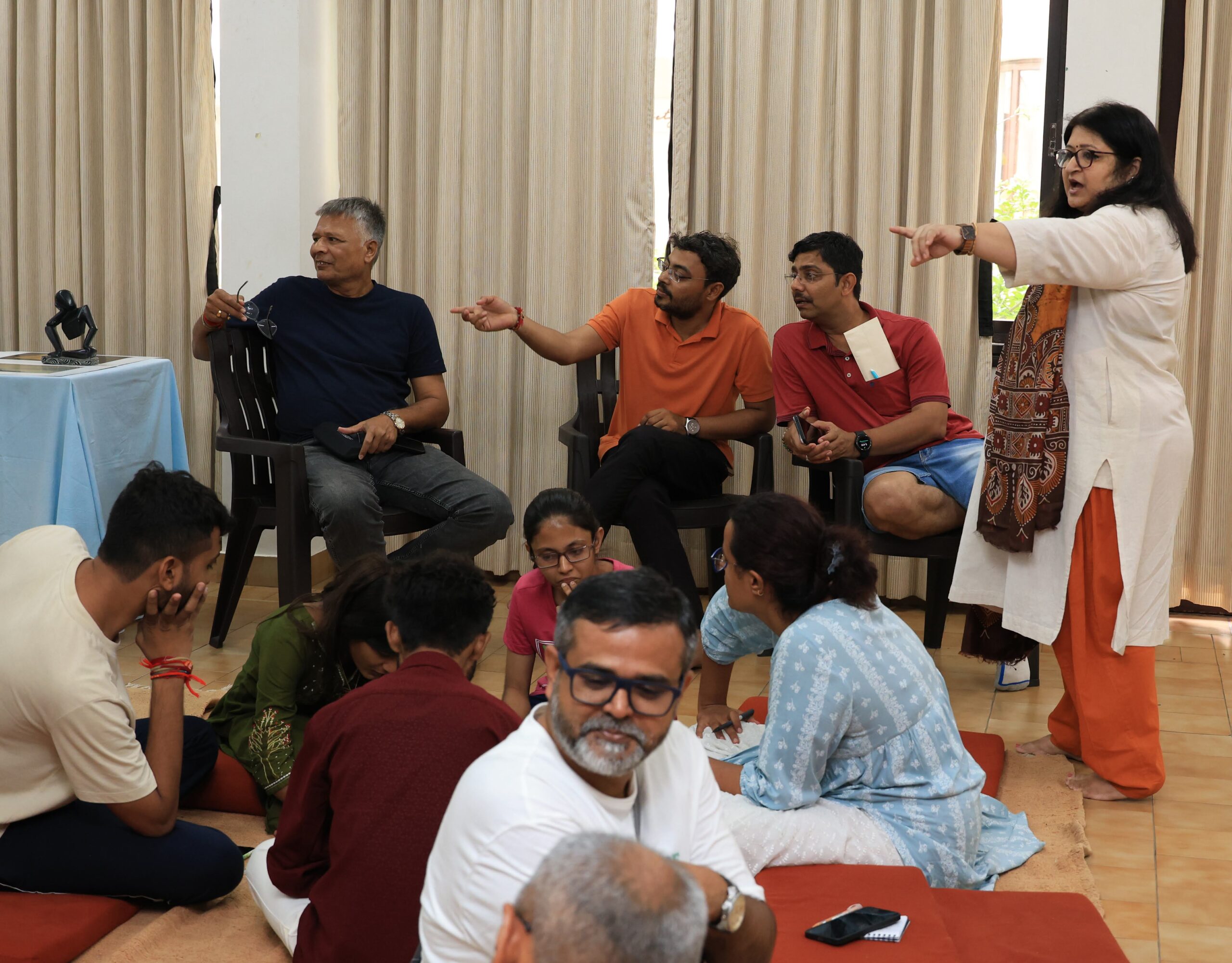
This year, the programme was planned in two phases. The first phase involved about 40 university students, and a 5-hour-long workshop titled ‘Know Bhārat Through Art‘ was conducted at Sri Aurobindo Sadhana Kendra, Vallabh Vidyanagar. The second phase conducted on May 28, 2026 involved about 25 students and 6 professors; ths workshop was conducted at Sri Aurobindo Society campus in Pondicherry.
The workshop included interactive sessions, video-based presentations, group work and engaging activities. Dr. Beloo Mehra was the key facilitator from BhāratShakti department, while Ms. Biswajita Mohapatra assisted with the activity-based sessions. Through some engaging activities, students were also introduced to the concepts of Rasa and Bhāva – two key terms in Indian theories of Aesthetics and Art Appreciation.
After the initial introductory remarks, there was a brief online interaction with Dr. Bhalendu Vaishnav, Sri Aurobindo Chair of Integral Studies at Sardar Patel University and Dr. Rajeshwari Singh, President of Sri Aurobindo Sadhana Kendra, Vallabh Vidyanagar.
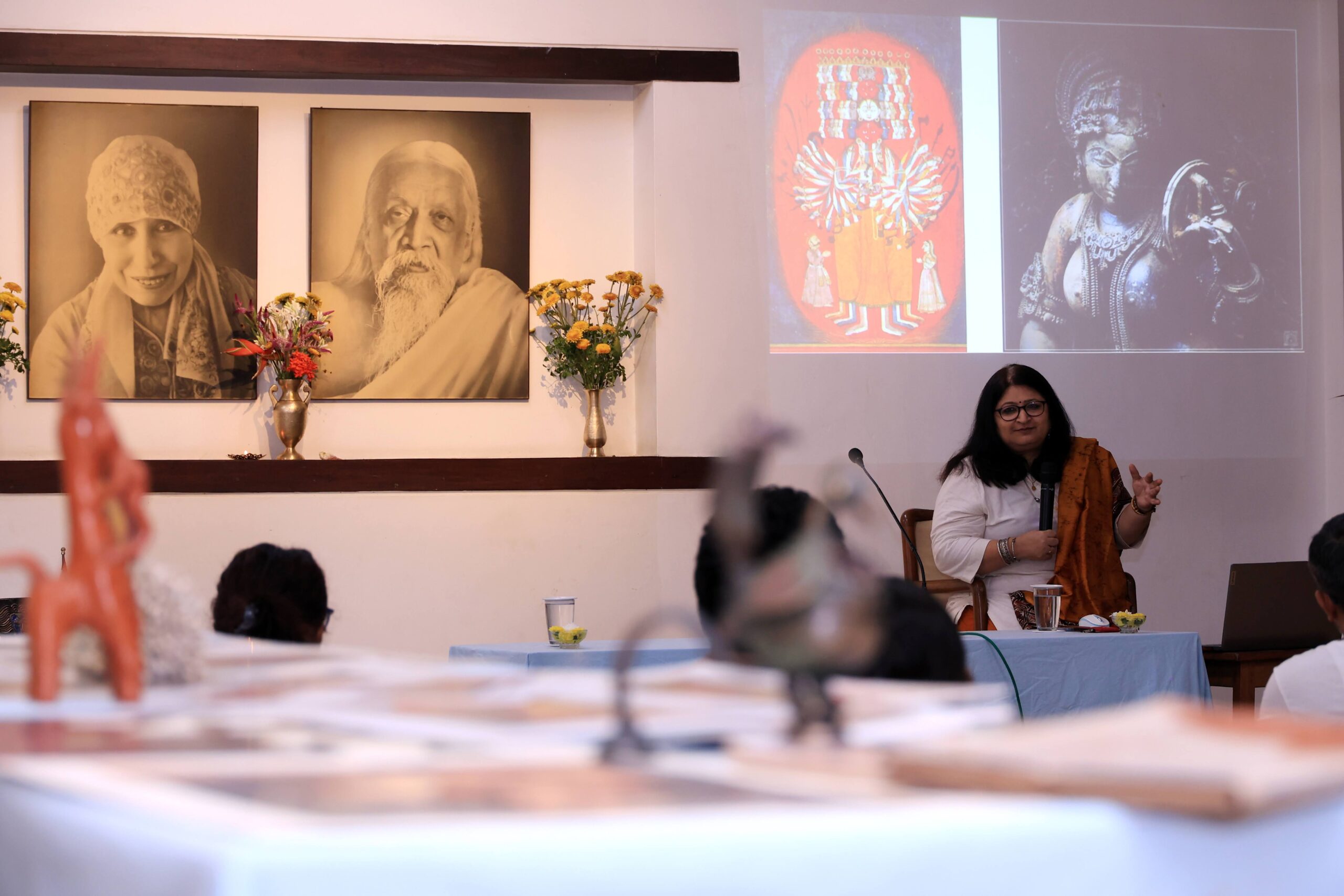
One of the key sessions of the workshop was titled – A Temple in its Inmost Reality. In her presentation Dr. Mehra highighted that the sacred buildings of India are the architectural self-expression of an ancient spiritual and religious culture.
Only with an inner study we can grasp the true significance of such architecture. It requires a spiritual self-identification with the deepest meaning hidden in the form. Seeing only with a rational and secular aesthetic mind we can never develop a true appreciation of this art. These points were illustrated with the help of a few pictures which Dr. Mehra projected for the participants.
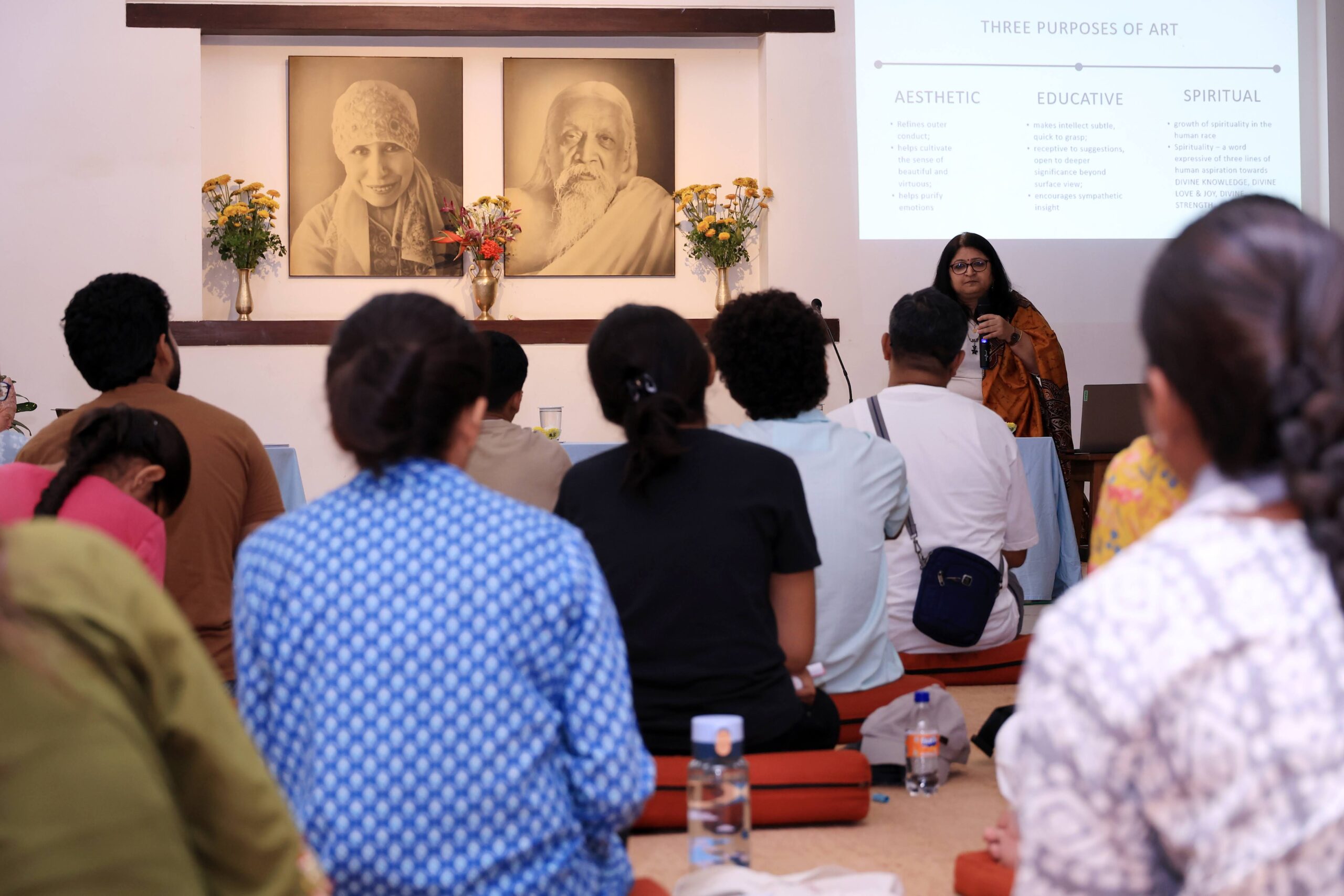
In an interactive manner, Dr. Mehra brought out the point that to an Indian mind, the temple is the representation of the cosmos. And it is so both at the level of the universe and the individual. This is what makes it possible for the devotee to get inspired in a temple. Some may visit a temple merely as a ritual or by habit. But to a conscious seeker and bhakta, a temple is essentially that sacred space where the heart aspires and strives for spiritual transformation.
Dr. Mehra also briefly touched upon the three purposes of art that Sri Aurobindo speaks of in his essay ‘National Value of Art.’ She explained that in India, the highest and the best Art has always been identical in its aim as the rest of the culture. That aim is to facilitate the spiritual growth of the individual and the collective. But before Art can fulfill this role, it must serve several other purposes.
She explained with some examples that according to Sri Aurobindo, the first and the lowest use of Art is the purely aesthetic. The second is the intellectual or educative, and the third and highest is the spiritual. By speaking of the aesthetic use as the lowest, he did not imply that this is not valuable. In fact, this aesthetic purpose is of immense importance to human progress.
And until this work has been done, humanity is not really ready to make full use of Art on the higher planes of human development. This point was illustrated through some relatable examples, especially towards the end of the workshop after students had presented their group work based on Rasa and Bhava.
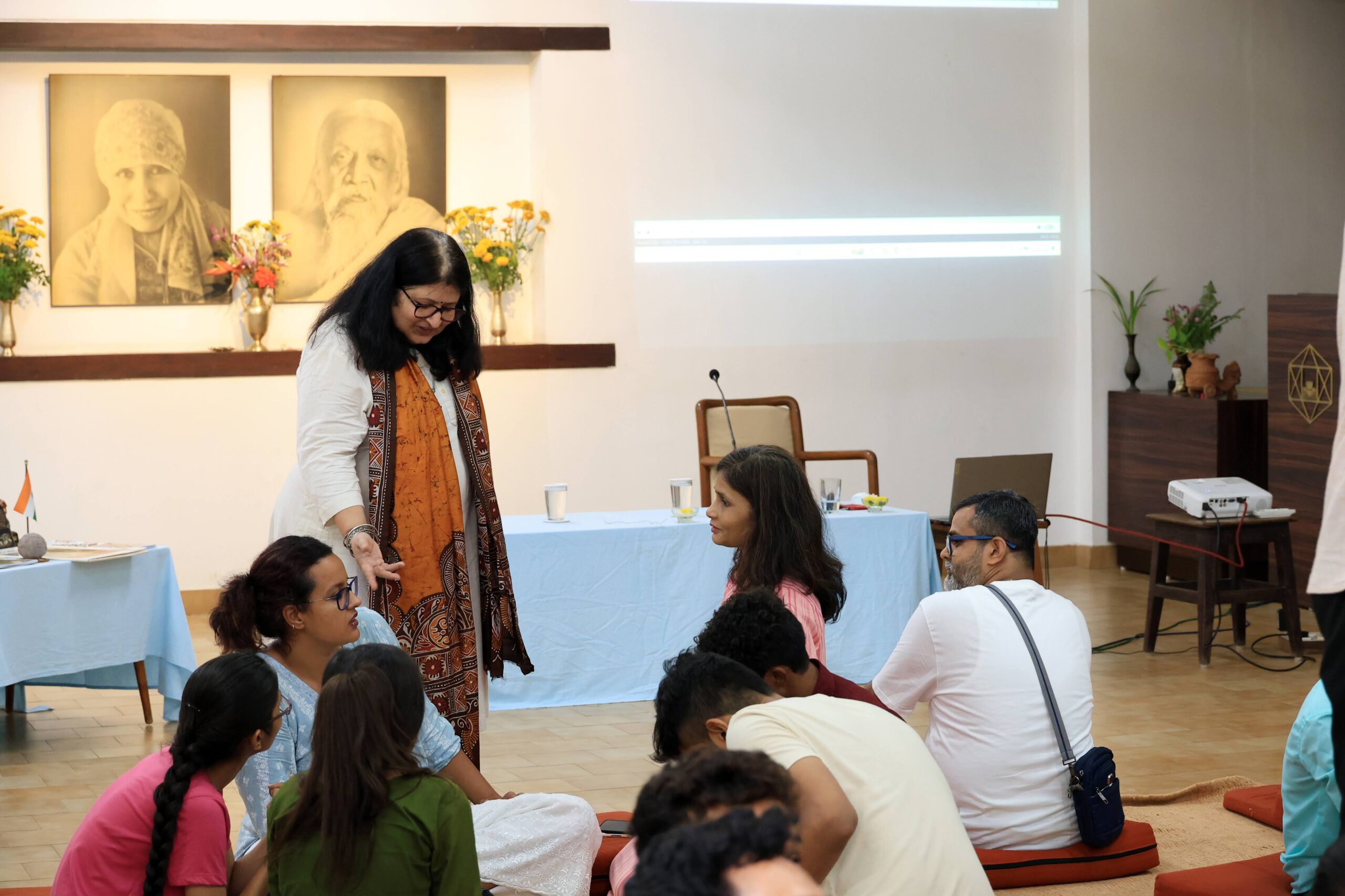
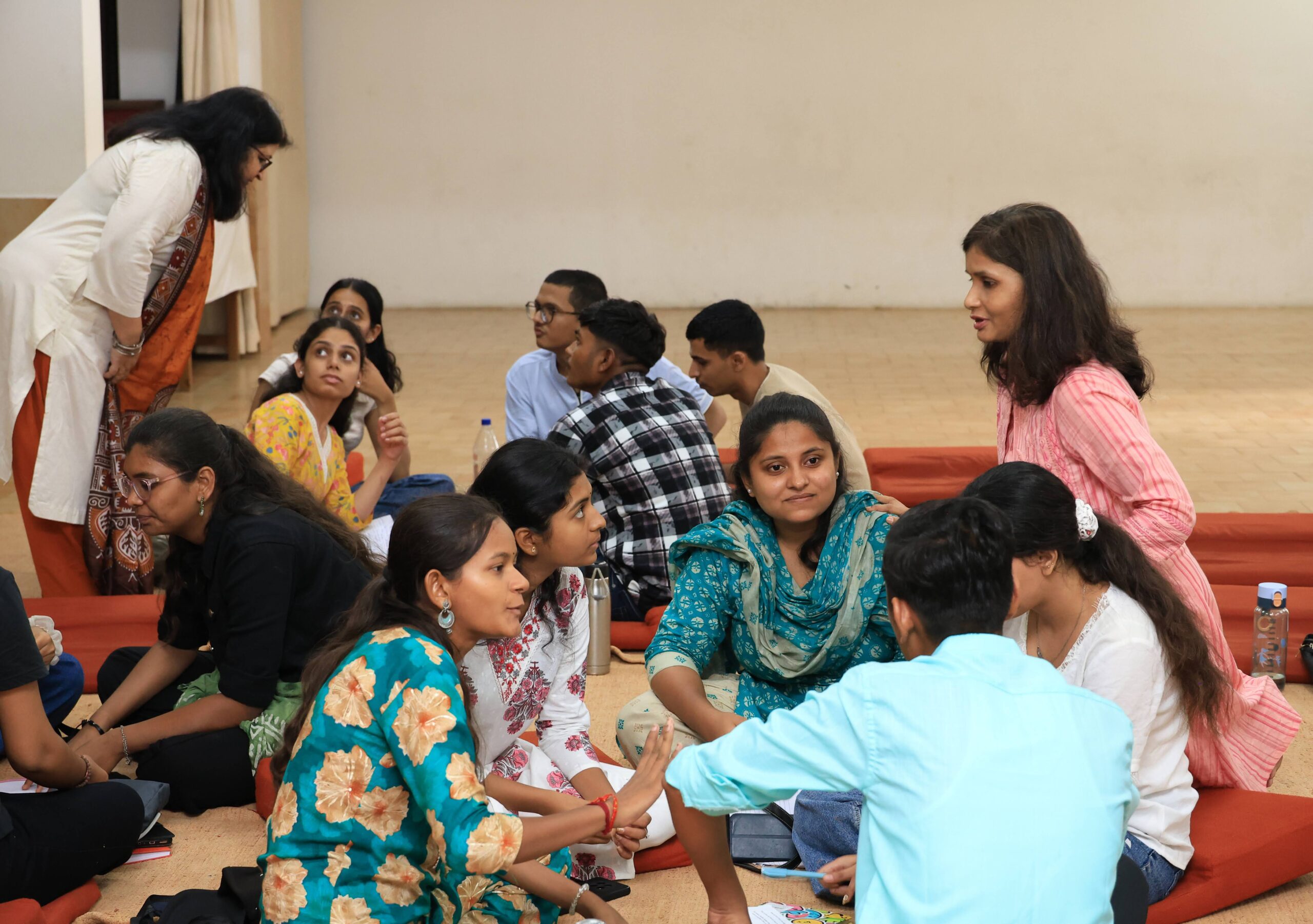
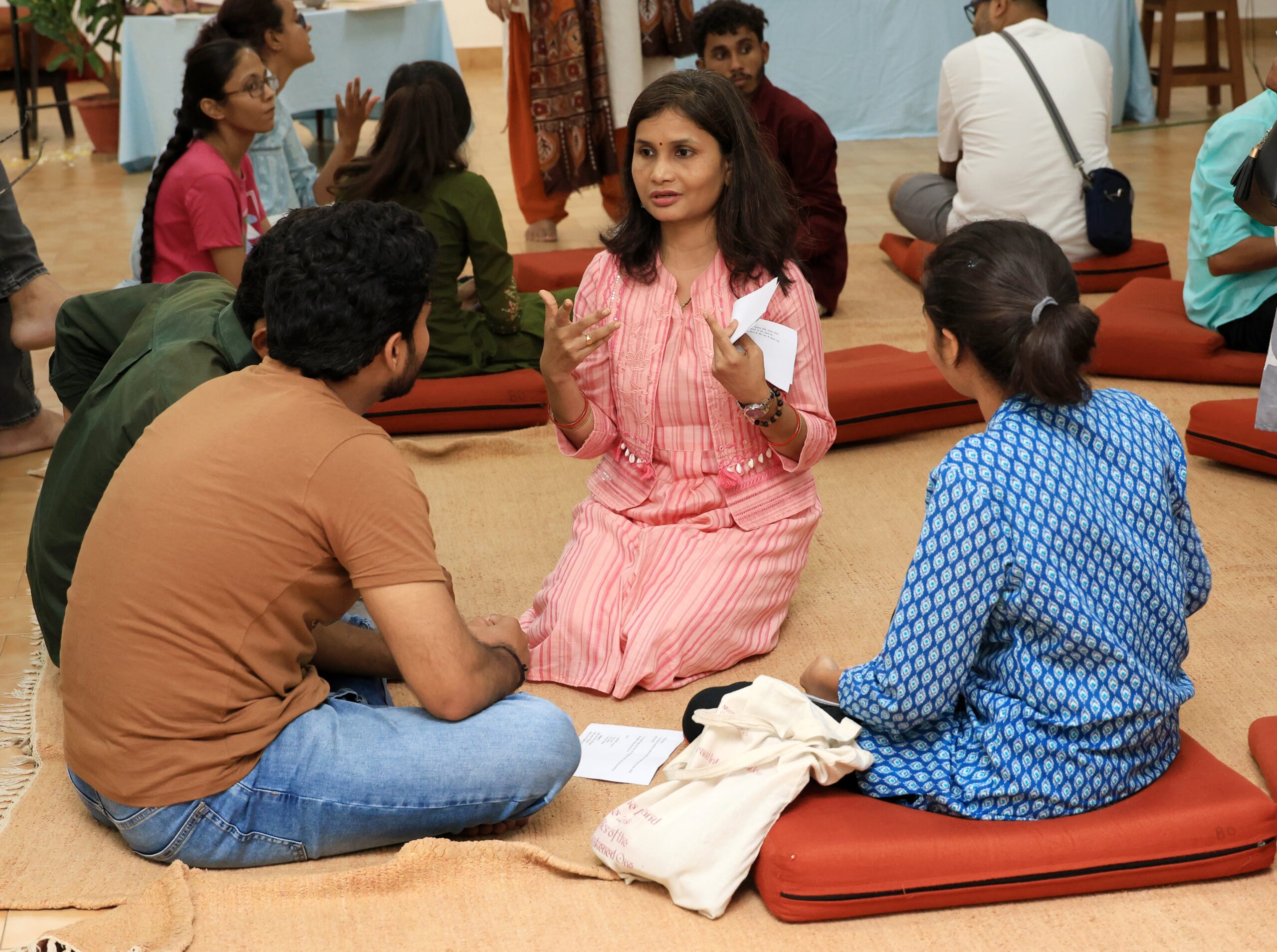
After a small tea-break, the next topic of the workshop was taken up – Rasa and Bhāva. To facilitate self-directed learning the students were shown a small video-lecture by an eminent scholar and performing artist. Students learned that Rasa theory blossomed beginning with the Sanskrit text Nātyashāstra, a work attributed to Bharata Muni. Eight rasa-s and associated bhāva-s are named by Bharata Muni and their enjoyment is likened to savouring a meal: rasa is the enjoyment of flavours that arise from the proper preparation of ingredients and the quality of ingredients.
Students were told that the eight sthayi bhāva-s and their corresponding rasa-s mentioned in Nātyashāstra are:
- Śṛngāram: Rati (Love, Attractiveness)
- Hāsyam: Hasya (Laughter, Mirth, Comedy)
- Raudram: Krodha (Fury,Anger)
- Kāruṇyam: Soka (Compassion, Tragedy)
- Bībhatsam: Jugupsa (Disgust, Aversion)
- Bhayānakam: Bhaya (Horror, Terror)
- Vīram: Utsaha (Heroism, Energy)
- Adbhutam: Vismaya (Wonder, Amazement, Astonishment)
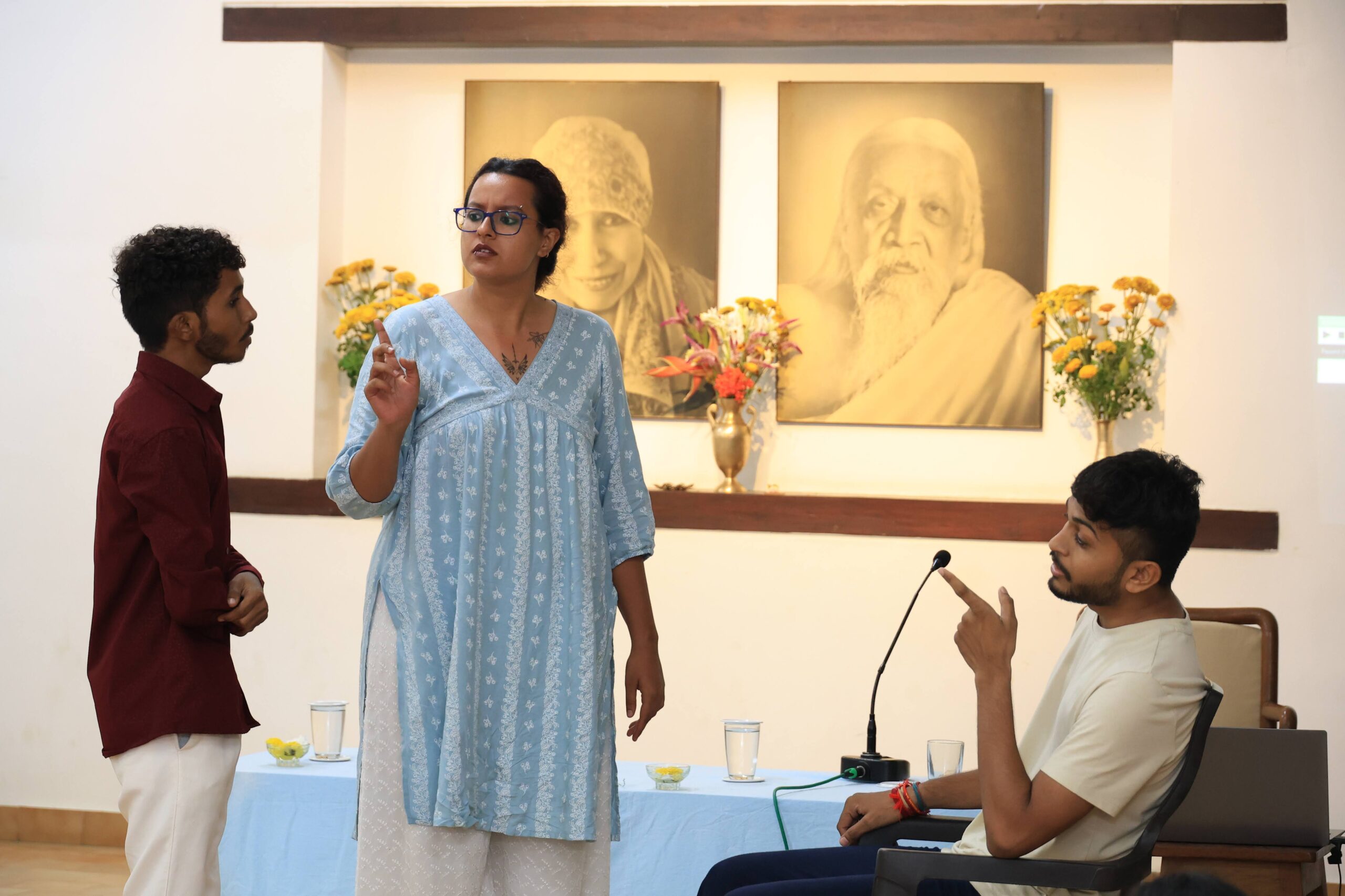
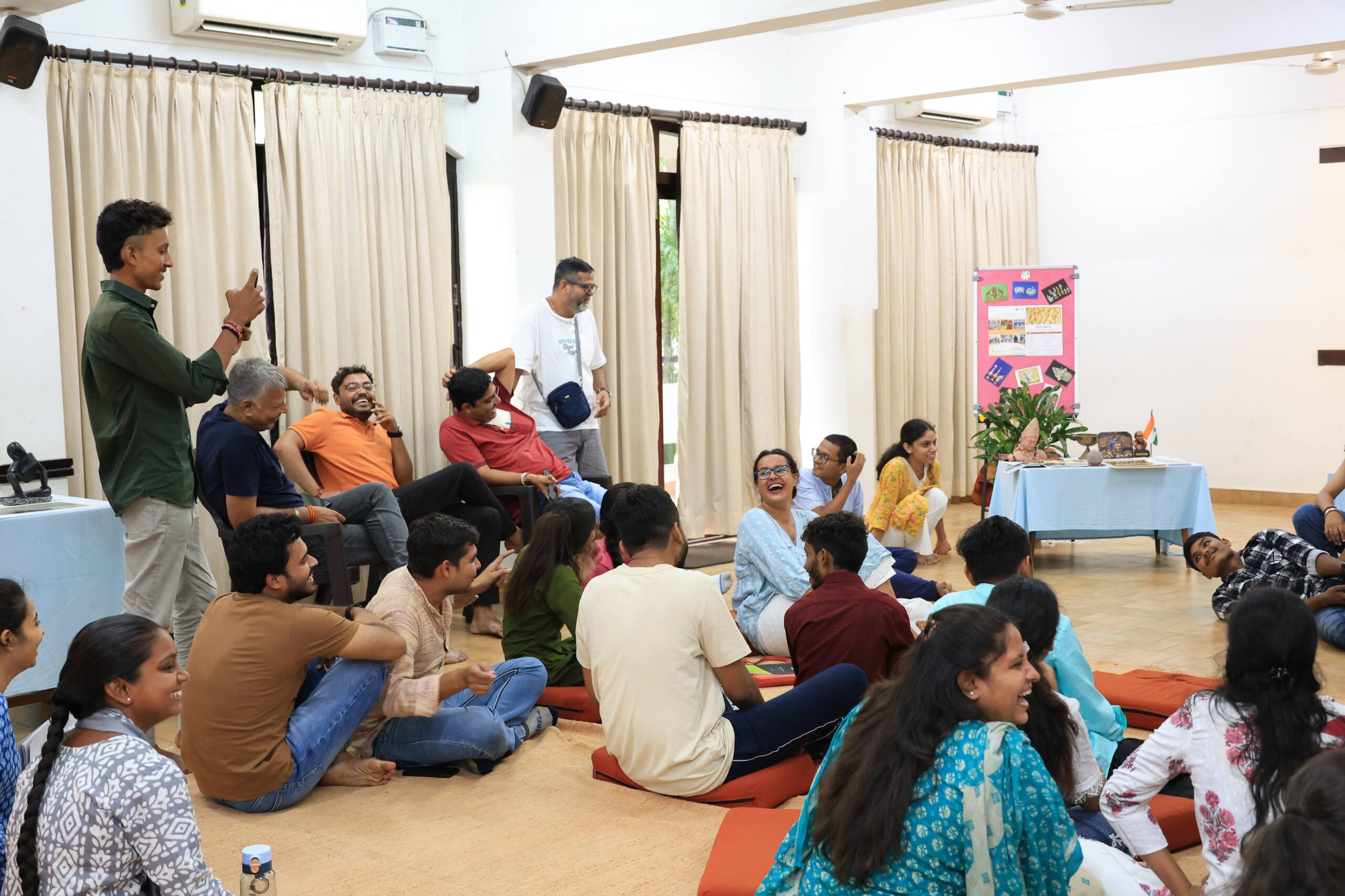
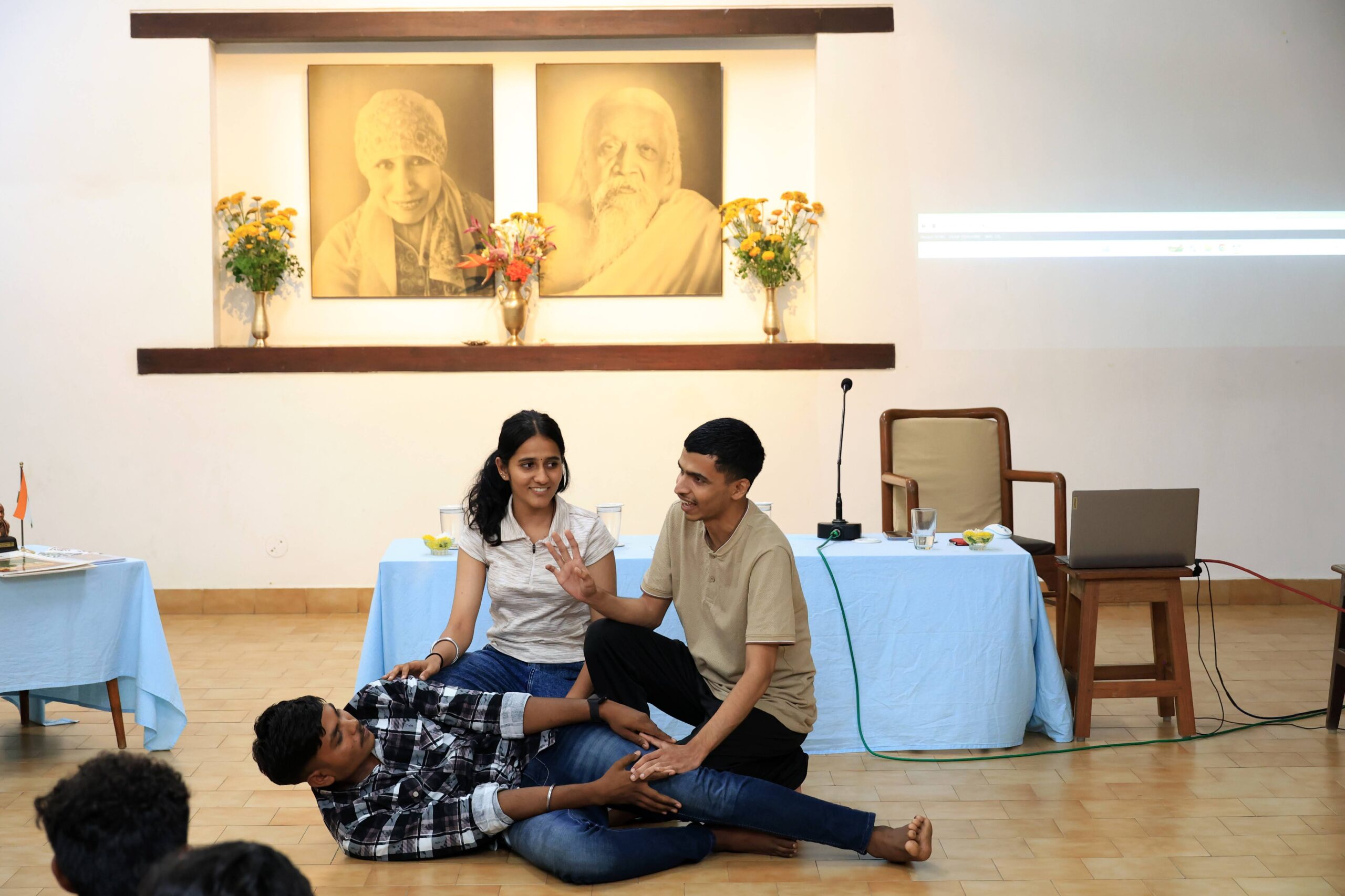
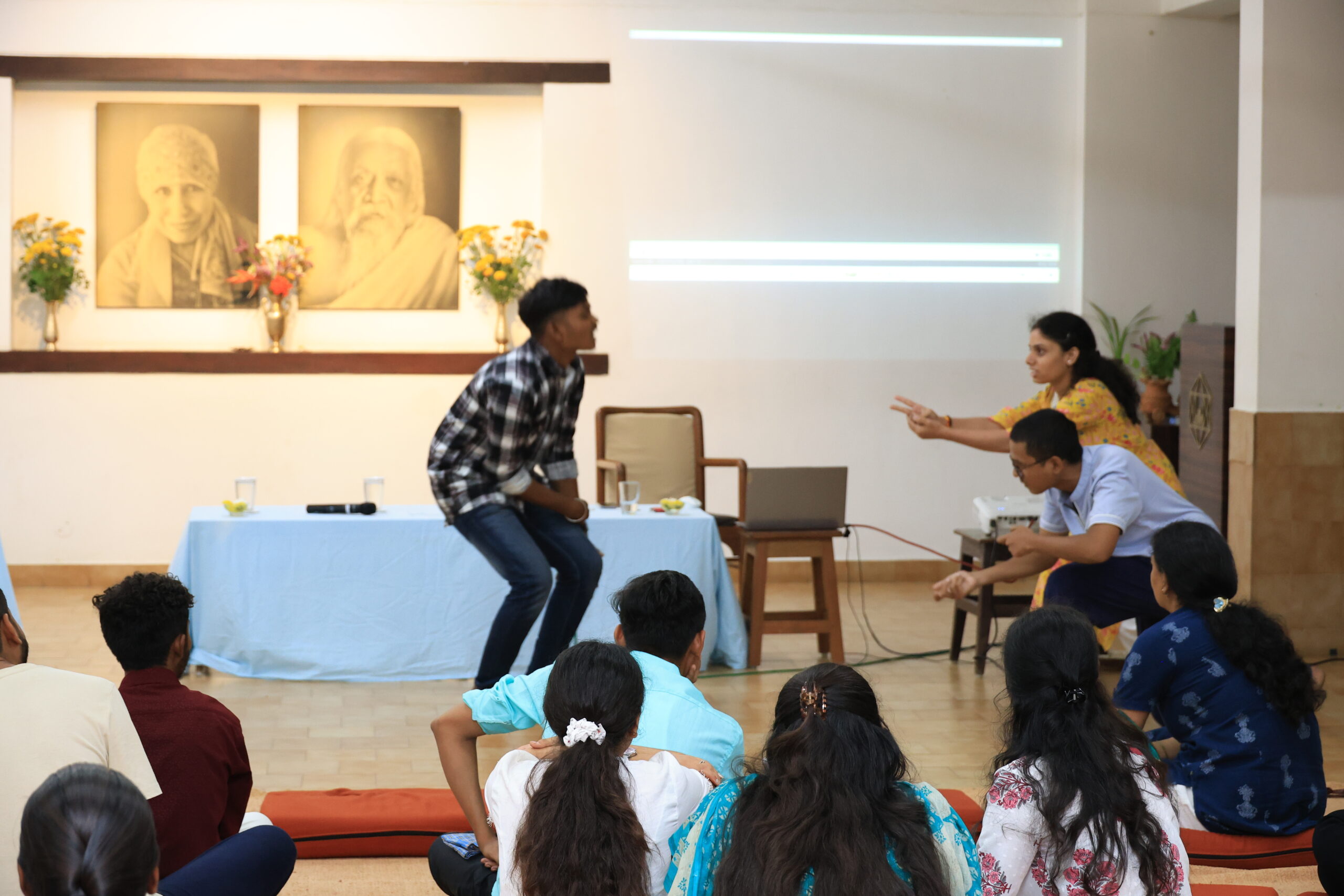
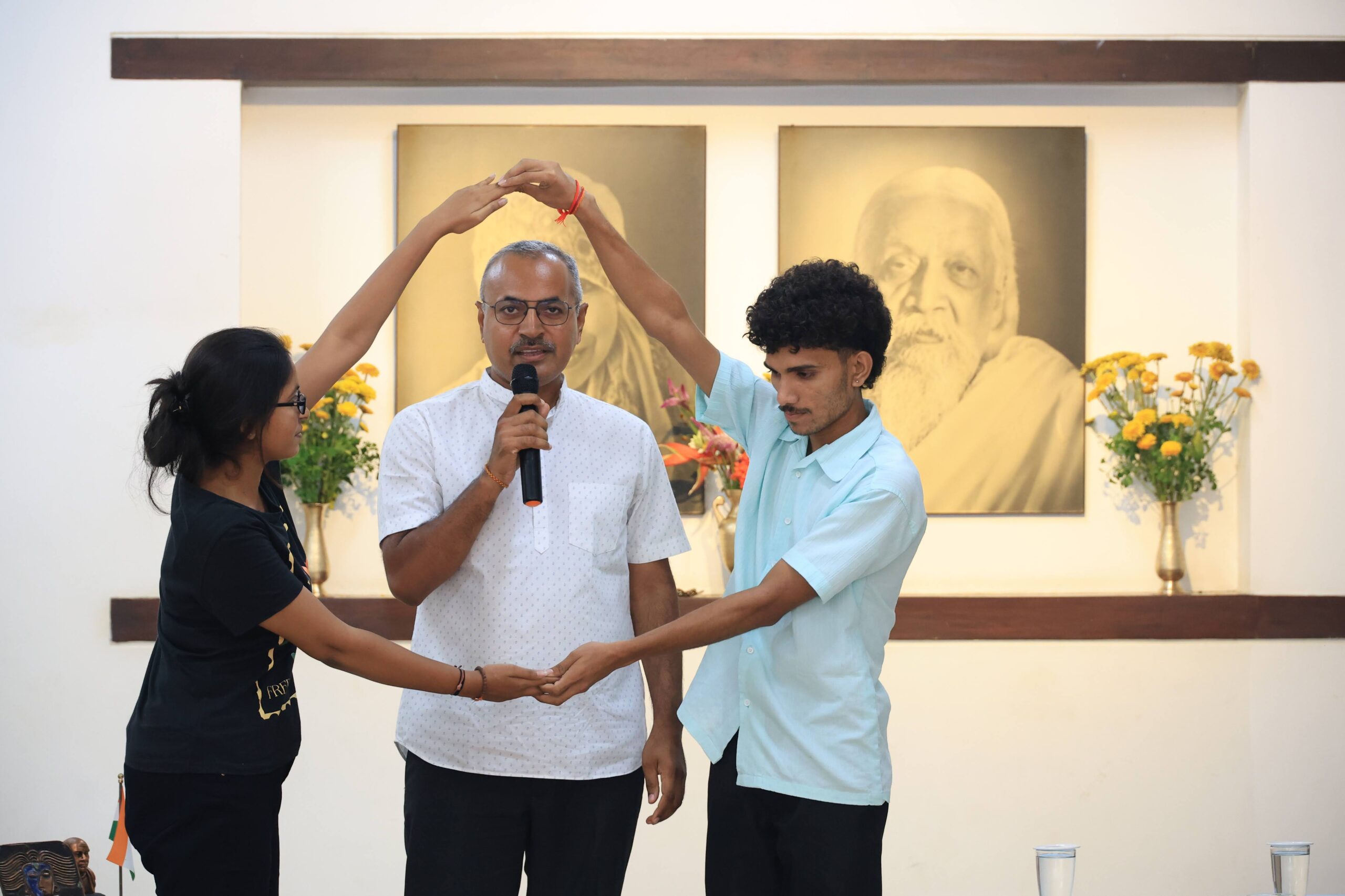
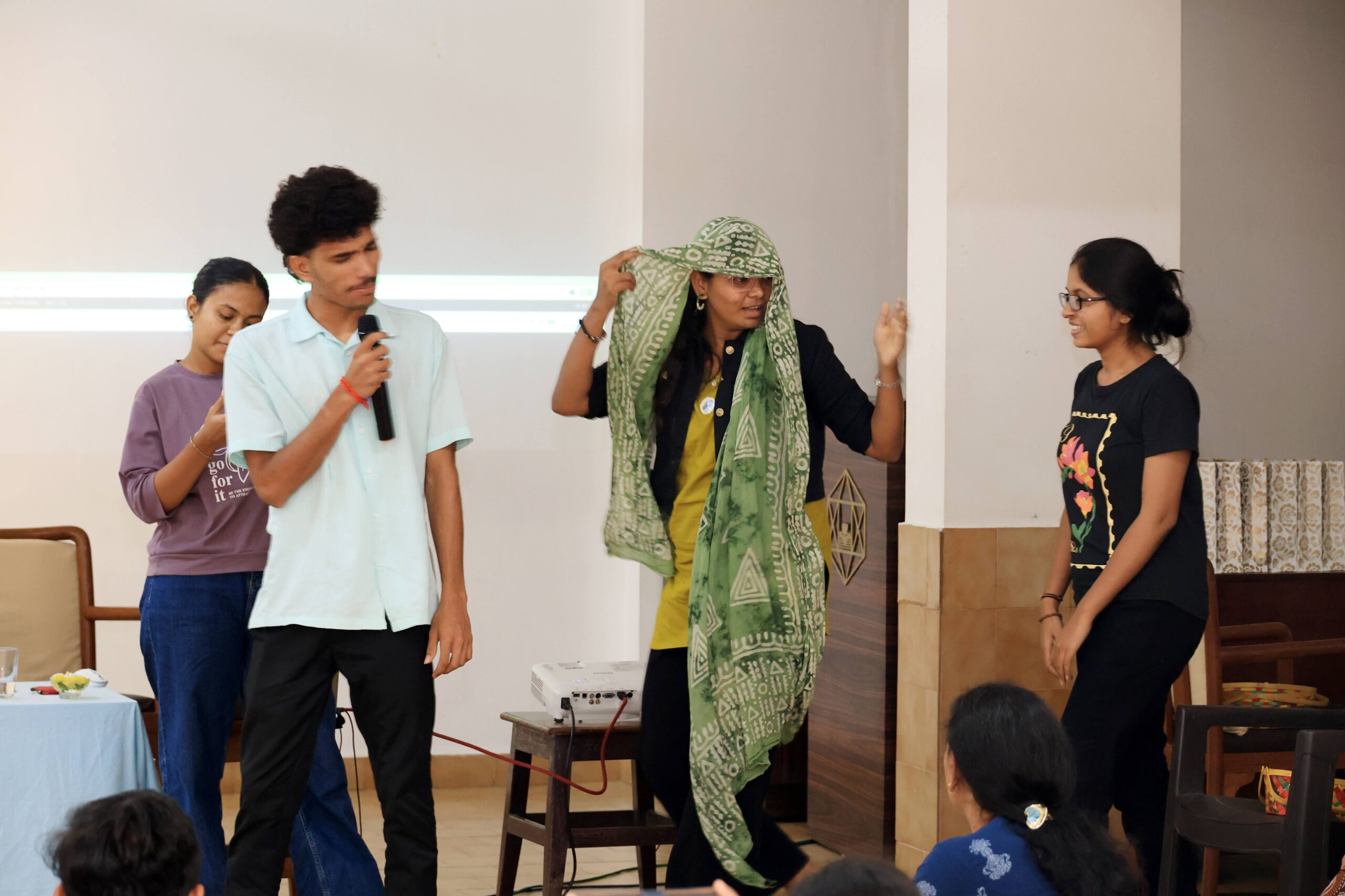
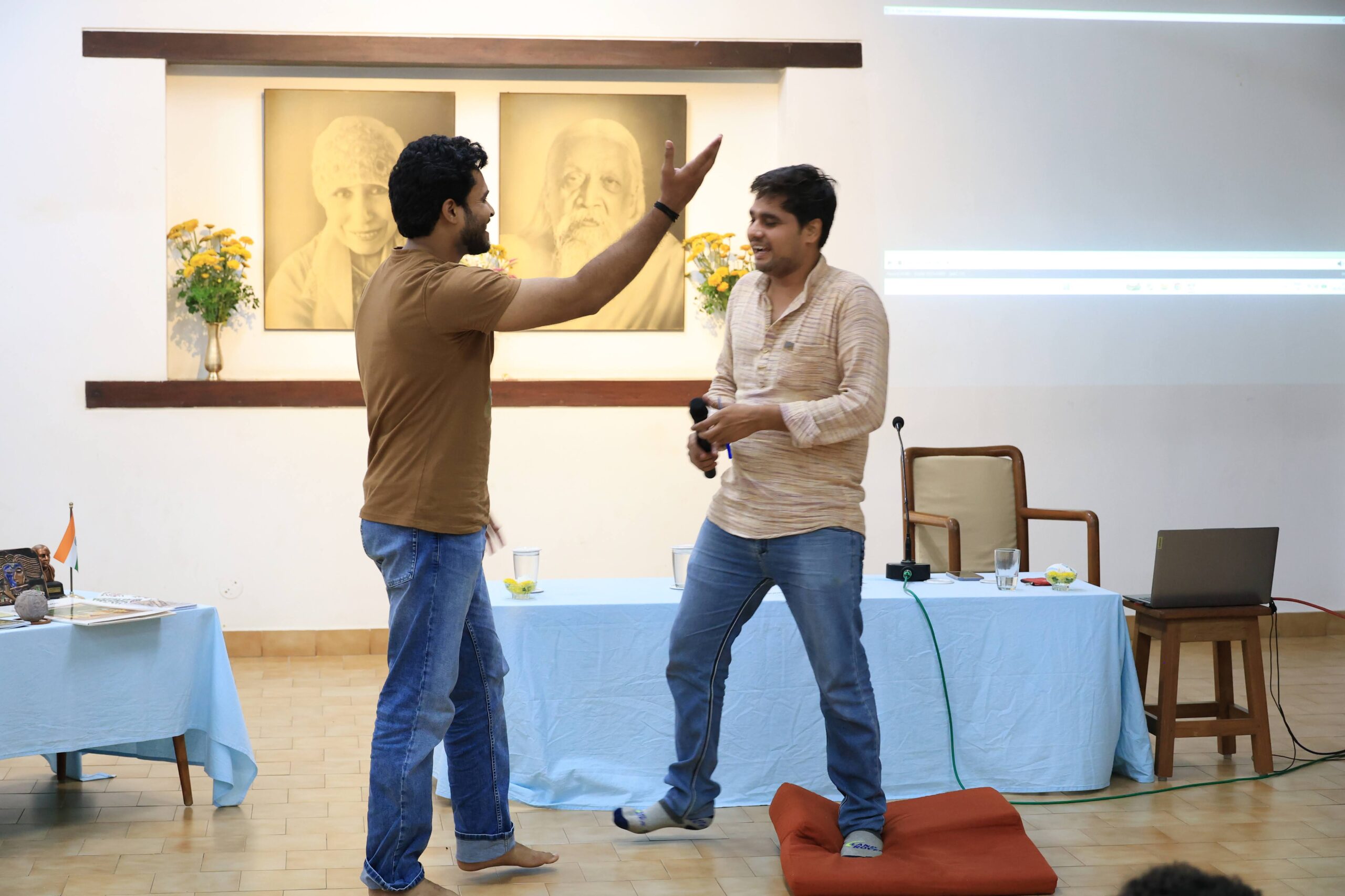
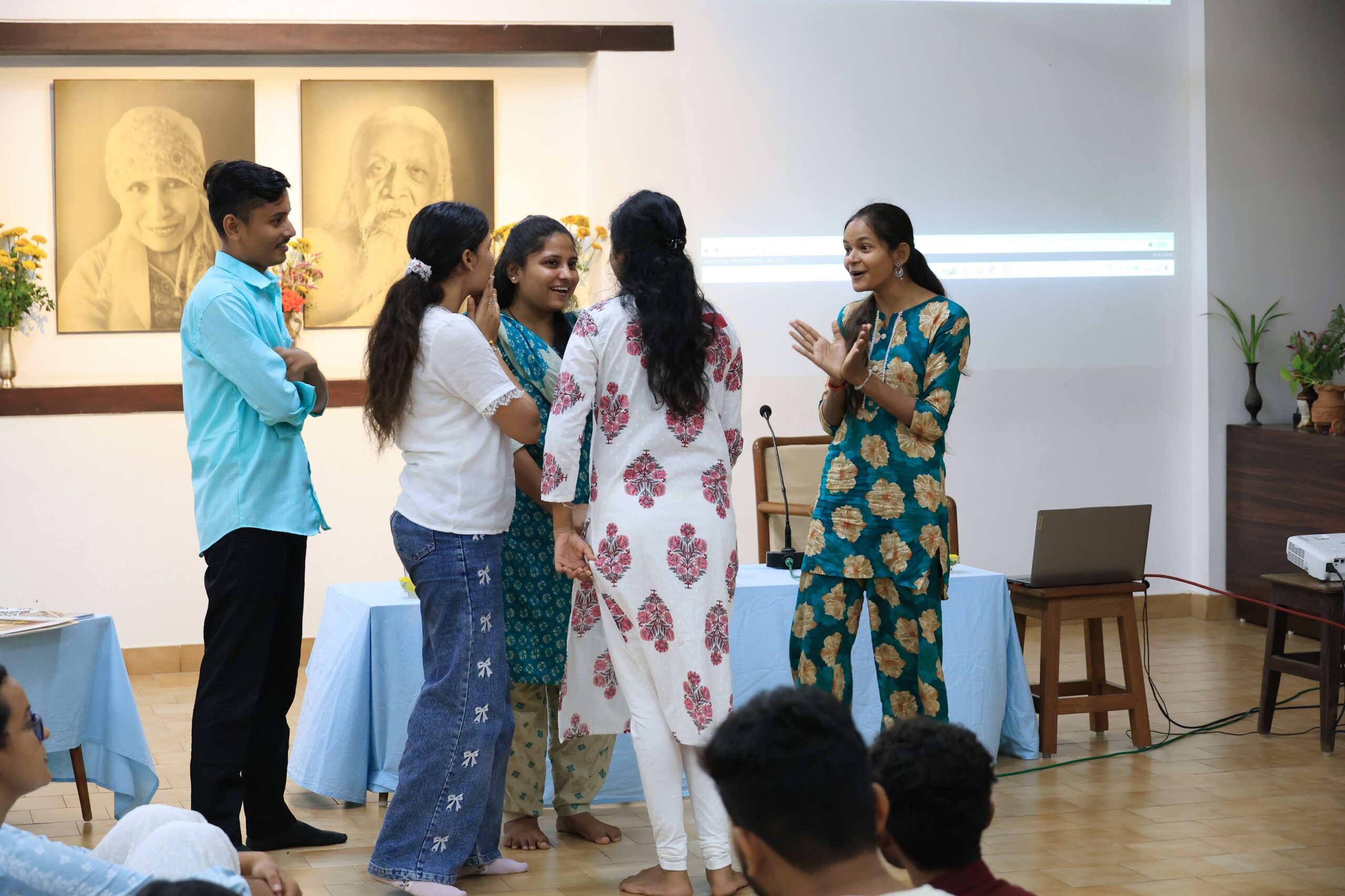
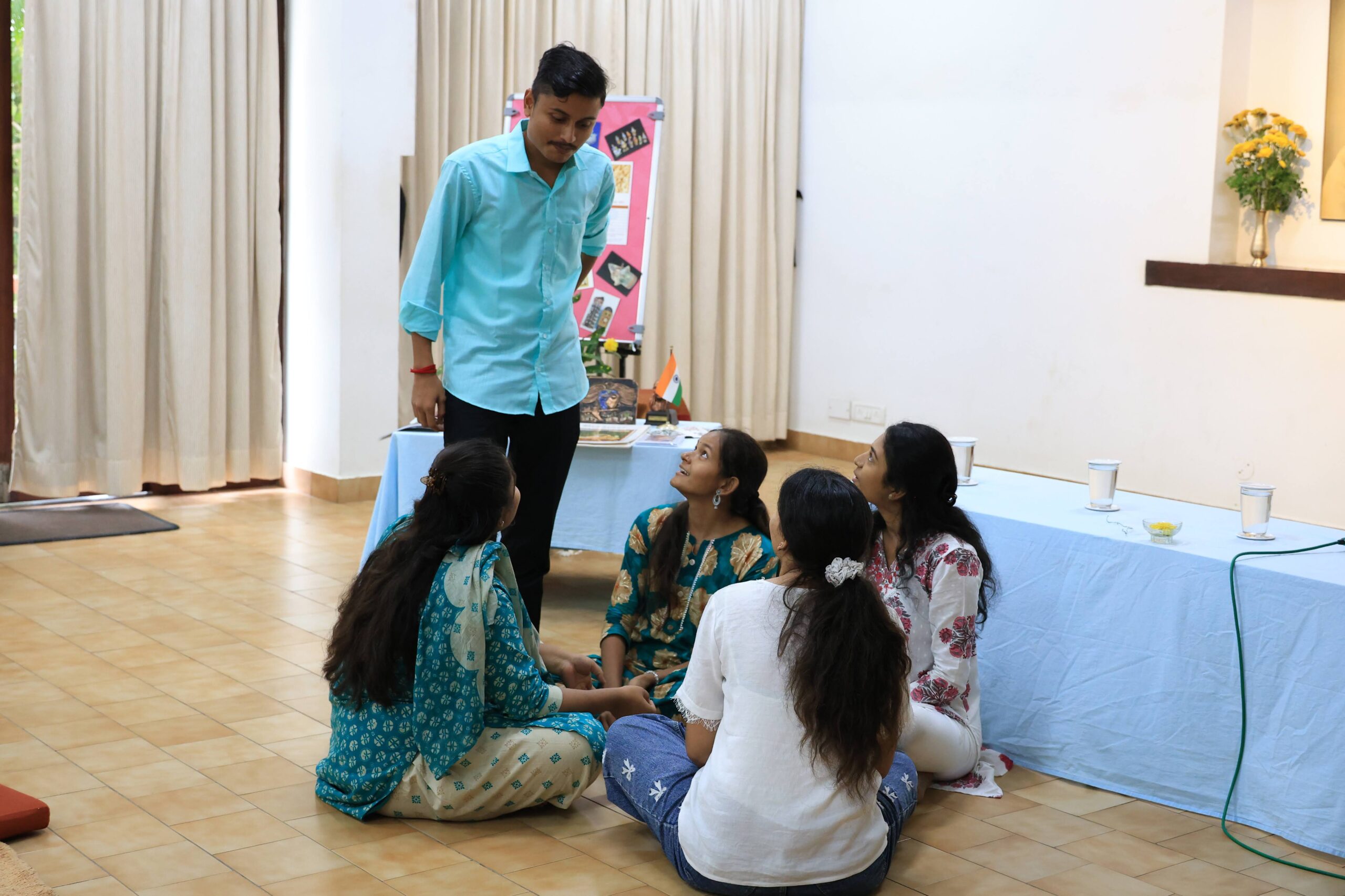
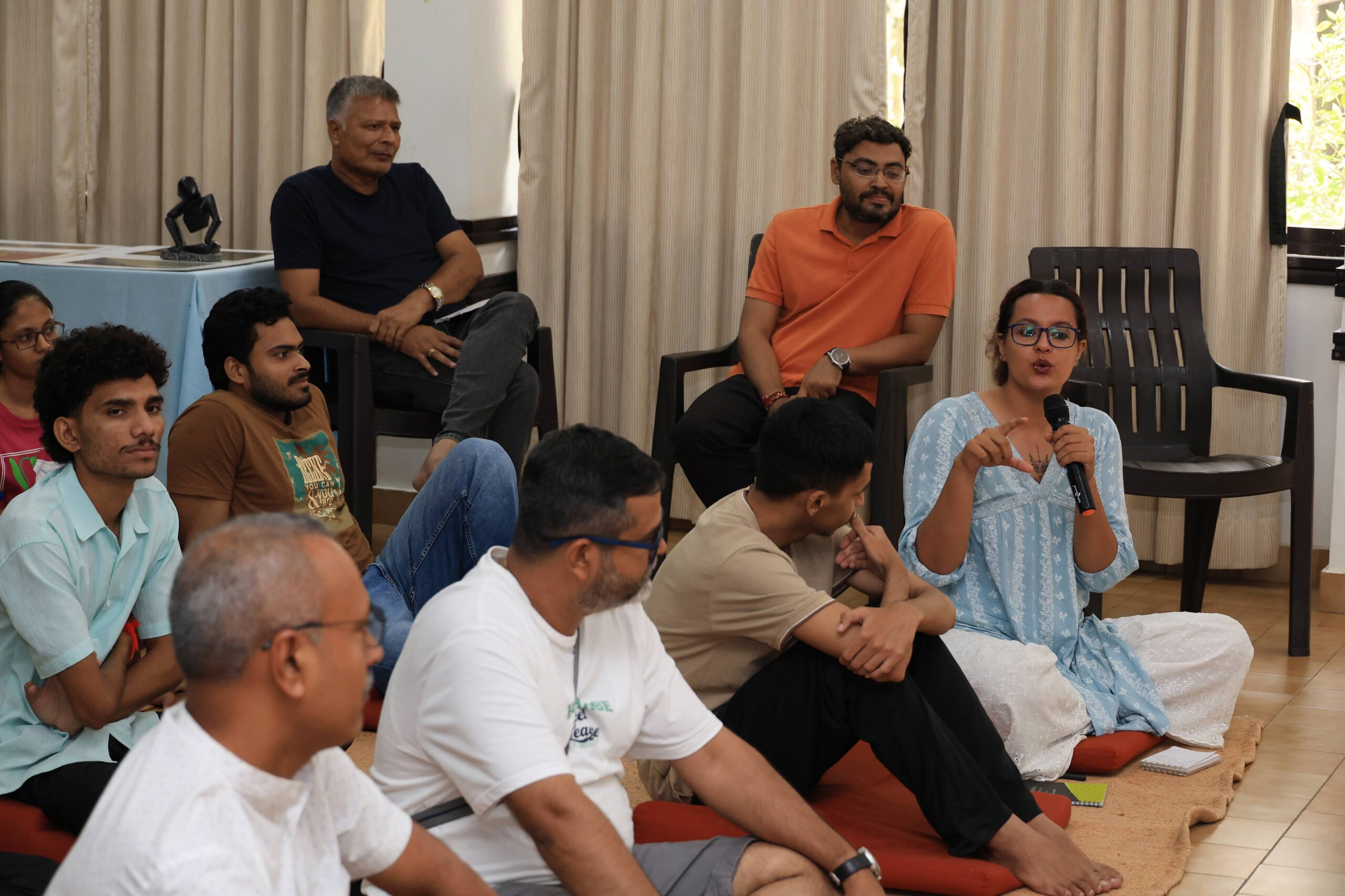
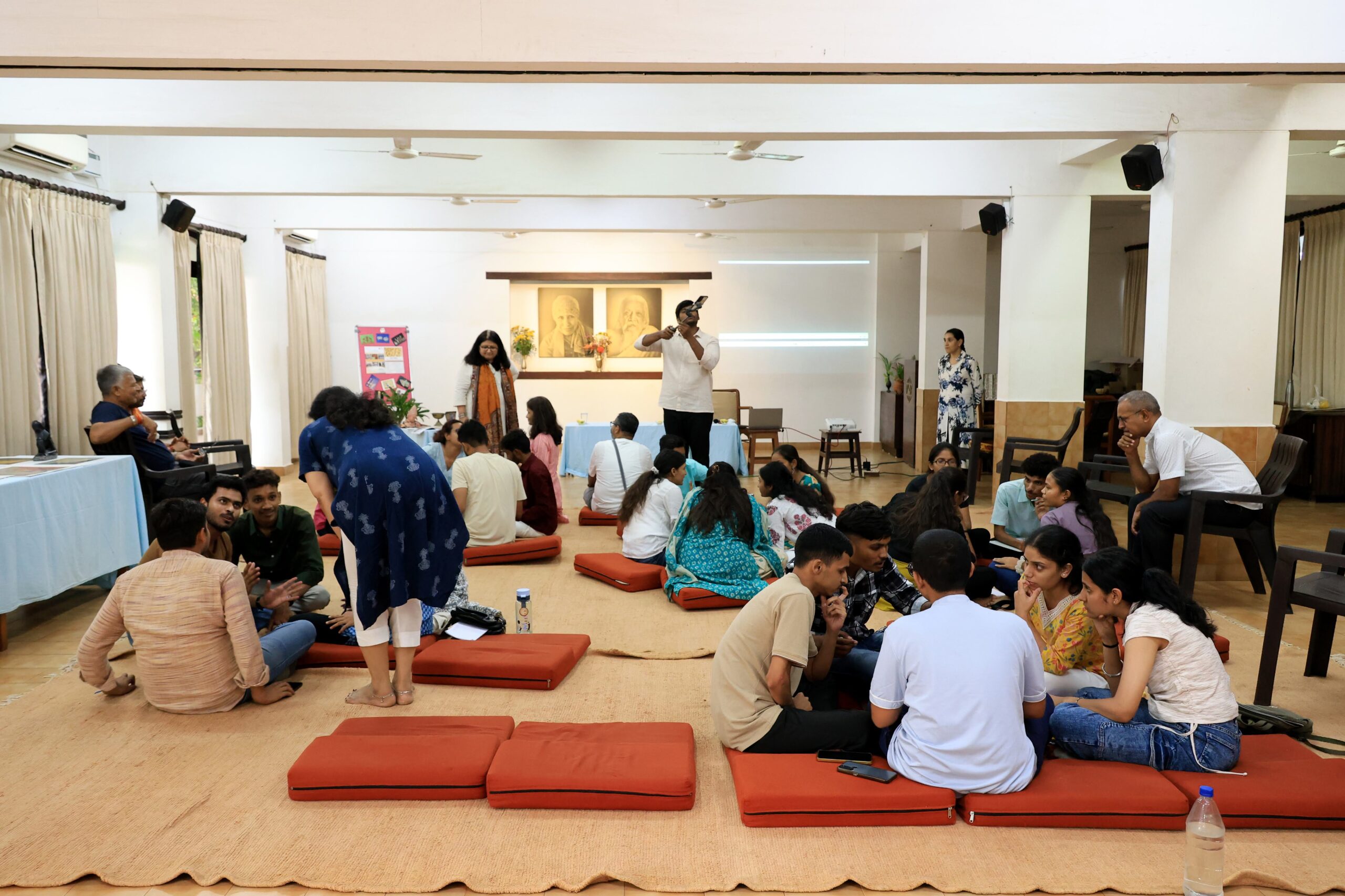
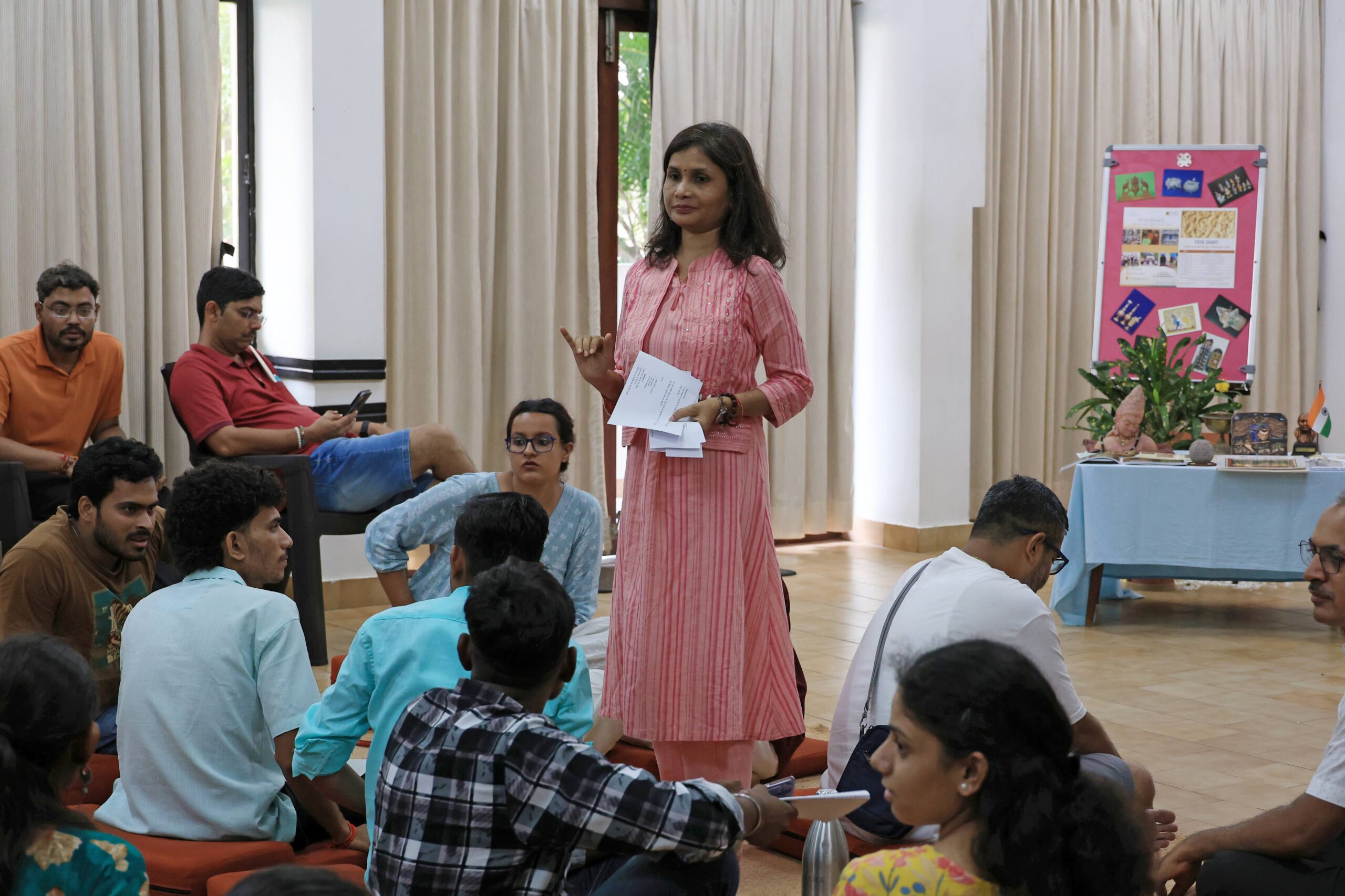
A brief discussion followed the video lecture, and points such as disinterested involvement in art experience were explained. Thereafter, students were divided into five groups and each group was assigned one specific rasa on which they had to prepare a short skit. The idea was that through their performance the audience should be able to experience the particular rasa.
Students enjoyed this experience of collaborating with their peers and then presenting their short sketches for all. A lot of creativity was on display during the group presentations. The professors and academic coordinators were also made to participate in a game inspired by different rasas.
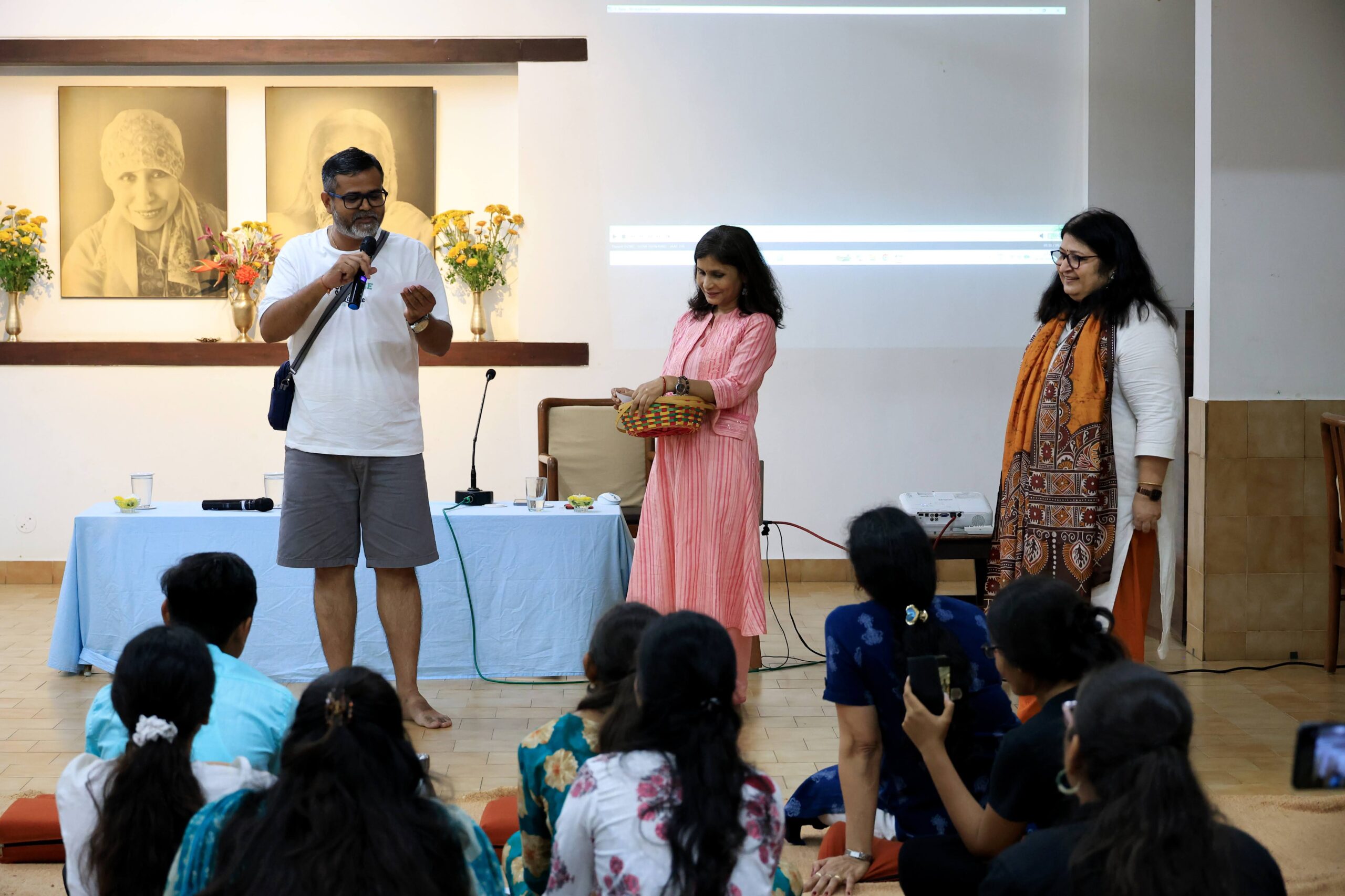
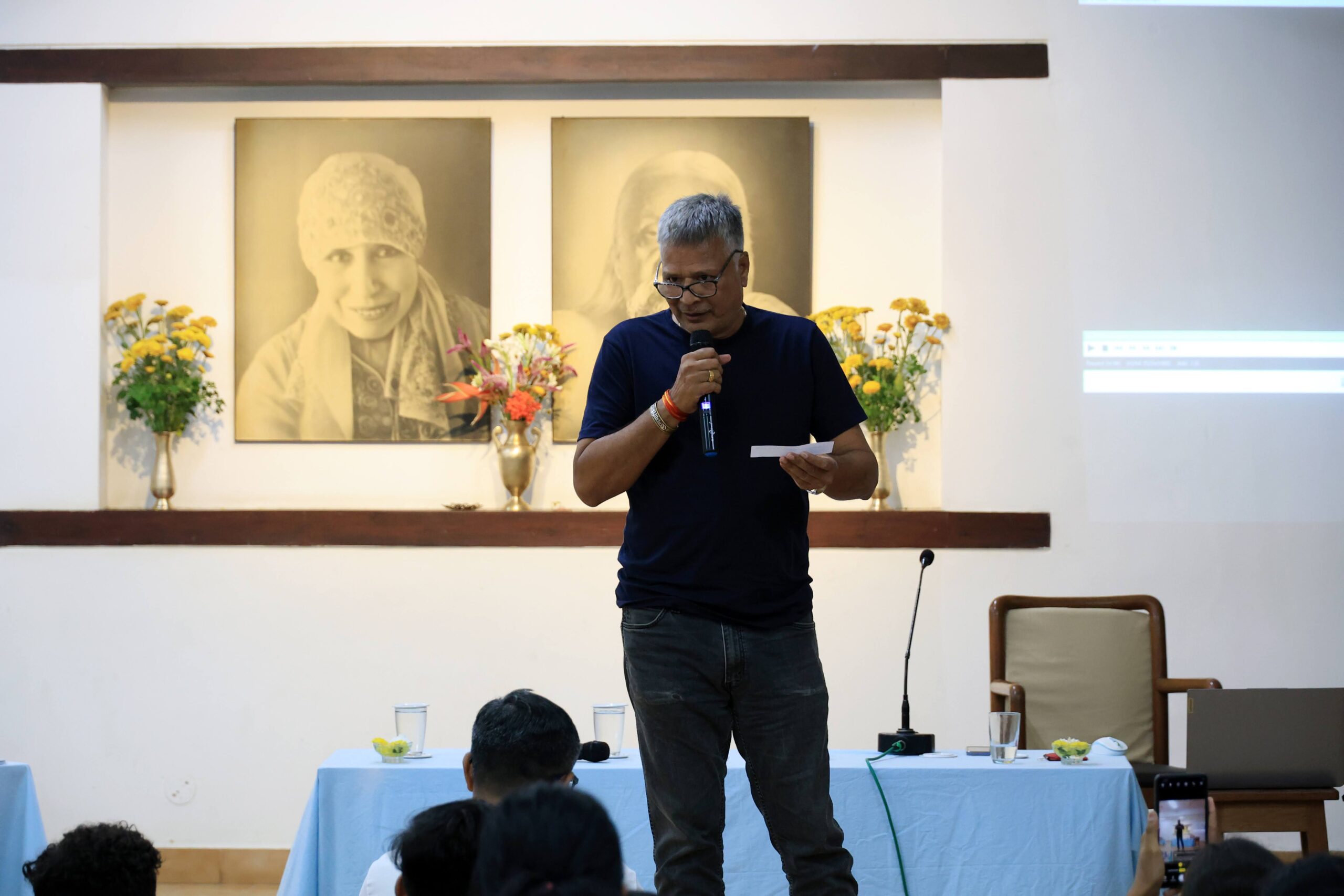
The workshop concluded with words of gratitude. Overall, the workshop was a huge success, and the sessions were appreciated by all the participants.
See photo and video gallery from the workshop HERE.
***
To know more about BhāratShakti Workshops see HERE.
To know more about BhāratShakti programmes under the theme Art and Spirituality see HERE.