
Date: September 16, 2026
Author: Beloo Mehra
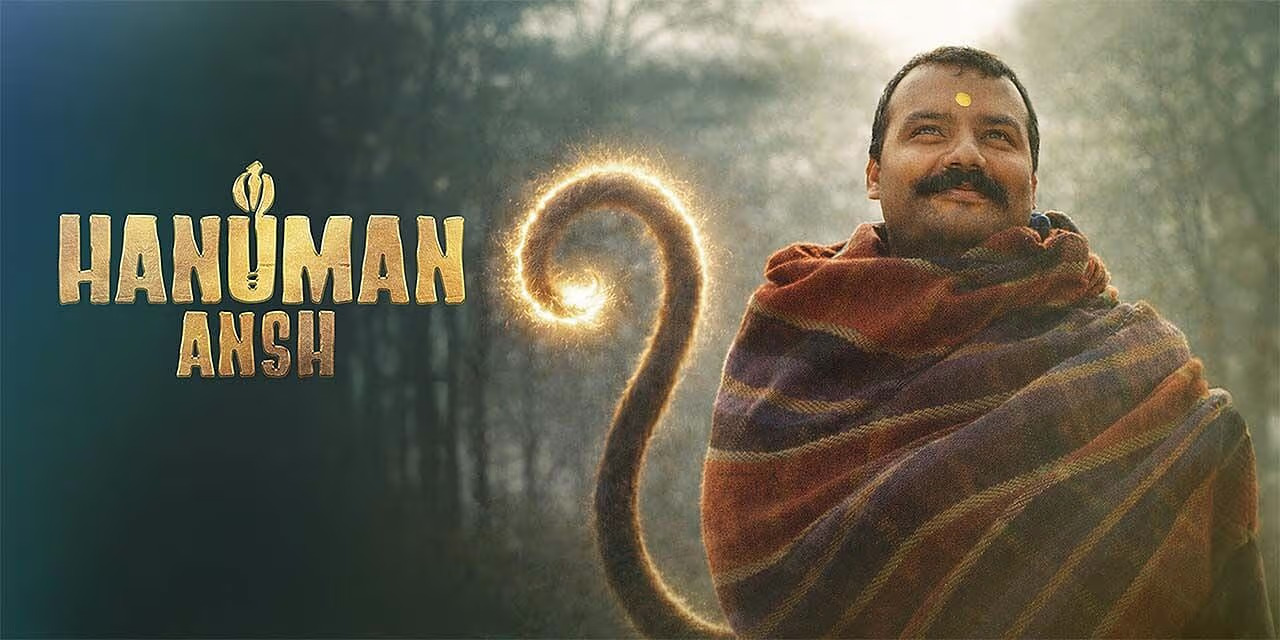
Much is being discussed about the recent Hindi film Hanuman Ansh, which is based on the life of one of the most revered saints of modern Bhārat, Neeb Karori Baba. Like millions of others who loved this film for its simplicity and uplifting feel, and for its message of the power of Bhakti for the Divine, I also felt a strong connection with the spirit in which this film has been made.
I was deeply moved by the sincerity with which the story of a great spiritual master has been portrayed, and could feel the purity of the intent, the bhaktibhāva of the filmmakers. It seems a deeper consciousness was guiding the project; and the impact is quite palpable throughout the film, at least it was for me. All through the film, my heart felt so full of Bhakti that it just kept flowing out from my eyes. Yet a part of me felt a deep silence — a solid peace in which there is a special knowing that all is well, no matter what is going on; all will be well no matter what may come.
Critics and reviewers have analysed its storytelling style, music, actors’ performances, etc. The spiritually inclined and bhaktas-at-heart are certain that some spiritual force — the Grace of Haumanji (the Ishta Devata of Neeb Karori Baba) and the Power of Babaji himself — is behind the film’s unprecedented success. Indeed, many subtle truths are most simply expressed through specific sequences in the film and its overall narrative —truths about the power of absolute devotion and faith in the Supreme, about the path of Bhakti Yoga. I focus only on a few which I found most powerful in the film. Things which have been resonating within since I experienced the magic of this film; things which reminded me of the truths I have long contemplated upon when reading the writings of Sri Aurobindo — truths about the soul of Bhārat, the great spiritual foundation on which our civilisation stands, and the essential Bhāratiya svabhāva.
Bhārat, that is India, is not merely a piece of piece of earth; she is a Power, a Godhead, says Sri Aurobindo. India is a living being, like Shiva, says the Mother. The film definitely makes one, once again, fall in love with that essence of Ma Bharati, Bharati Bhavani, the living Godhead which manifests herself in this Punya Bhoomi of Bhārat. Over the long march of time this indeed has been the chosen land for divine beings to descend.
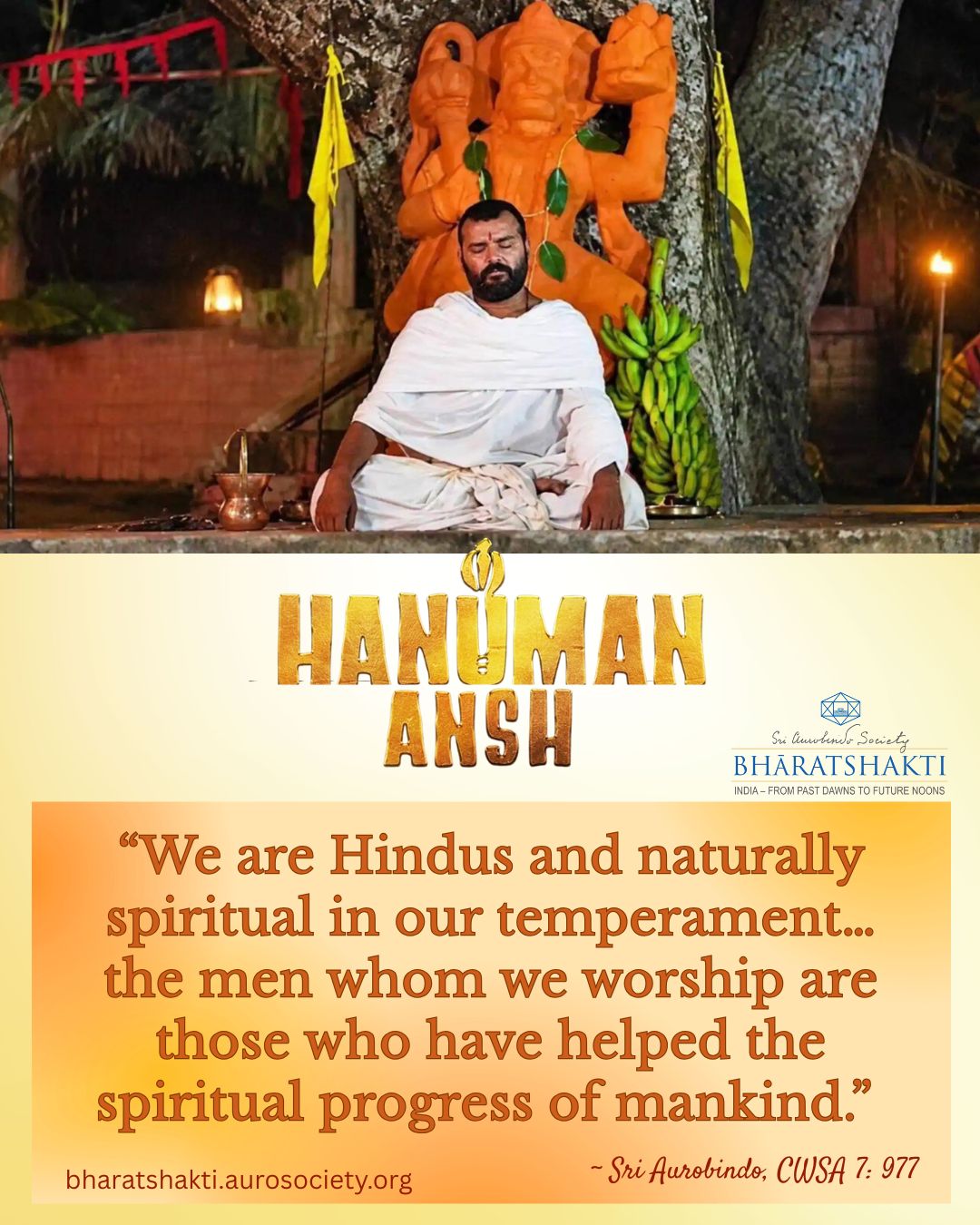
Sri Aurobindo speaks of India as the “eternal fountain-head of holy spirituality,” (CWSA 7: 876) and as “the centre of the religious life of the world & its destined saviour through the Sanatana Dharma” (CWSA 36: 178). And about our innate temperament he says, “We are Hindus and naturally spiritual in our temperament… the men whom we worship are those who have helped the spiritual progress of mankind” (CWSA 7: 977).
Why is this so? Because Bhārat, the land of the saints and sages, has been, for millennia, “the grand workshop of spiritual experiment, the laboratory of the soul”. Thousands of great spirits have been born in every generation on this land, men and women “who were content to work quietly in their own souls, perfect their knowledge, hand down the results of their experiments to a few disciples and leave the rest to others to complete”. The film captures this truth of Bhārat to the dot!
But there is more. How do these great spirits work? Why are Indians (and I don’t speak merely of those who are born in Indian bodies, but of all those who are awakened to the truth of spirit as the primary reality expressing itself through mind and matter) so drawn to not merely worship but adore and follow the path shown by these great saints and sages, these scientists of the soul, working in the “grand workshop of spiritual experiment”? Sri Aurobindo explains.
With no desire to proselytize and no eagerness to proclaim themselves, these great spirits that have “merely added their quota of experience and returned to the source from which they had come”. These were men and women “so full of God that they could not be satisfied with silent bliss, but poured it out on the world, not with the idea of proselytising but because they wished to communicate their own ecstasy of realisation to others who were fit to receive it either by previous tapasya or by the purity of their desires” (ibid.). With such outpourings of bliss, countless hearts have been touched, countless minds have found peace and countless souls have been awakened to the quest for the Truth.
This is how the core Bhāratiya svabhāva, over the course of time, has become essentially spiritual — or at the very least, conscious of the truth that spiritual attainment is the ultimate supreme ideal. Sometimes it just waits hiding behind the outer rational-agnostic-skeptic veil; only to be shown a little light, given a gentlest touch, and it surfaces. As Sri Aurobindo says emphatically, spirituality is the master-key of Indian mind!
Hanuman Ansh builds its story through the voices of some key narrators whose lives were touched and transformed in most intimate ways by Neeb Karori Baba, beautifully illustrating that Indian temperament very naturally accepts the truth that there is more to the visible world of Matter, that there is Divine Presence in all of the world and life which we see — and which we do not see, and that the spiritual aim of life can co-exist with other aims of life.
Despite the outer modernity, in much of urban India and certainly in small town and rural India one still witnesses a living, pulsating, throbbing human expression of an attempt constantly to bring the Divine closer to human. A makeshift temple under a tree which came up because someone placed there an old mūrti of a deity or simply a stone marked with holy red powder, or a picture of one’s favourite deity glued on the dashboard of a car or taxi — these are seen almost everywhere in India.
Bhakti, devotion and love for the Divine, is the most common form of spiritual practice for the vast majority of Indians. One can almost sense, in the general atmosphere, a power of living faith which perceives the Divine in All and Everything and yet Beyond All and Everything. Hanuman Ansh not only portrays this power of living faith through a beautiful story of a Self-realized spiritual master, a saint and a sage, a man “full of God”, it actually reminds the Indian collective psyche that its true strength lies in its essential svabhāva, that sooner the modern Indian mind aligns itself with its master-key the more confidently and assuredly it will find itself progressing in an integral manner. Through a heartful storytelling it reveals a profound truth of Bhakti Yoga, which Sri Aurobindo explains as follows:
“…by bhakti one becomes close to the Divine, becomes intensely aware of Him and arrives at knowledge, for the Divine is the Truth and the Reality; by knowing Him, says the Upanishads, one comes to know all. By bhakti also the will is led into the road of the works of love and the service of the Divine and the government of the nature and its acts by the Divine, and that is Karmayoga. By bhakti also comes spiritual change of the consciousness and the action of the nature which is the first step towards its transformation”. (CWSA 31: 687)
Another aspect which I found most illuminating concerns the very beginning of the spiritual quest of Neeb Karori Baba. As a young boy he seeks a way to re-unite with his mother who has left the mortal world. As is commonly explained to young children that the departed souls go to God’s abode, Lakshminarayan is also told the same thing. But unlike most children he is not satisfied with this answer; he truly believes that there is a way to go to God’s abode where he would be able to meet his mother. This is not a simple boy’s grief talking. He is convinced. And like Nachiketa of the yore, he leaves his home to find a way to go to God’s abode. The way to the Mother’s Home will require a guide — a guide who has been on this journey before, one who has found the Lotus Feet of the Mother. It could only be Hanuman, about whom Sri Aurobindo gives a simple equation — “Hanuman = complete bhakti” (CWSA 30: 157).
In the Sundara Kanda of Ramayana, Hanuman goes on a search for Mata Sita. It is the journey of an aspiring soul which has surrendered to the Supreme Being, Sri Rama, but Him it can know fully only through the Grace of Mother Divine. Hence the quest for the Mother’s abode so that the soul may surrender at Her Feet. When the journey seems too hazardous and clouds of despair and discouragement cover Hanuman’s heart and mind, only the name of the Lord is his aid. Because he is a surrendered servant of the Lord, he is able to face whatever dangers come on the way. On its journey to the Lotus Feet of the Supreme Shakti, the soul meets several hurdles and obstacles — lures and trappings that attract and bind the lower nature — but true Sraddha and Bhakti for the Lord are its saviours.
Hanuman Ansh captures this essence of Sundara Kanda beautifully as its builds up its narrative — either through the story of Neeb Karori Baba himself or the side stories of his early disciples and followers. As an eternal servant to Sita Ram, Hanuman’s ultimate charge is to open the way to unite Shakti (Sita) with the Supreme Being (Ram); Babaji’s simple teaching has been to see this oneness of Sita and Ram in everyone, the oneness of Nature and Spirit, Dynamism and Stillness, and selflessly serve everyone with love, like Hanuman. The simplest method he teaches is Nama Japa. SitaRam SitaRam.
“The name of the Divine is usually called in for protection, for adoration, for increase of bhakti, for the opening up of the inner consciousness, for the realisation of the Divine in that aspect” (Sri Aurobindo, CWSA 29: 327).
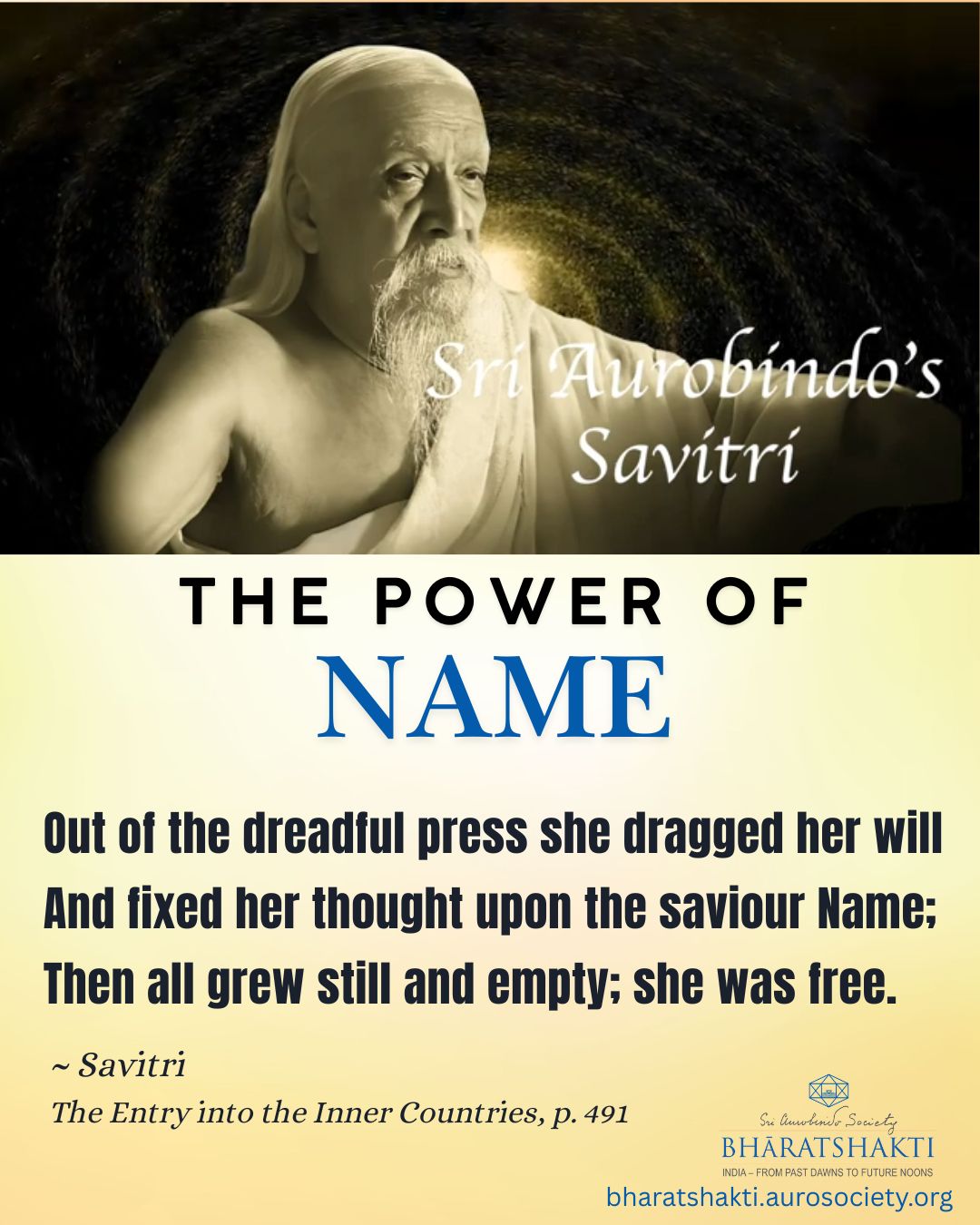
While watching Hanuman Ansh in silence, I felt that as the theatre filled with chants of SitaRam SitaRam (and other names of Bhagavan), coming from the mouths of film’s characters or through its music track, the power of Nama Japa almost became a living experience. Countless others would have experienced something similar; no wonder many people all across the country are removing their shoes and sandals as they settle in the theatres to experience this film. This is the spirit and strength of Bhakti in which a Bhāratiya soul blossoms.
Several other aspects of this film moved me deeply, but perhaps some things are best left unexpressed. Let me conclude with this: I am still in awe of the magical way this film does its work on the heart of a God-lover.