
Date: January 10, 2026
Venue: Bhopal Literature Festival, Bharat Bhavan, Bhopal
Watch the Recording
On January, 10, 2026, Mr. Narendra Murty, Research Associate, BhāratShakti was invited to deliver a talk at the prestigious Bhopal Lit Fest, on the topic “Sri Aurobindo: The Revolutionary, The Yogi.” The session was moderated by Dr. Reema Hooja, Archaeologist, Historian, Writer and a Fellow of the Royal Asiatic Society.
Dr. Reema Hooja as host and moderator welcomed and introduced Mr. Narendra Murty as an author and asked him to say a few words about the books he had written. After some introductory remarks by the moderator on Sri Aurobindo, Mr. Murty was invited to give a short description of Sri Aurobindo’s life.
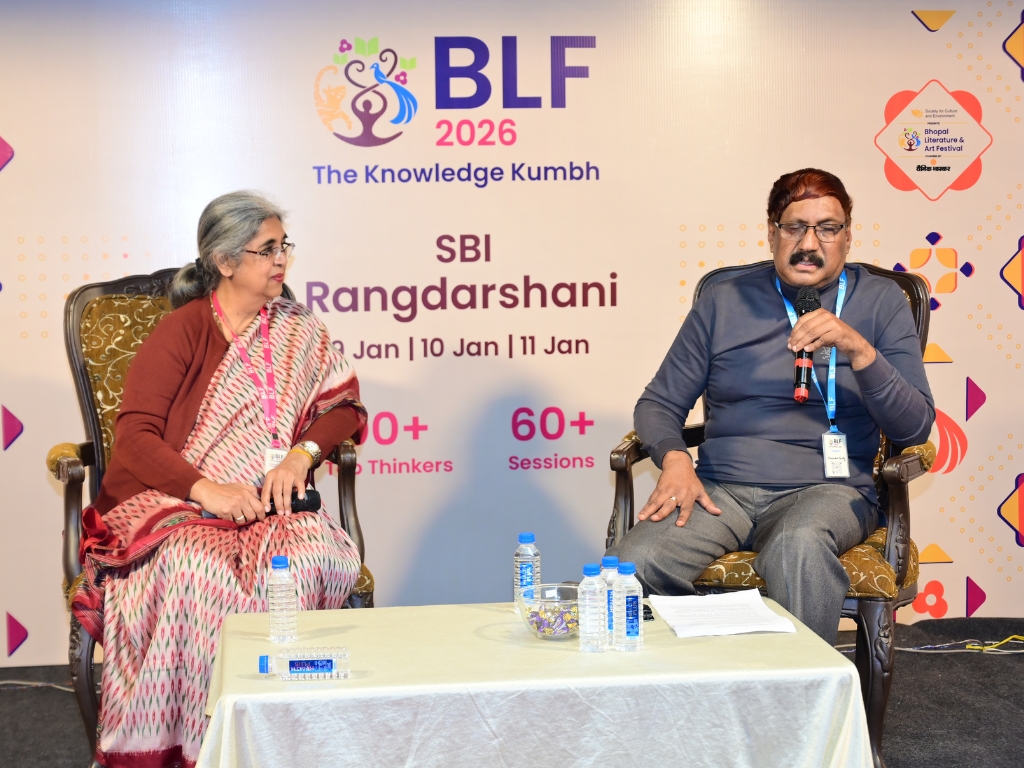
Mr. Murty highlighted some aspects of the work Sri Aurobindo did in the service of the Maharaja of Baroda and as a professor at Baroda college, about his first political writings in Indu Prakash and how this phase led to the future revelation Sri Aurobindo as a Revolutionary and “prophet of Nationalism”.
Mr. Murty then spoke about the tumultuous days of Partition of Bengal, and the active plunge of Aurobindo Ghose (as he was called then) into national politics after quitting his job in Baroda, his going to Calcutta as the first Principal of Bengal National College and his fiery articles in Bande Mataram. He said that all the revolutionary ideas relating to our freedom struggle like Swadeshi, Boycott, Non-cooperation and most importantly Purna Swaraj were first voiced in India by Sri Aurobindo through his articles in Bande Mataram.
The audience were also informed that Sri Aurobindo also lent his guidance and support for the armed revolutionaries behind the scenes though outwardly, through his writings, he was advocating non-violent resistance. He was increasingly becoming inconvenient for the British government and they put him in jail and trial under the famous Alipore Bomb Conspiracy.
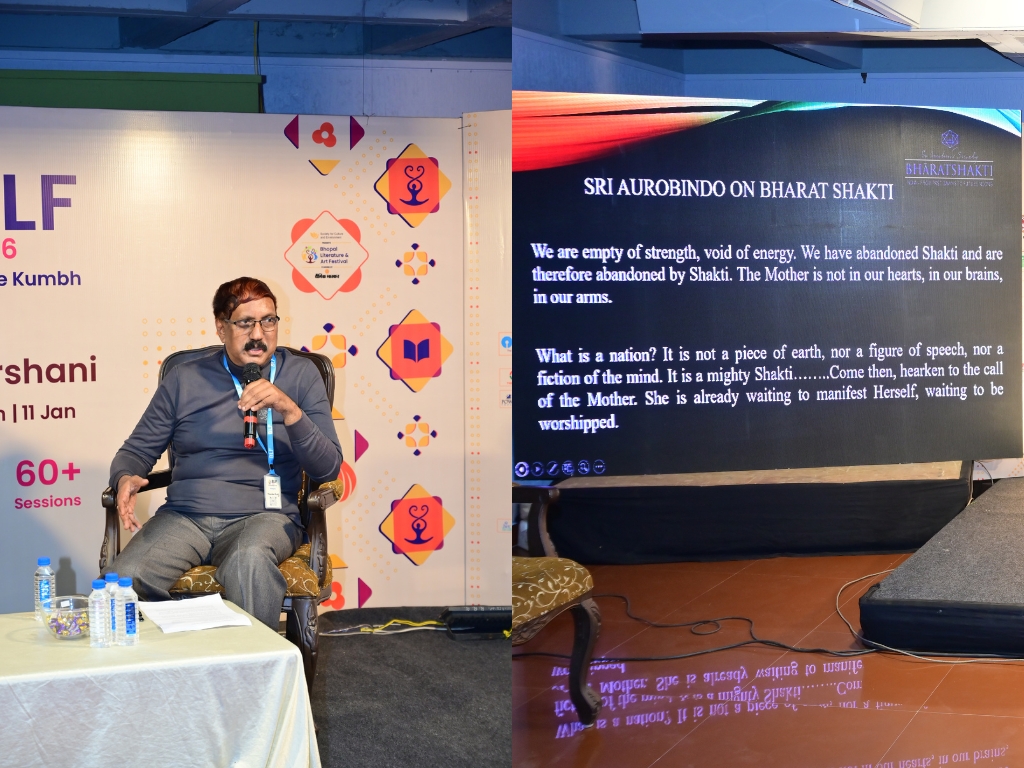
Then a short mention was made about the divine experiences the revolutionary Aurobindo Ghose had in the jail and how he was finally acquitted after one year and about the final summing up by the defence counsel Chitta Ranjan Das where he described Aurobindo Ghose as the “poet of Patriotism, the prophet of Nationalism and the Lover of Humanity”.
Mr. Murty informed the gathering that this was followed by the continuation of Sri Aurobindo’s work in two newspapers namely, Karmayogin and Dharma. And then the close of his revolutionary life came in the form of an “adesh” to go to Chandan Nagar and then to Pondicherry.
After this, the Yogic phase of Sri Aurobindo’s life was brought up and about the beginning of the writing of Arya and about the significance of the word “Arya”. In response to the moderator’s question, Mr. Murty spoke about the meeting with the Mother in 1914 and how finally Sri Aurobindo Ashram was established in 1926 and also about the significance of Siddhi Day. Then a few words were shared about how Integral Yoga differs from the other forms of Yoga and about the Supermind and how that is going to bring about the next stage of the evolution of the human consciousness.
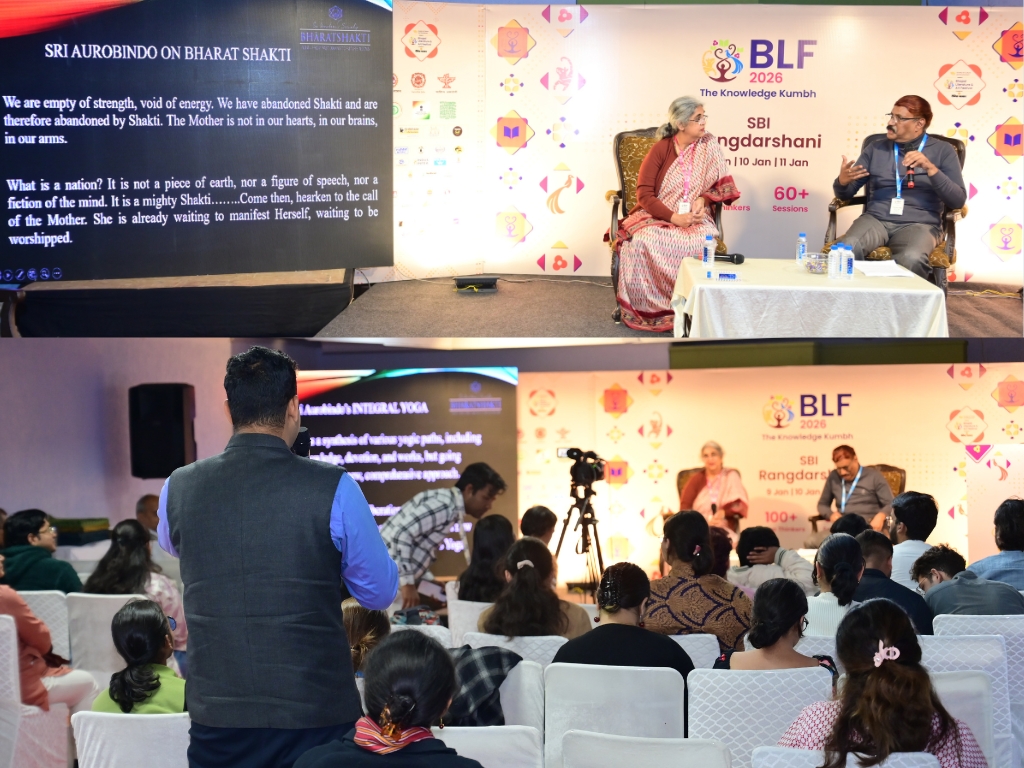
During the interaction session an interesting question was addressed about “why it is so difficult to follow Sri Aurobindo”. Mr. Murty shared his own experience in this regard and gave specific guidance to the audience about how to go about reading the works of Sri Aurobindo.
The gathering included mainly a young audience and the discussions continued with several of the enthusiastic participants after the official close of the session.