
Date: November 28, 2025
Venue: Om Shanti Dham Gurukulam, Karnataka
Photo-gallery
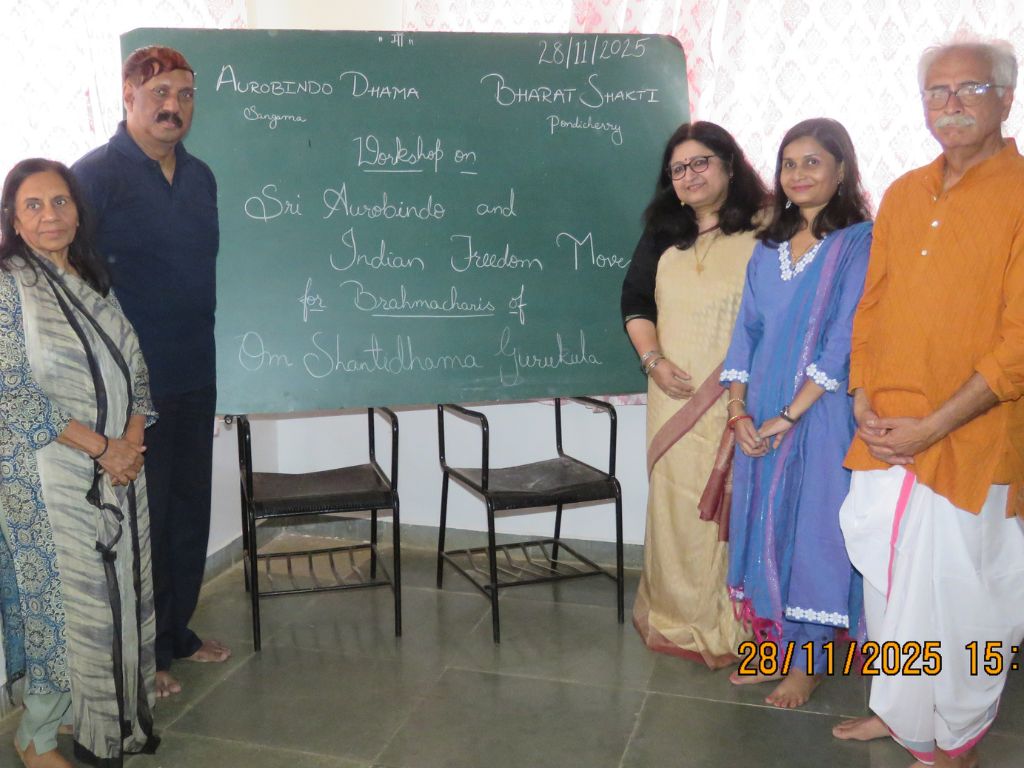
The BhāratShakti department of Sri Aurobindo Society was invited to curate and conduct a day long workshop for about 75 students (ages 12-16) on the theme – “Sri Aurobindo and the Indian Freedom Movement” on 28th November, 2025 at Om Shanti Dham Veda Gurukula, Karnataka. The workshop content was planned, researched and curated by Dr. Beloo Mehra, Director, BhāratShakti and Ms. Biswajita Mohapatra, Design & Admin Assistant, both of whom also facilitated several sessions throughout the day.
Other session facilitators included Mr. Narendra Murty, Research Associate, BhāratShakti and Dr. Suhas Mehra, Volunteer, BhāratShakti. The acharyas, teachers and the administrators of the Gurukulam provided valuable support with the logistics and coordination.
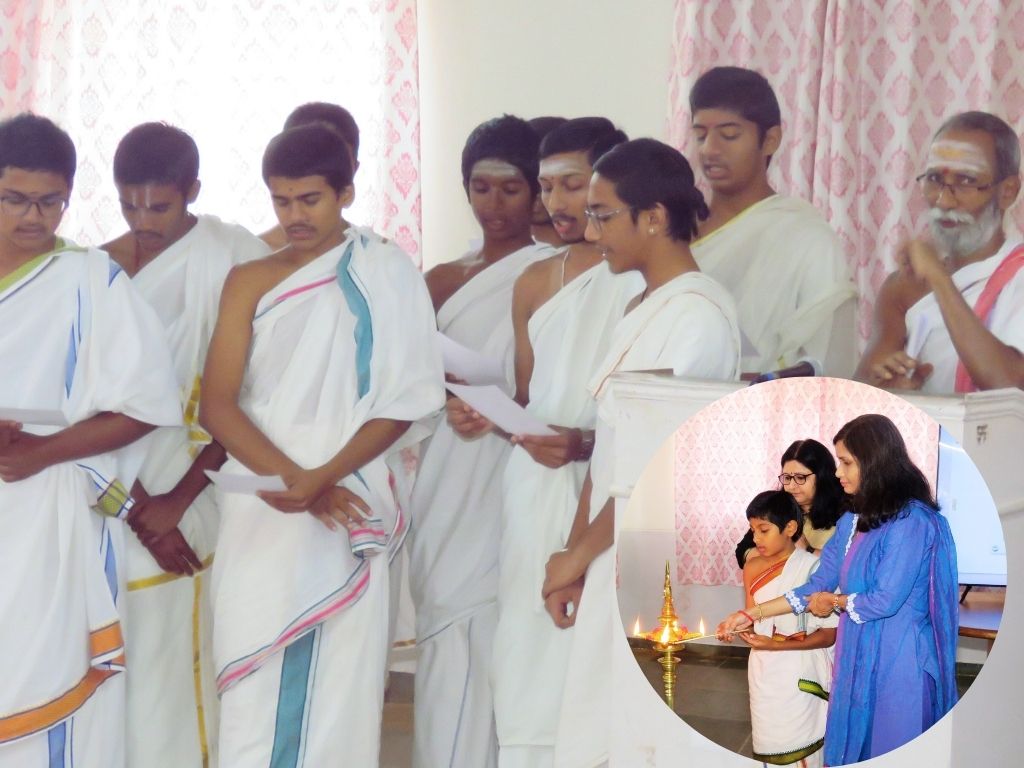
The day’s events started with the lighting of the lamp and the chanting of Guru Stotram by the students of the Veda Gurukulam. A brief welcome address was delivered by Guru Lambodhar ji, the kulapati of the Gurukulam.
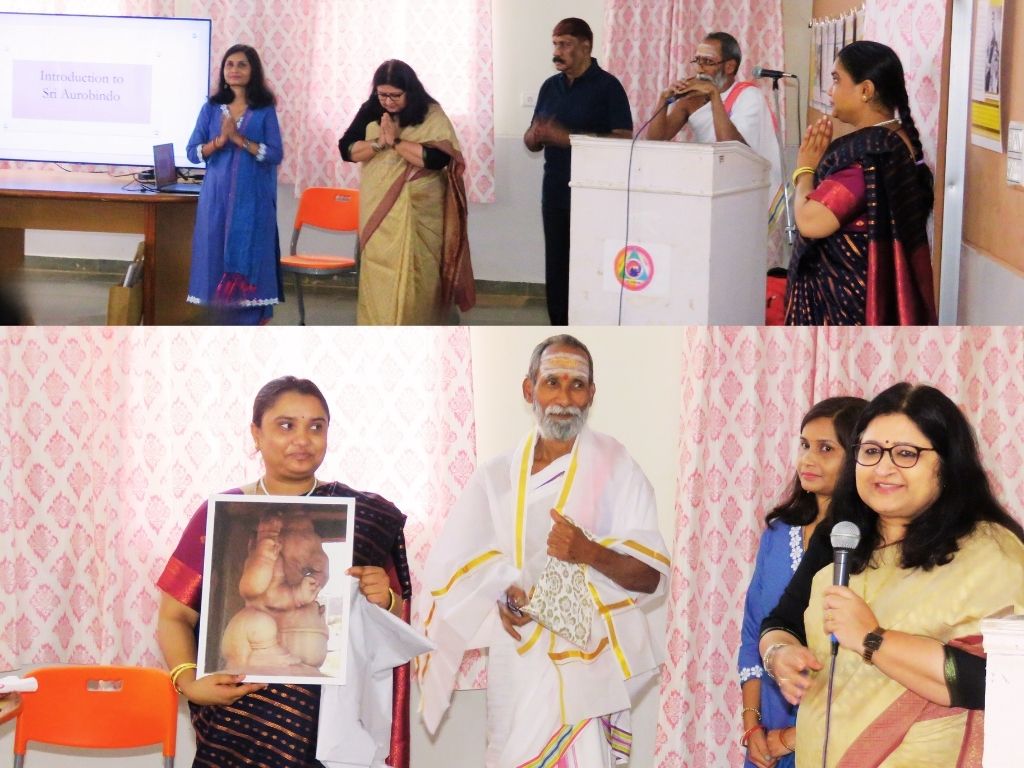
The workshop was designed with an aim to introduce the students to some important aspects of Sri Aurobindo’s contribution to the Indian Freedom Movement and his tremendously important work in this respect before he moved to Pondicherry in the year 1910. The topics that were presented included:
- Introduction to Sri Aurobindo
- Interactive session on “My Dream for India”
- Presentation on “Sri Aurobindo and the Freedom Movement”
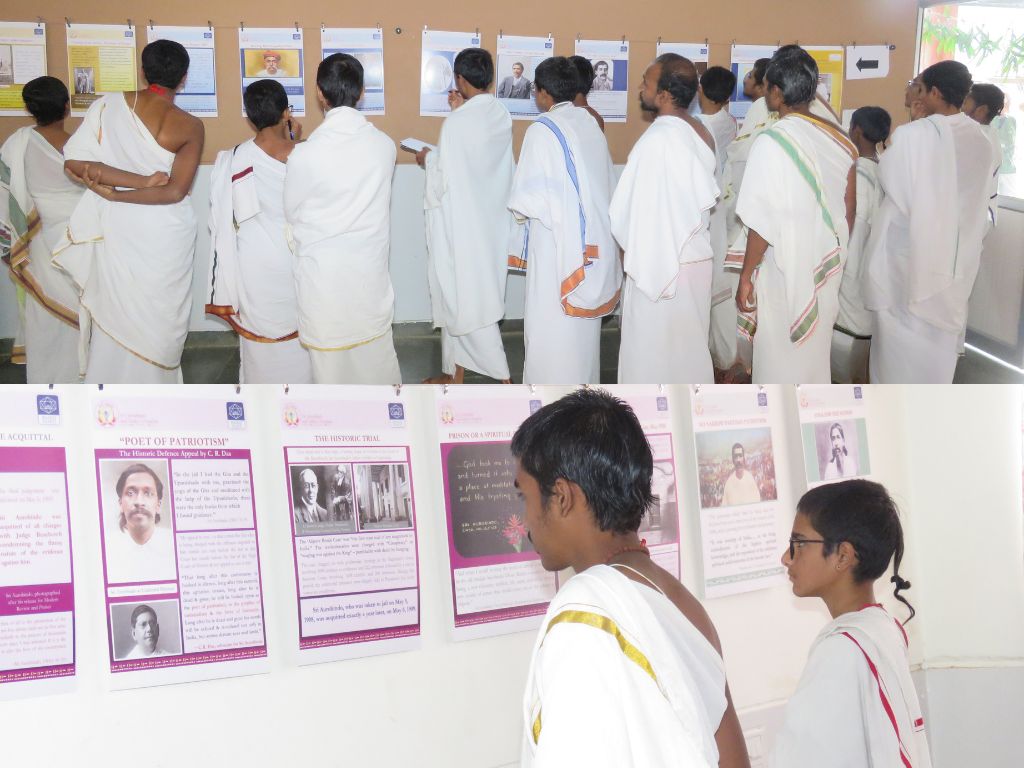
- 38-poster Exhibition documenting Sri Aurobindo’s work as a yogi-revolutionary
- A short film followed by a discussion on “Sri Aurobindo’s Message for the Students”
- A fun game on expressing the “Navarasas” for the younger age group
Students were divided into two groups – ages 12-14 and 15-17, and similar content was creatively presented in an age-appropriate manner the groups. The first group consisted of students of Class VI and VII and the second group from Class VIII to XII. The sessions included a variety of activities including exploratory interactions, experiential activities and storytelling.
The evolution of Sri Aurobindo from a teacher’s role in Baroda to a political journalist churning out fiery articles against the British rule in Bande Mataram was traced and presented to the students in an easy and attractive manner. This was supplemented by a 38-Poster Exhibition which showcased key phases of Sri Aurobindo’s life – from his return from England in 1893, his journey from a teacher in Baroda, to his plunge into Indian politics, to his leadership of the revolutionary forces and his powerful critique of the colonial masters though his writings, his imprisonment in the Alipore Bomb Case, subsequent acquittal and C.R. Das’s prophetic utterance about Sri Aurobindo being “a poet of Patriotism, a Prophet of Nationalism and a lover of Humanity”.
All these aspects were brought out in the presentations as well as in the Poster Exhibition with attractive pictures and quotes. The post imprisonment phase where he emerged as the editor and Karmayogin and Dharma and his departure from Kolkata as well as from active politics to Pondicherry in 1910 was also covered. Students brought in some interesting questions to explore the content in a bit more detail.
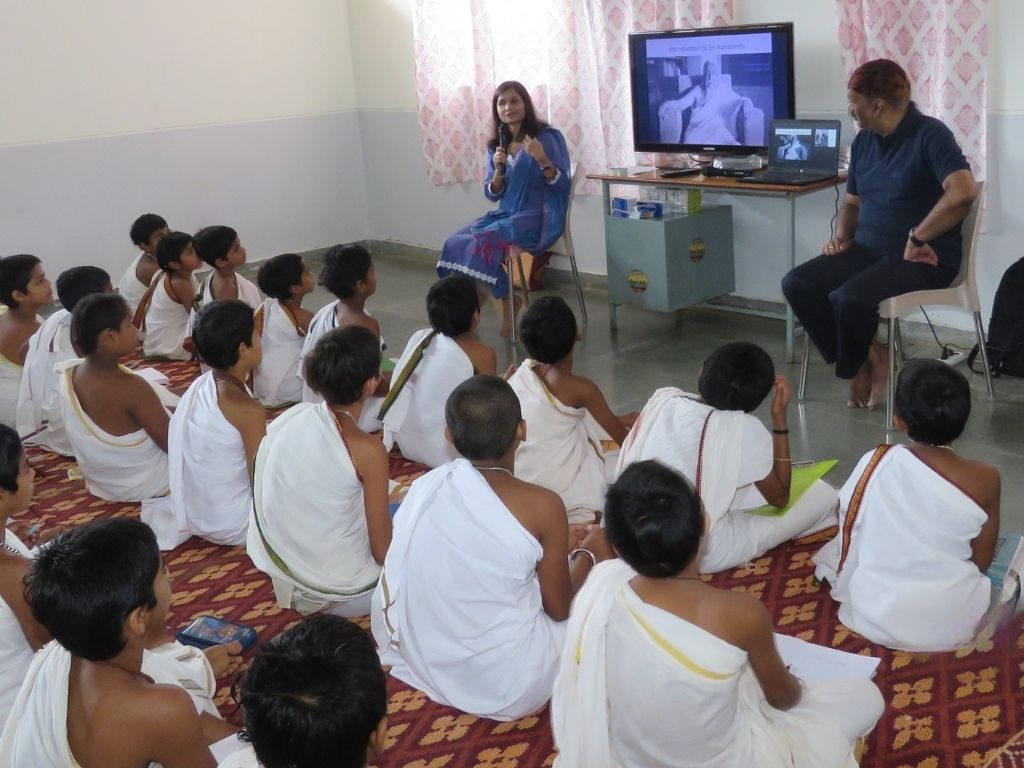
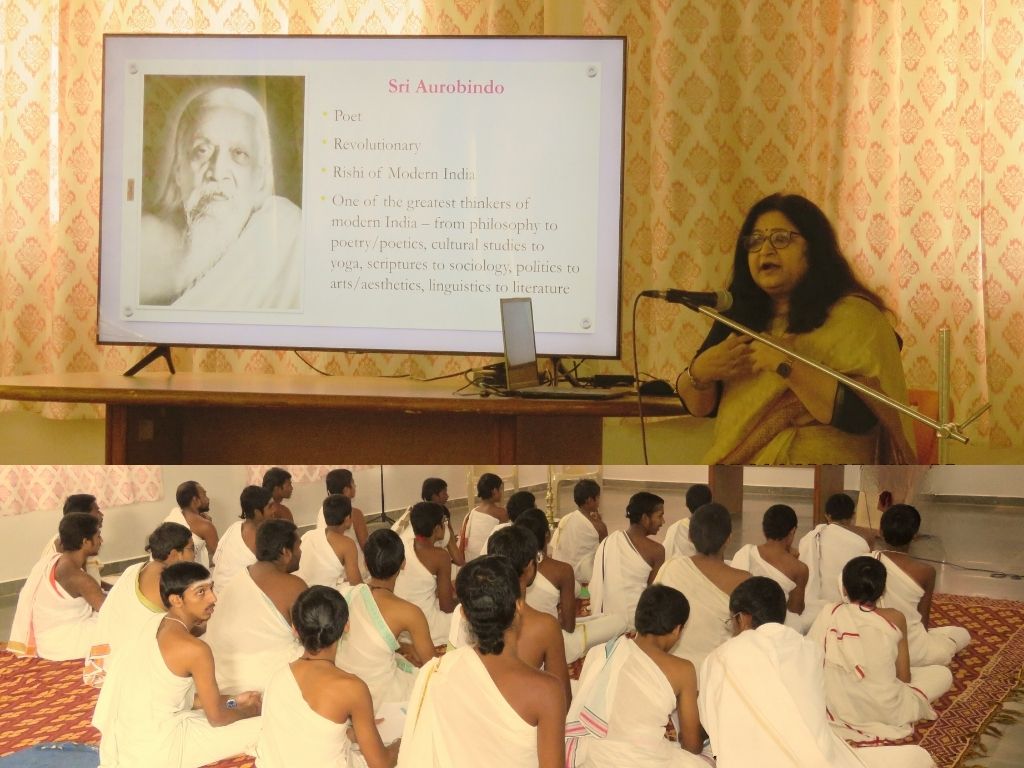
For the younger age-group students, under the subject “Introduction to Sri Aurobindo”, Ms. Biswajita Mohapatra briefly presented key aspects of the outer life of Sri Aurobindo showcasing some fascinating pictures starting from his birth, education in England, return to India and up to his departure to Pondicherry. This was highly appreciated by the students who could see how Sri Aurobindo looked in the various stages of his growing up and adulthood.
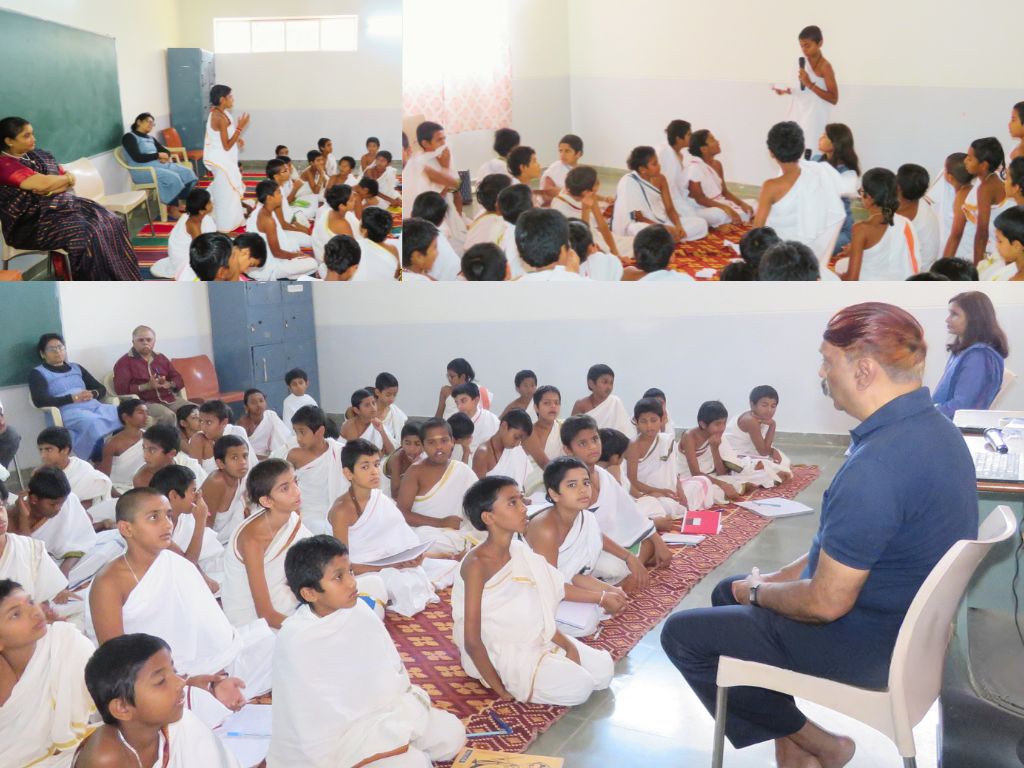
In a parallel session, similar themes and photographs were presented and discussed by Dr. Beloo Mehra for the senior students’ group. Dr. Mehra adopted a more storytelling approach to highlight certain key aspects from the early life of Sri Aurobindo and connecting them with some of the contemporary issues so as to help students develop a deeper insight.
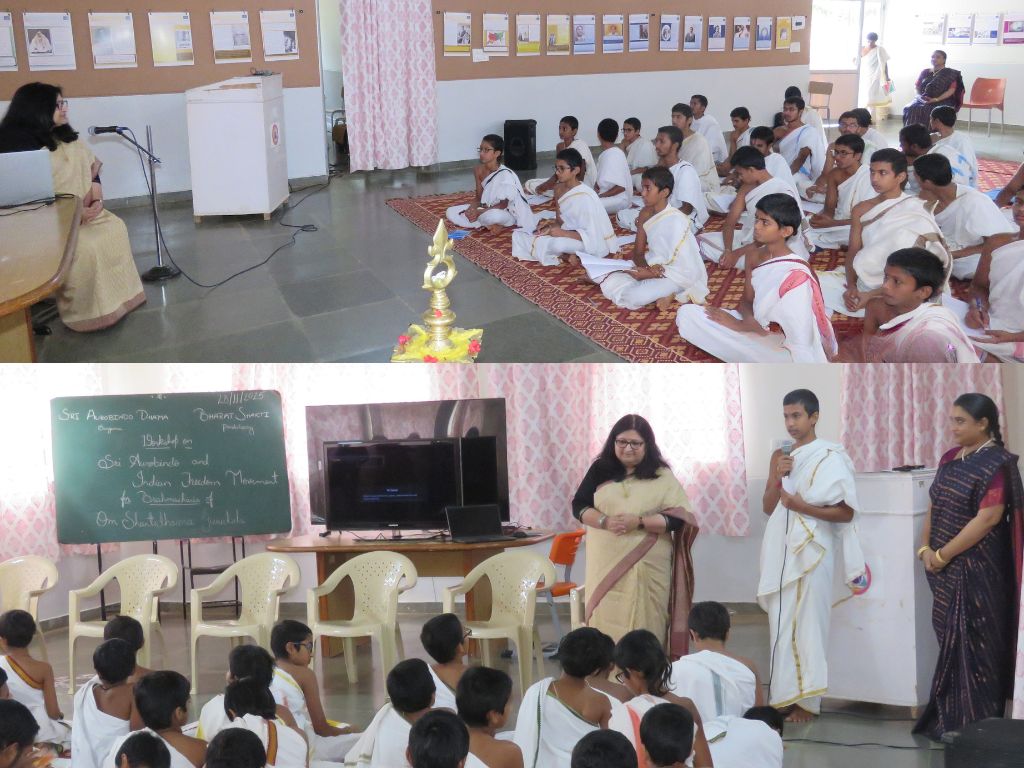
Under the subject “Sri Aurobindo and the Freedom Movement”, Mr. Narendra Murty gave a presentation for the younger students. Sri Aurobindo’s political career and his work as a patriotic journalist who instilled the minds of his countrymen with the idea of Purna Swaraj was highlighted. He told the students about Sri Aurobindo’s political writings starting with Indu Prakash and then moving on to Bande Mataram, Karmayogin and Dharma. Through his writings, Sri Aurobindo gave a clear voice to the ideas of Swadeshi, National Education, Complete Boycott and Non-Cooperation, Formation of a Militant Force and Purna Swaraj.
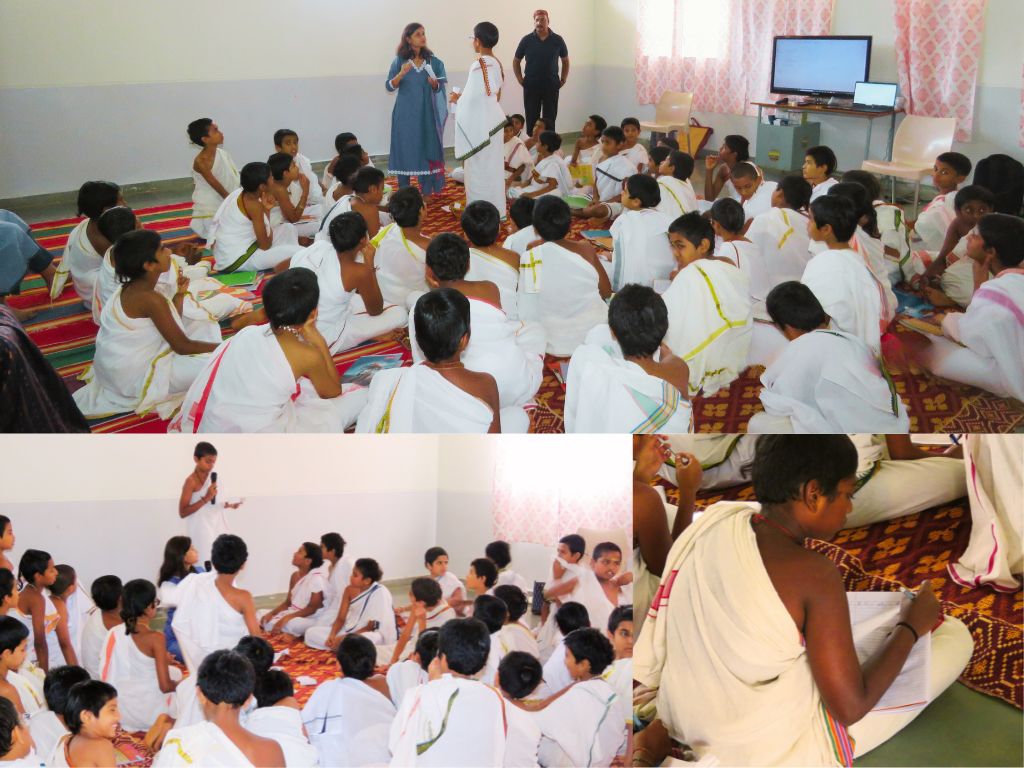
This was followed by an interactive session where the students were asked to express what they feel about “My Dream for India”. In other words, what they visualize and what ideas they have for a future India of which they are going to be a part. After lunch, a fun game on the Navarasas was conducted which the students enjoyed thoroughly.
The senior students were asked to go through the exhibition and bring back to the group some insights and questions that emerged for them. These were taken up in an interactive discussion session led by Dr. Beloo Mehra. She also highlighted some key insights from the transformative experience Sri Aurobindo had at Alipore jail, and his famous Uttarpara speech.

Sri Aurobindo’s vision of nationalism as expressed through his political writings and speeches, and its deep connection with the spirit of Sanatana Dharma were also explored in some detail with suitable examples and explanations. Some students also expressed curiosity to know more about Mrinalini Devi.
After lunch, a short film on Sri Aurobindo’s advice to students was shown to the senior students. This was followed by a scene-by-scene discussion by Dr. Suhas Mehra who had curated the film for the September 2025 issue of Renaissance journal.
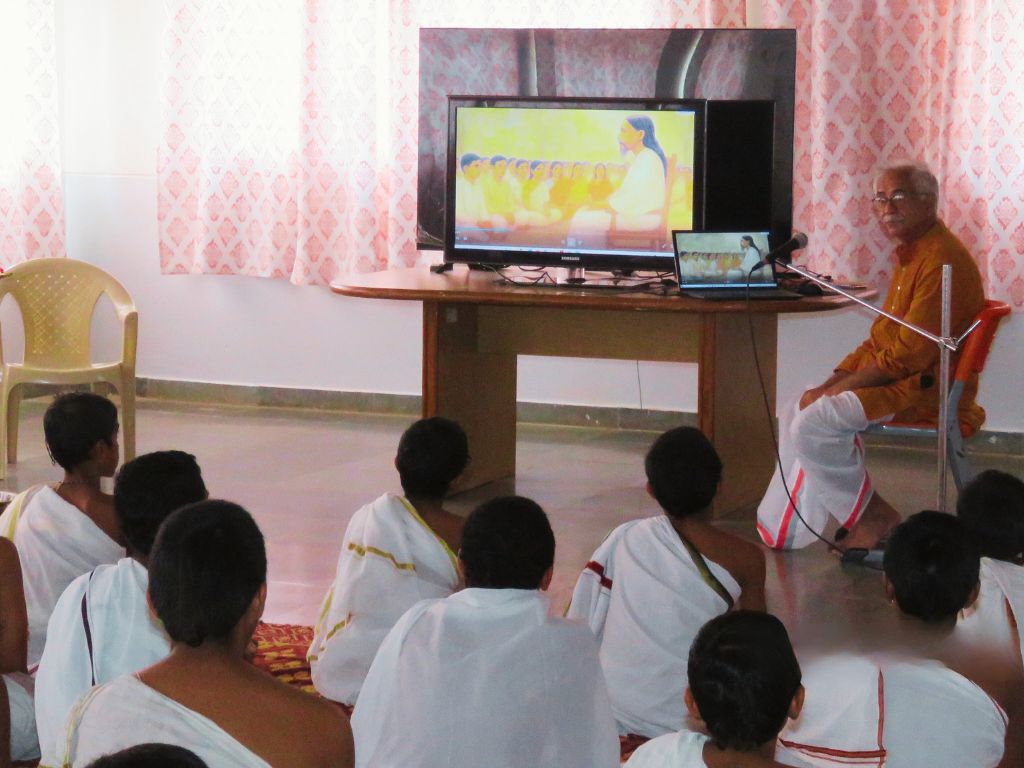
The film and follow-up discussion helped students address the question: What can we — each one of us individually — do for the New India that Sri Aurobindo envisions, India that carries on her timeless Spirit in new forms? I am merely a student, or one of the millions of nameless workers in corporate India, or a bus driver or a painter or a home-maker; what or how can I contribute? The examples shown in the film were discussed in an interactive manner, making the learning more relatable and inspiring.

Overall, the workshop provided a range of activities and learning opportunities for the students who found the whole day an engaging experience. The day ended with both the groups coming together for a short but insightful question-answer and feedback session where many interesting points were discussed. Students were all given a bookmark highlighting selected words of Sri Aurobindo and the Mother on India. The programme was concluded with a vote of thanks by Ms. Saujanya, the Headmistress of the Gurukulam.

Enjoy full Photo-gallery
For more student workshops conducted by BhāratShakti, see HERE.