
Start Date: February 28, 2026
Start Date: March 28, 2026
Venue: Online
A 5-week online course titled ‘Self-management Lessons from the Gita’ was organised by the BhāratShakti department of Sri Aurobindo Society. The course which started on 28th Feb and concluded on 28th March, 2026 was designed and facilitated by Mr. Narendra Murty, Author and Research Associate, BhāratShakti. Dr Beloo Mehra, Director, BhāratShakti, provided additional facilitation as required. A total of 15 participants registered for the course.
The course included weekly 1.5-hour-long online sessions which were held every Saturday from 9.30 AM to 11.00 AM, but the sessions usually stretched for 2 hours. The presentation of the subject matter was made in the first hour and thereafter the remaining time was devoted to answering questions from the participants through lively interactions.
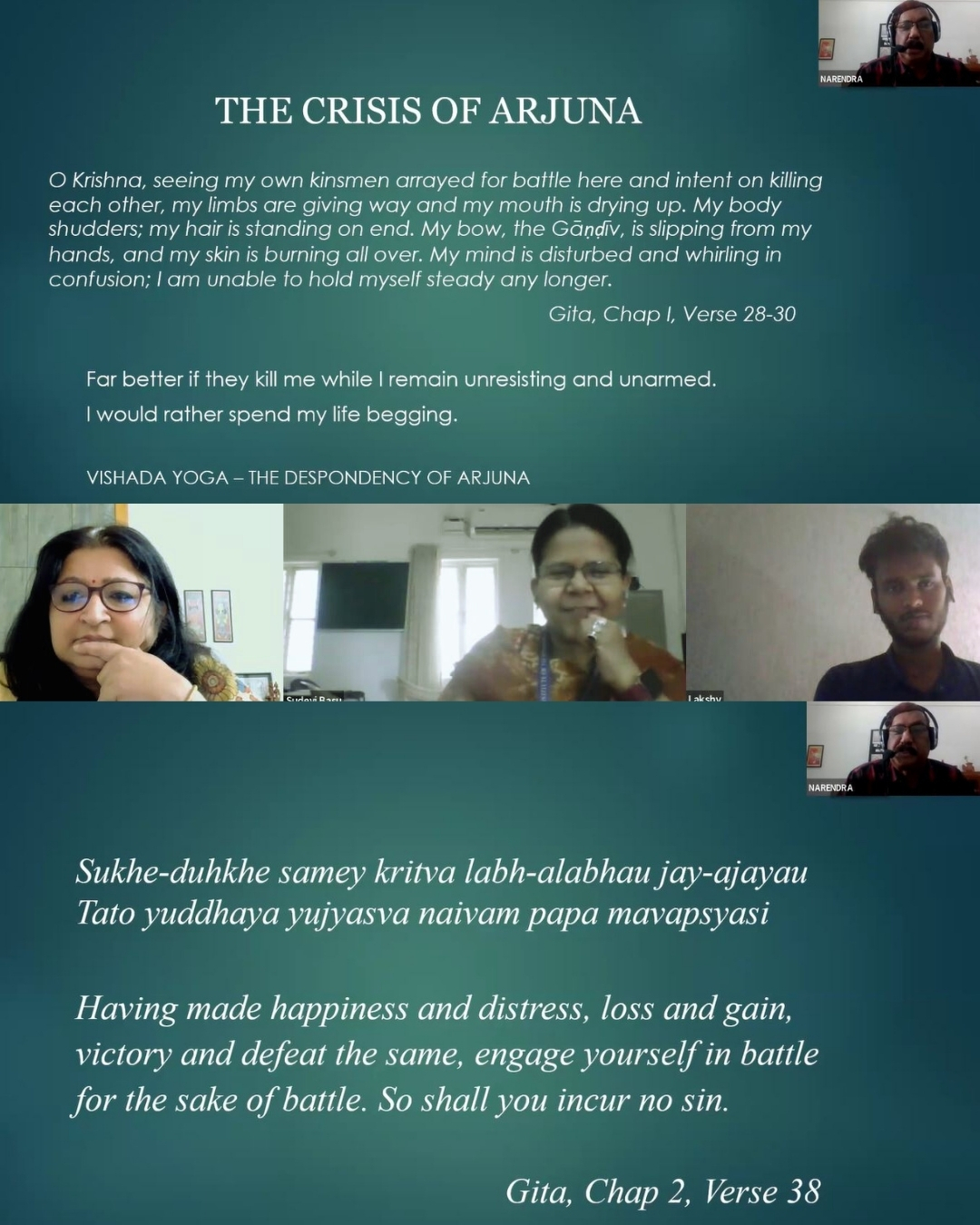

The course topics were carefully researched and outlined by Narendra Murty with the starting premise being Bhagavad Gita as the greatest “self-management manual” in the world. It is the “Krishna cure”for the “Arjuna disease.” He explained in the first introductory session of the course that at some point in our lives we all suffer from the “Arjuna disease” when we feel paralyzed and overwhelmed by the challenges of our lives. Managing ourselves comes before we can think of managing others and the situations of the external world. And when our own knowledge and inner resources prove inadequate, we turn to the Divine guidance of Sri Krishna. Following specific topics were covered in the course:
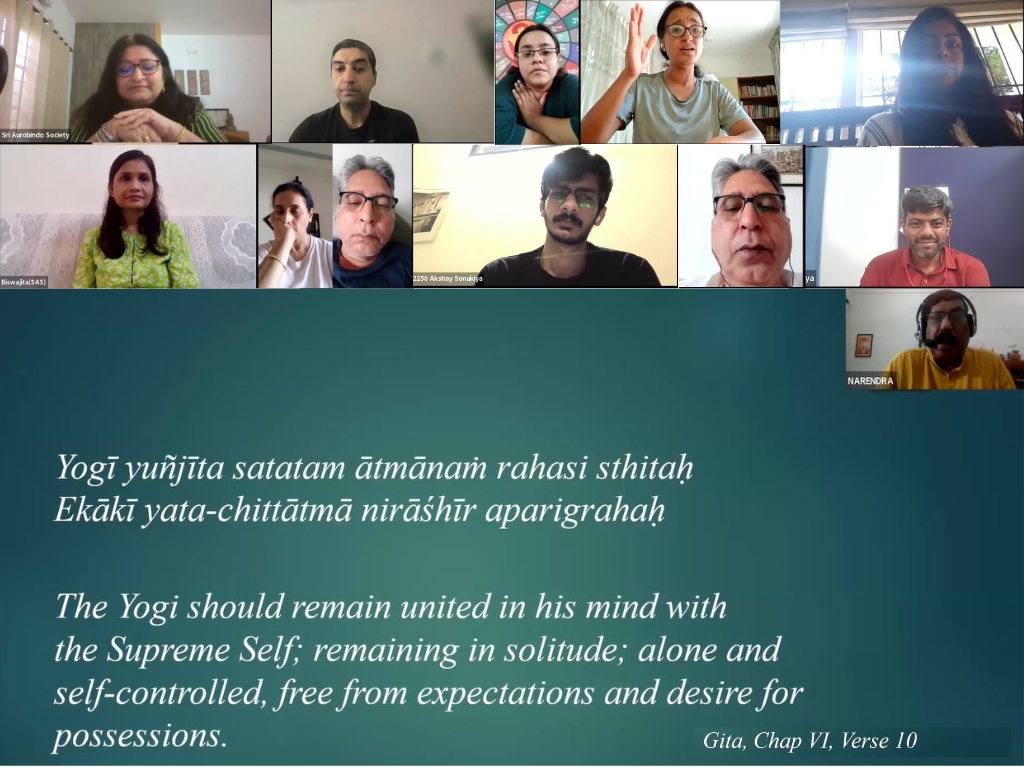
From Chapter 2 of Bhagavad Gita: Sankhya Yoga
- Kurukshetra as a metaphor. The Dejection of Arjuna and his surrender to his Teacher Sri Krishna on the eve of the battlefield of Kurukshetra
- The necessity of Impersonal action in place of Ego-driven work
- The single-pointedness of Mind
- The attitude of Karma Yoga
- Samatvam – Equality/Evenness of the Mind
- Yoga is Efficiency in Action
- Who is a Stitha Prajna?
- Withdrawal and control of the senses
- The need for sense control and what makes it possible
- The Fall of Man – It’s analysis and causes
From Chapter 6: Abhyasa Yoga
- Mind is the enemy, Mind is the friend
- Having a Daily Practice
From Chapter 18: Moksha Yoga
- The Lord’s Final instructions to Arjuna
- Arjuna’s choice after receiving the Divine Grace and knowledge
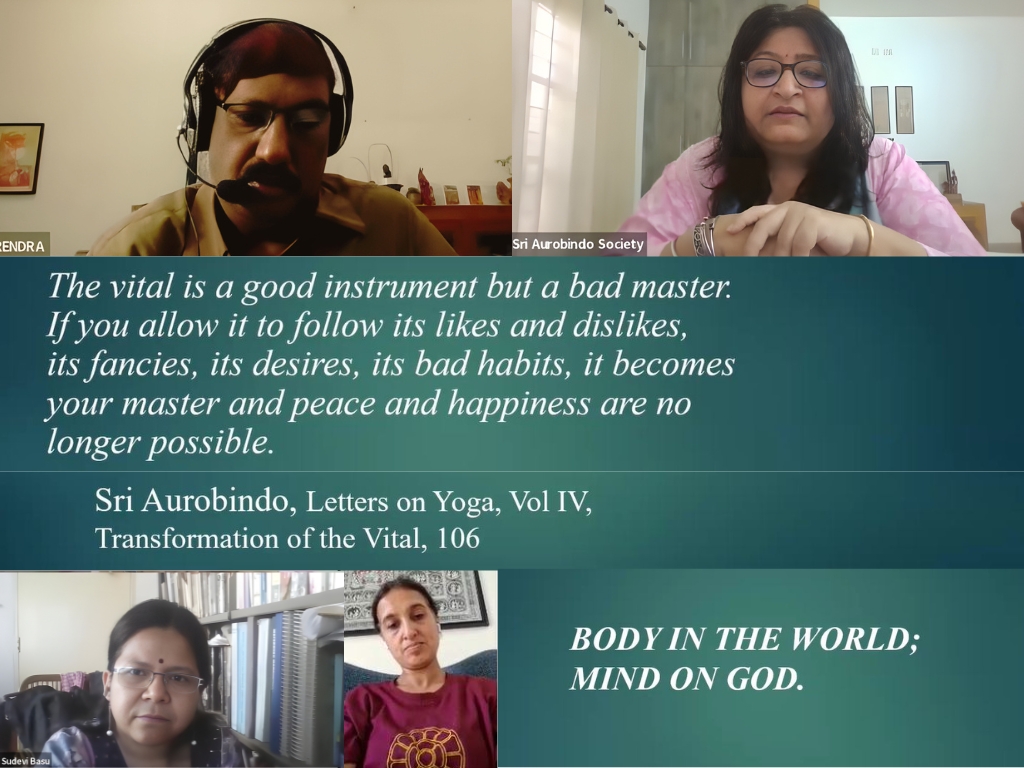
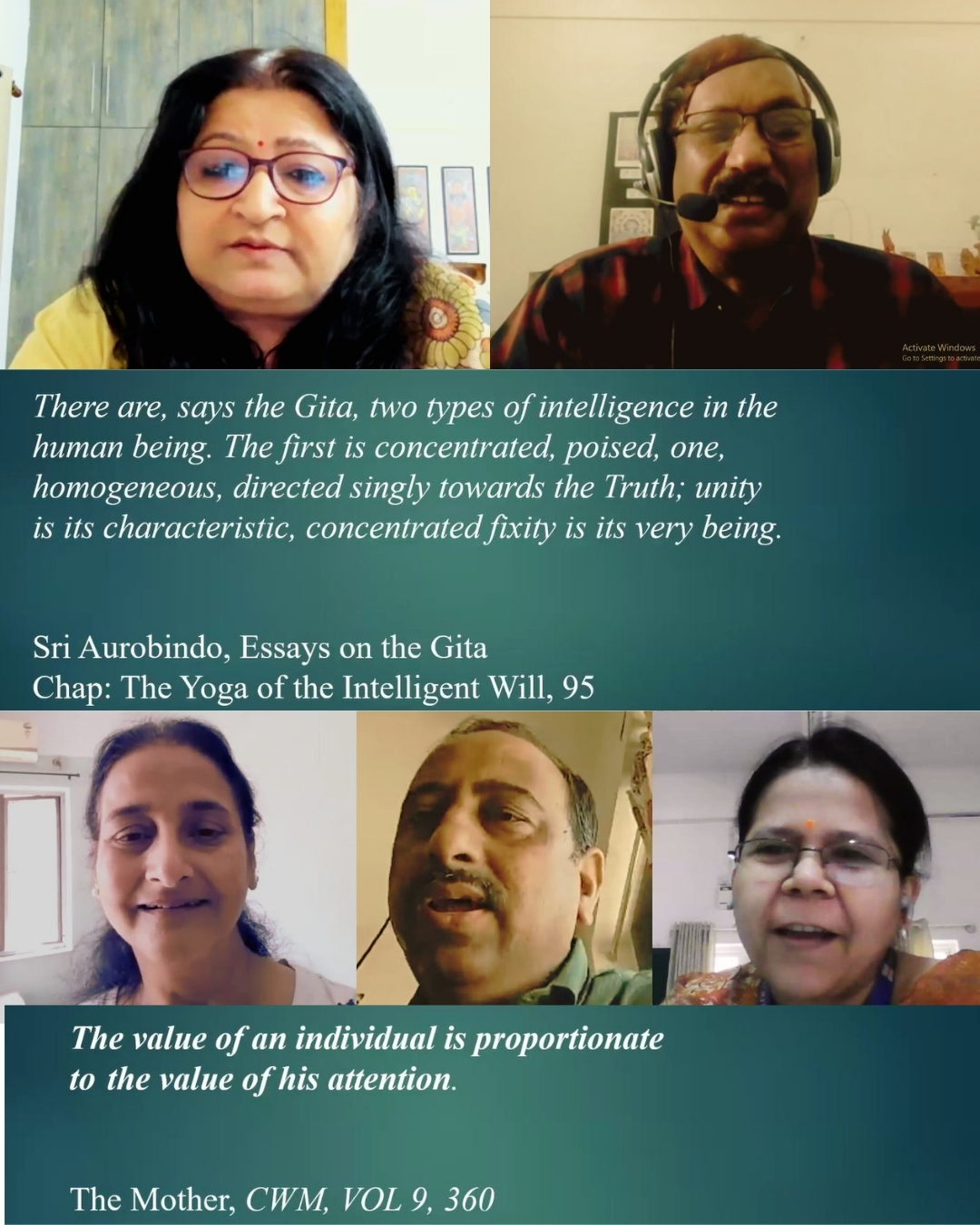
In respect of the concepts covered, first the relevant Sanskrit verse was studied going deeply into the meaning of each word. Thereafter, the sense of the verse was analysed and explained using the writings of Sri Aurobindo from sources such as Essays on the Gita, The Synthesis of Yoga and Letters on Yoga. In addition to this, parables, anecdotes, historical events and real-life incidents were cited to bring more clarity to the verses.
The approach was highly appreciated by the participants as was evident by their lively participation and involvement during the interaction. In view of their enthusiasm and considering that only very few topics could be covered in 5 classes (though very important principles of self-management were covered), it was decided to offer 3 extra classes in the month of May 2026 to cover some more aspects of the Gita.
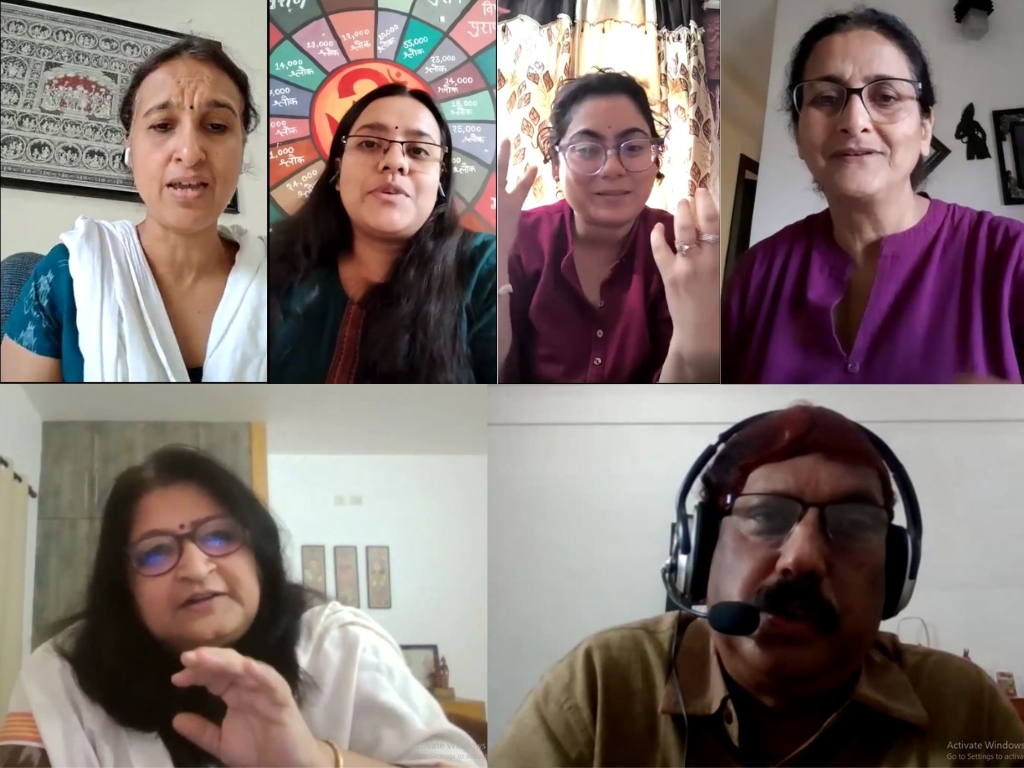
In their feedback, all participants expressed that now they saw the Bhagavad Gita in a new light. They said they could relate to it to their own lives and expressed their desire to attend more such courses in future.
Read more about Courses and Study Groups HERE.