
Start Date: November 28, 2025
End Date: December 4, 2025
Venue: Om Shanti Dhama Gurukulam, Karnataka
As part of a day-long workshop titled ‘Sri Aurobindo and India’s Freedom’, curated and conducted for students at Om Shanti Dhama Gurukulam, Karnataka, a 38-poster exhibition on the workshop theme was created and displayed. Dr. Beloo Mehra, Director, BhāratShakti, SAS, conceived, researched and designed the overall content of the exhibition. Ms. Biswajita Mohapatra, Design and Administrative Assistant, BhāratShakti, SAS worked on the final design and coordinated all the logistics for the exhibition display.
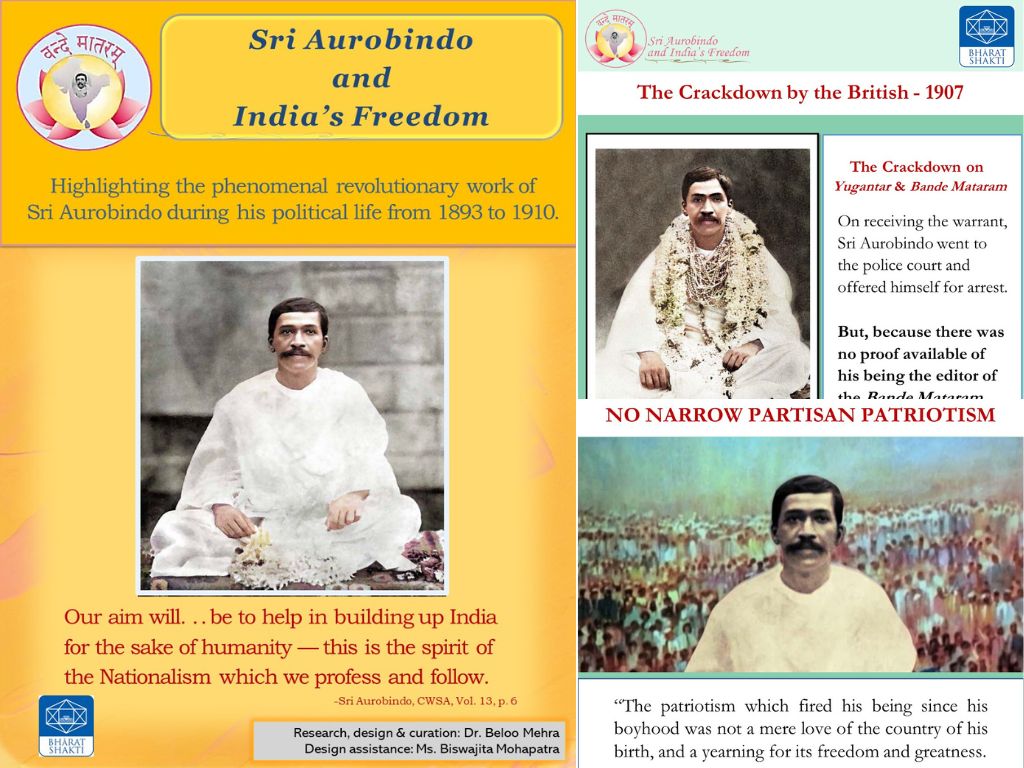
Different versions of this exhibition have been displayed at several venues including Raj Nivas in Puducherry, Pondicherry University, National Seminar on Sri Aurobindo’s Nationalism at Sri Aurobindo Society, National Seminar on The Renaissance in India and Sri Aurobindo’s Nationalism in Bengaluru, Karnataka, Auro University, Creative School, and also a virtual exhibition at Central University of Tamil Nadu.
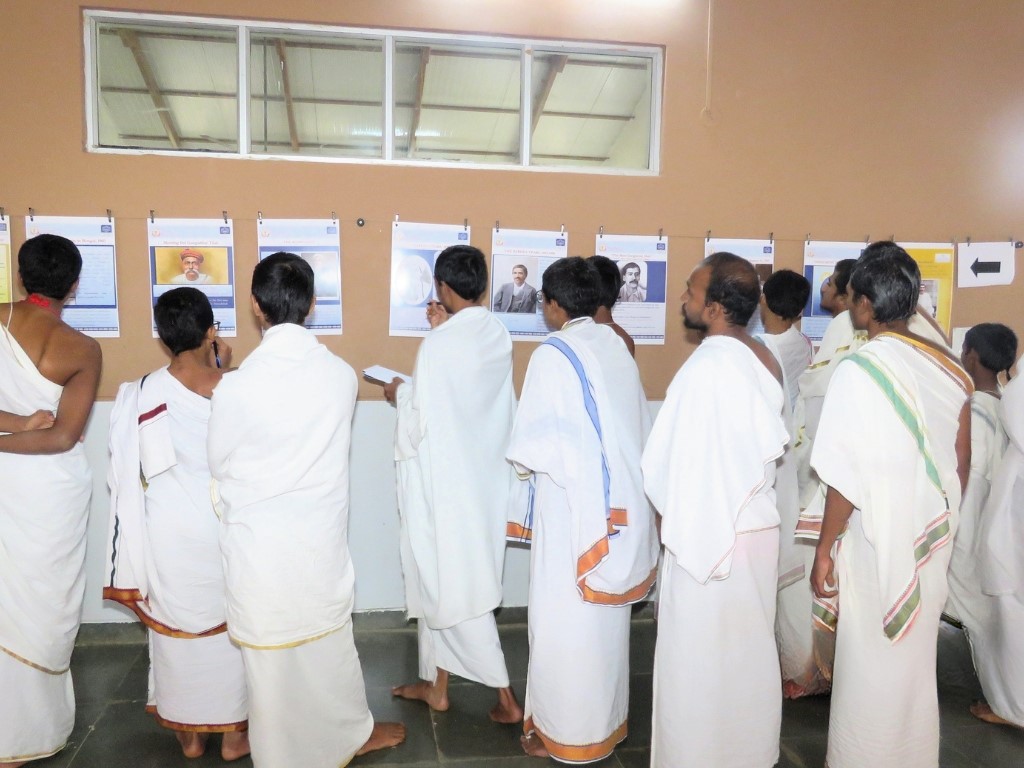
At Om Shanti Dham, the exhibition posters were displayed at one of the main halls where the workshop was conducted. A total of 40 students (ages 14-17) participating in the workshop were introduced to the exhibition posters on the same, day rest of the 35 students were asked to see the exhibition at a later date with their teachers’ guidance. About 20 adults including teachers and acharyas at the Gurukulam also went through the posters.

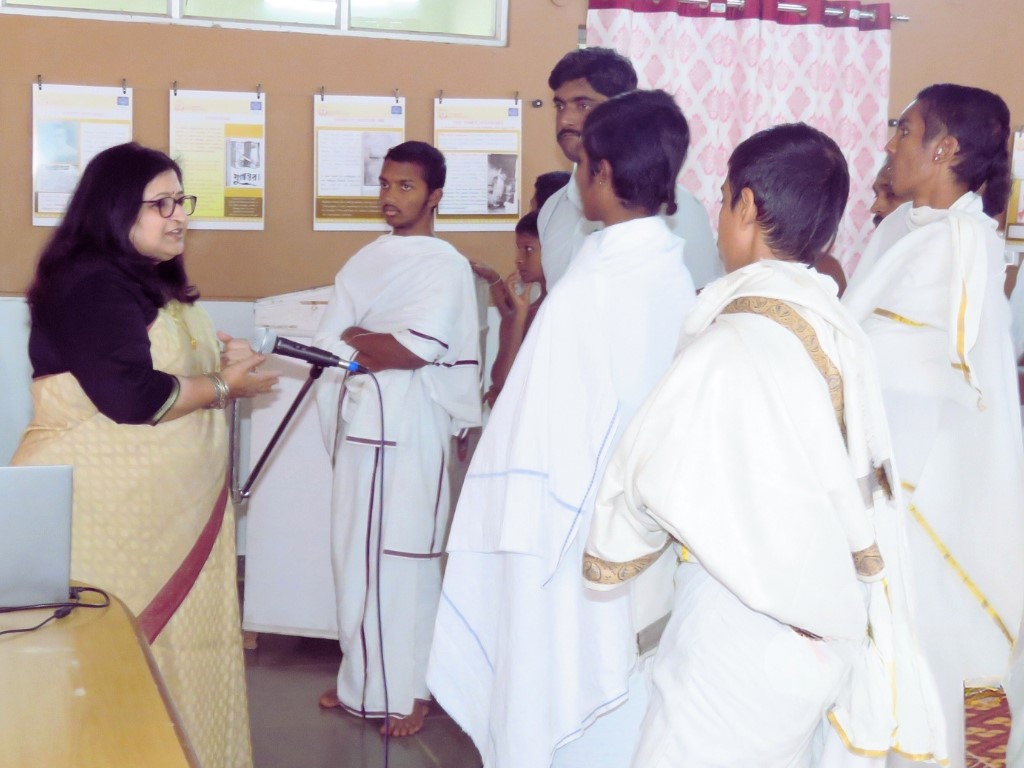
In order to prepare the students for the exhibition, Dr. Beloo Mehra gave a brief orientation to them highlighting Sri Aurobindo’s work as a Yogi-revolutionary. Some interesting questions were asked by the students during this orientation session.
For the next 40 minutes the group walked through the exhibition, with Dr. Mehra pointing out some key points from some of the posters. Interesting anecdotes about the Indian freedom movement, especially concerning the work of revolutionaries also came up during the interactions.
Walking the participants through the period of 1893-1906, or the Baroda years, Dr. Mehra highlighted the key revolutionary work of Sri Aurobindo – primarily done through the might of his pen as a writer whose words could stir up deep emotions of patriotic fervour and zeal among his contemporaries. She added that Sri Aurobindo’s political writings continue to stir the soul of all Indians who love their motherland. Examples from Bhawani Mandir and Sri Aurobindo’s famous letter to his wife Mrinalini Devi were pointed out.
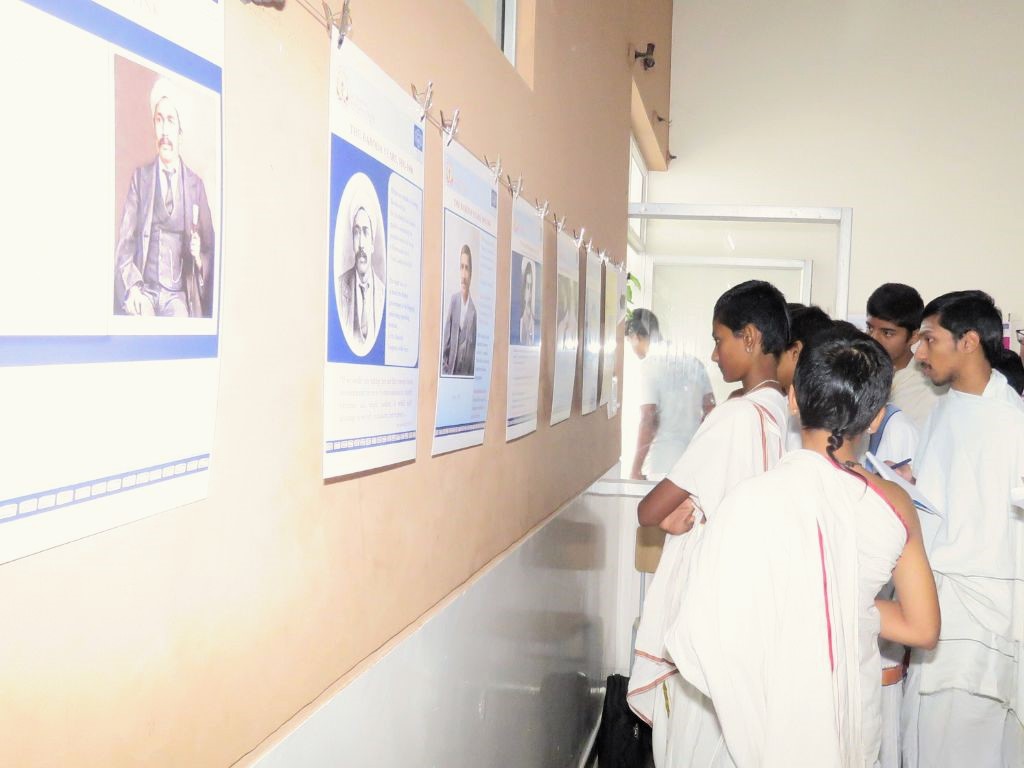
It was added that much of Sri Aurobindo’s political activity during this period happened behind the scenes, which included his being the force in bringing together different revolutionaries working toward India’s freedom. In the follow-up discussion, Dr. Mehra also summarised a few highlights from the years 1906 to 1910, the time Sri Aurobindo spent in Bengal, where he actively participated in political activities, including speaking at several public events and rallies.
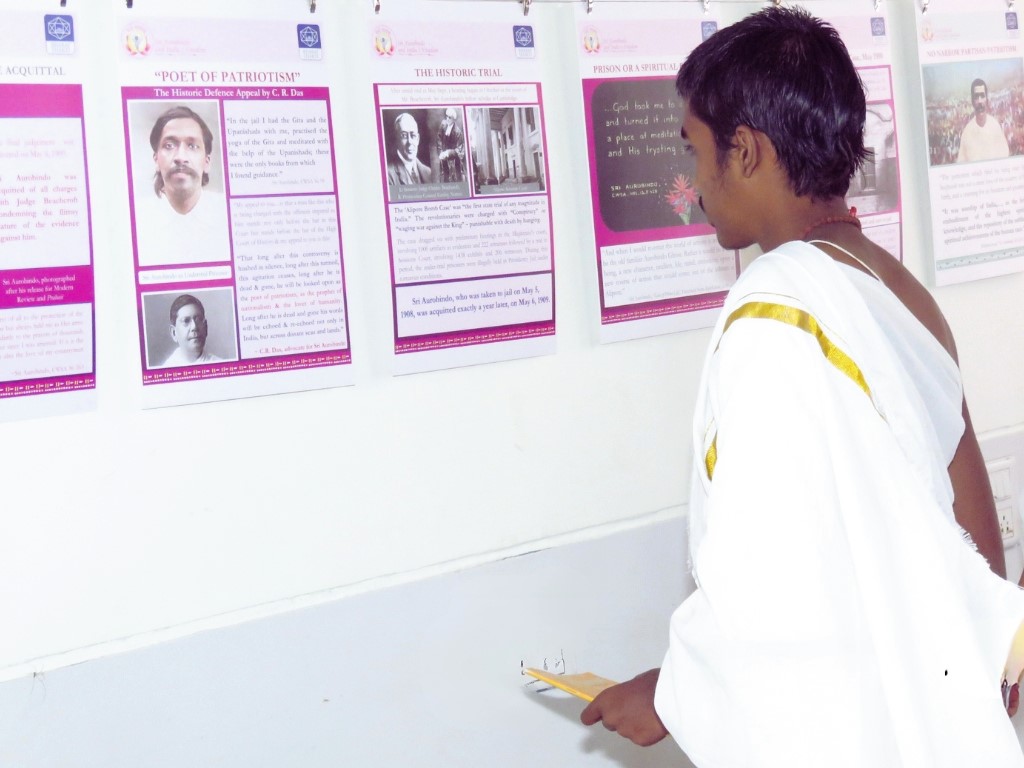
The exhibition also highlighted Sri Aurobindo’s arrest in 1908 in regard to the famous Alipore bombing case, and his eventual acquittal exactly a year later. Specific mention was made of his fiery writings in Bande Mataram and Yugantar, and then later in Karmayogin and Dharma after his acquittal from the prison. A few key passages from Uttarpara speech were also shared which speak significantly of the spiritual realisation of Sri Aurobindo in prison. The exhibition also provided a few interesting details on some of the other nationalistic leaders of the time, particularly those with whom Sri Aurobindo worked closely.
For more exhibitions designed and curated by BhāratShakti, see HERE.