
Date: February 13, 2026
Venue: Auro University, Surat
Watch the Recording
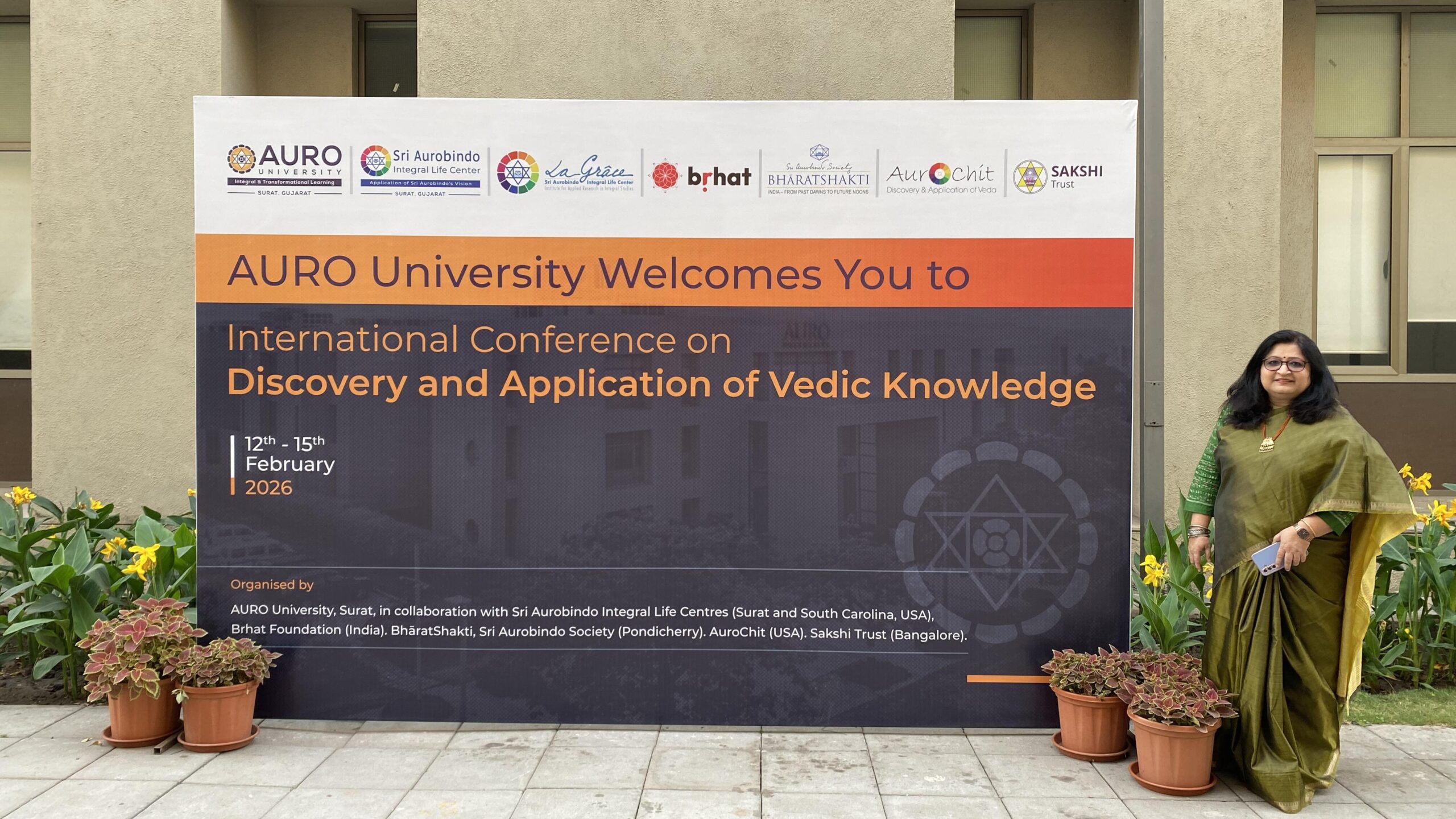
During February 12 to 15, 2026, an International Conference on Discovery and Application of the Vedic Knowledge (February 12-15, 2026), organised by Auro University in collaboration with Sri Aurobindo Integral Life Center, Surat, La Grace Sri Aurobindo Integral Life Center, USA, Bṛhat Foundation, BhāratShakti, Sri Aurobindo Society, SAKSHI Trust, Bengaluru and AuroChit, USA, was held at the campus of Auro University. Dr. Beloo Mehra, Director, BhāratShakti, SAS, was invited as a keynote speaker and representative of a collaborating institution.
Dr. Mehra delivered one keynote address on the opening day of the Conference, February 12, which is the birth anniversary of Swami Dayananda Saraswati (1824-1883). Read HERE for a summary of that talk titled ‘Swami Dayananda Saraswati and Indian Renaissance: Insights from Sri Aurobindo‘.
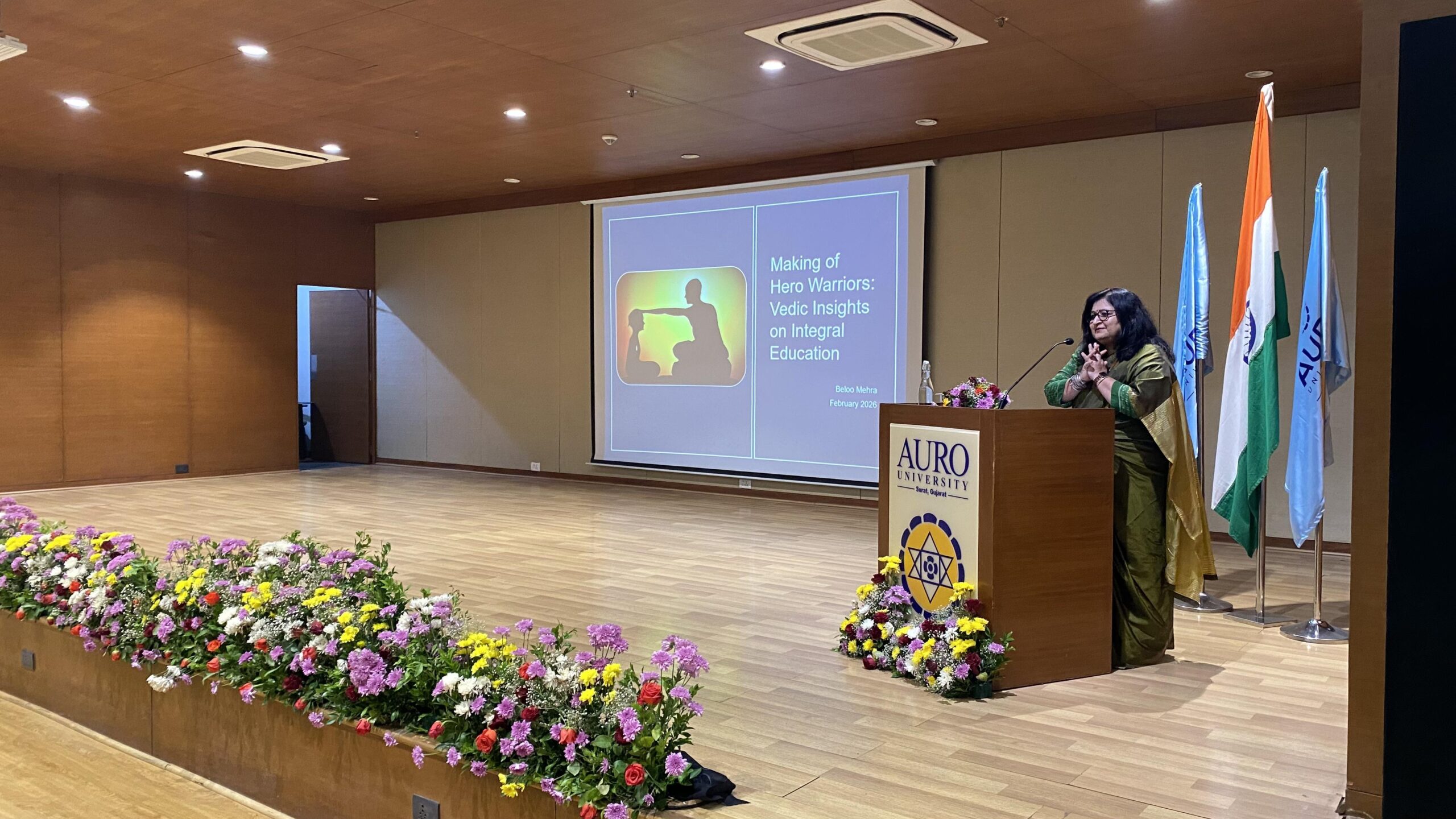
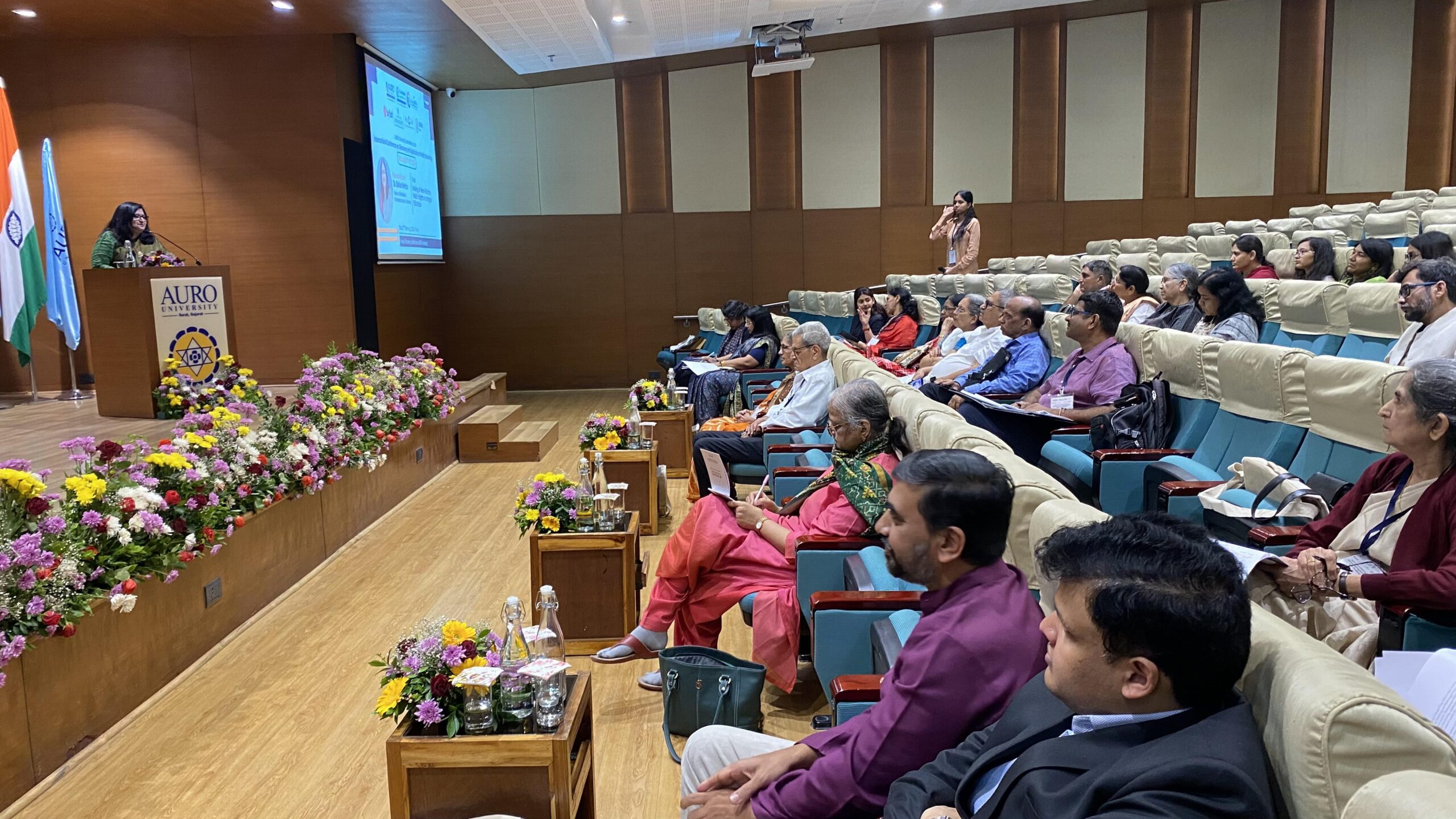
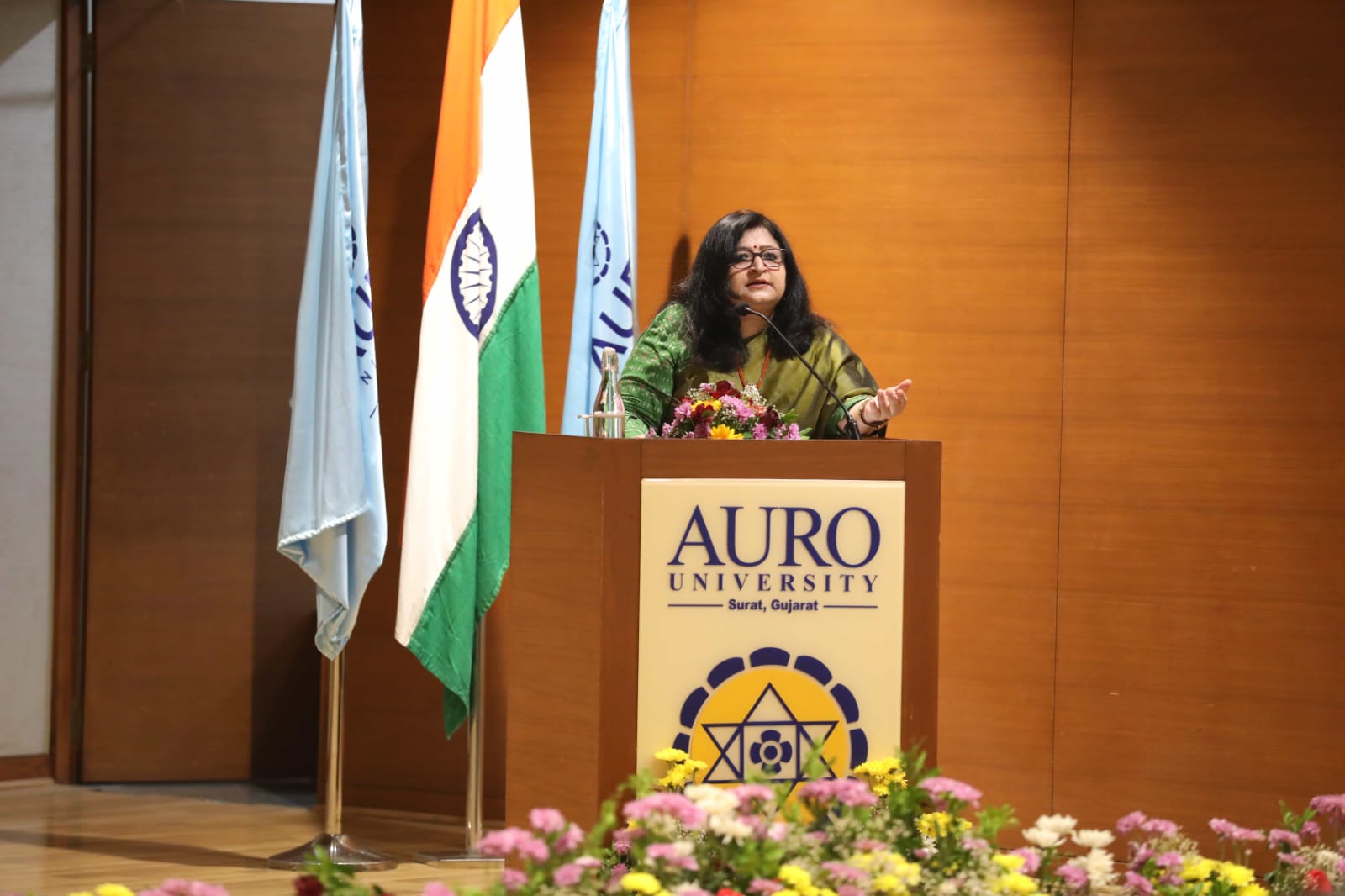
On Day 2 of the conference, February 13, Dr. Beloo Mehra delivered another keynote address on the topic – ‘Making of Hero-Warriors: Vedic Insights on Integral Education‘. Her talk explored the Vedic foundations of Integral Education through a close study of Sri Aurobindo’s and the Mother’s insights on human development, consciousness, and the formation of a heroic character.
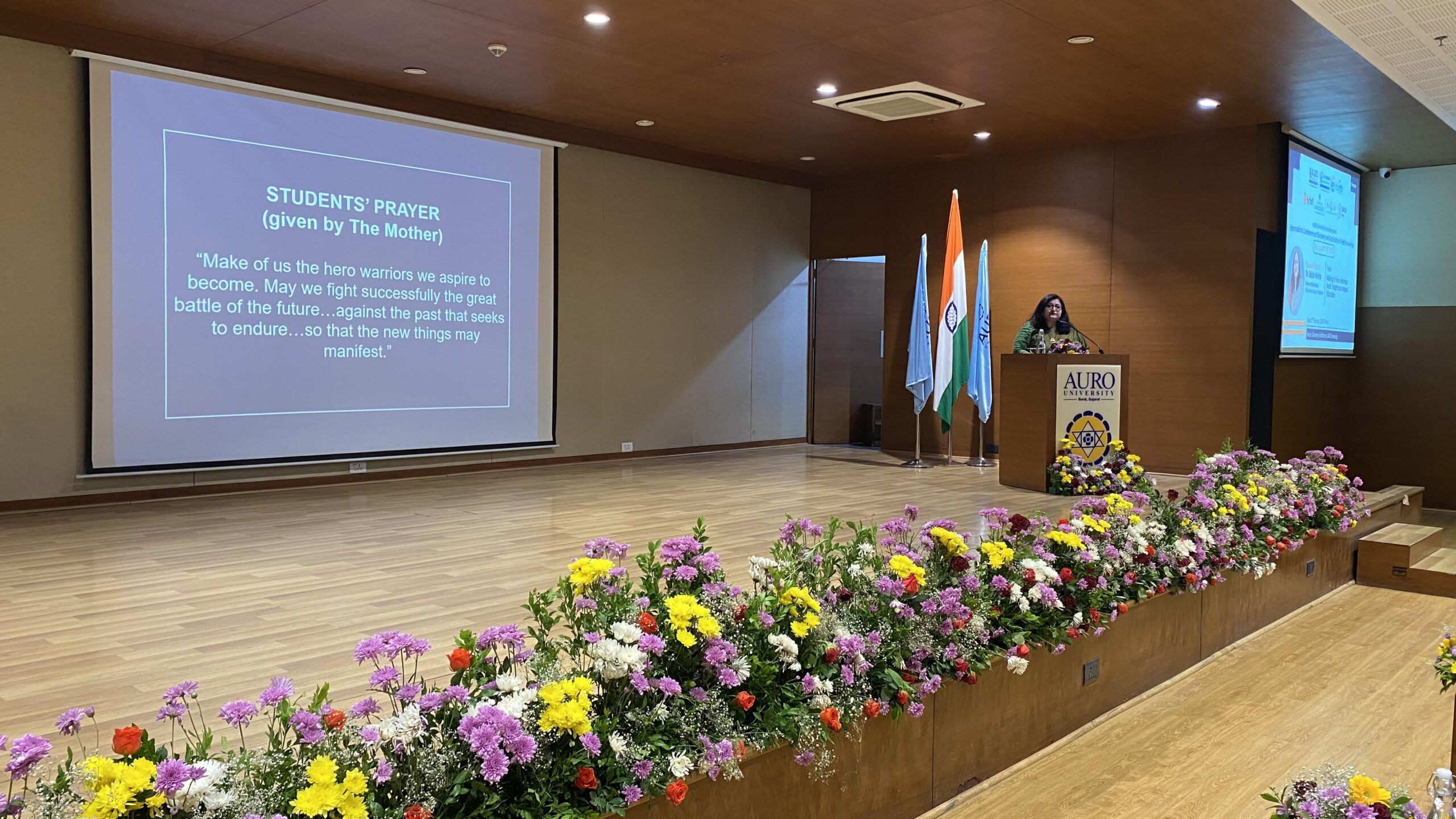
After a brief silence to invoke the Mother’s presence and guidance, Dr. Mehra informed the audience that what she was about to share finds its starting inspiration in the prayer given by the Mother to the students of Sri Aurobindo International Center for Education (SAICE, popularly known as Ashram School). She carefully and slowly read out the prayer, which she said was Vedic in its essence, “Make of us the Hero warriors we aspire to be; may we fight successfully the great battle of the Future.”
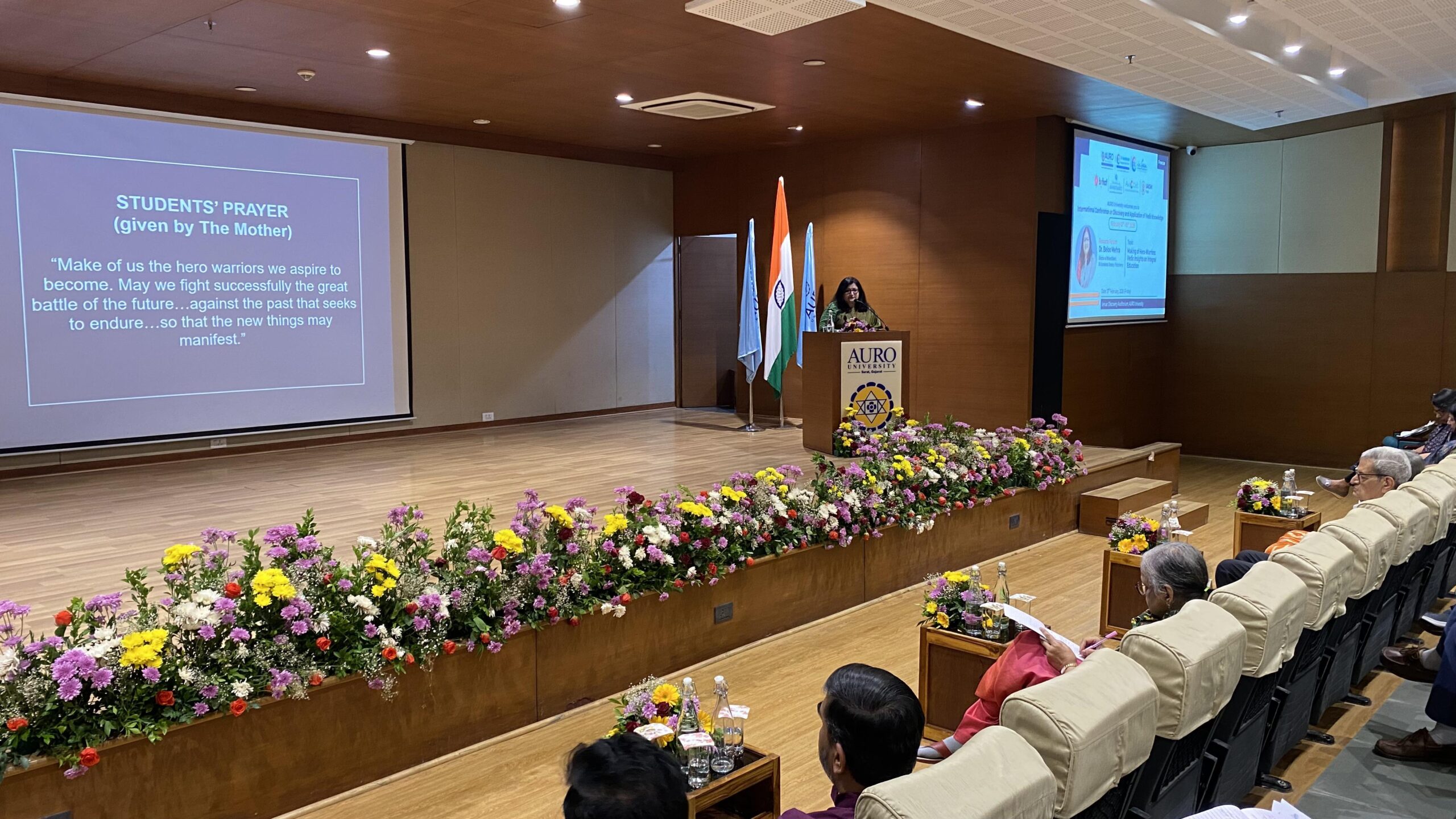
Highlighting and explaining some of the key words in this prayer, Dr. Mehra emphasised that the battle is against the past that wants to endure beyond its time in us and in this world – the practices, the conventions, patterns of our minds, our habits, weaknesses, etc. She emphasised how this prayer invokes the spirit of the hero‑warrior, and highlights the importance of aspiration, will‑force, and inner readiness in shaping individuals who will be capable of leading the evolutionary march of humanity.
Speaking of an example of Hero-warrior, Dr. Mehra briefly spoke of the key aspects of the life of Devi Ahilyabai Holkar. The Malwa Queen after losing her husband in battle was disillusioned from life itself and wanted to end it, but with her father-in-law’s inspiring support and empowerment through education, went onto become a great daughter of the land, fought many battles and restored many temples including the Somnath temple in Gujarat when many kings of her time hesitated. She worked towards the upliftment of her kingdom of Malwa, built a new capital city of Maheshwar and went onto be addressed as Devi Ahilya Bai for the exemplary social and economic reforms she brought about.
In elaborating the role of education in creating Hero-warriors, Dr. Mehra alluded to Sri Aurobindo’s guidance, drawn from his own experience of being a teacher having worked with young students, on how education must fulfil the temperament and national spirit and work towards create a living Indian man for the future.
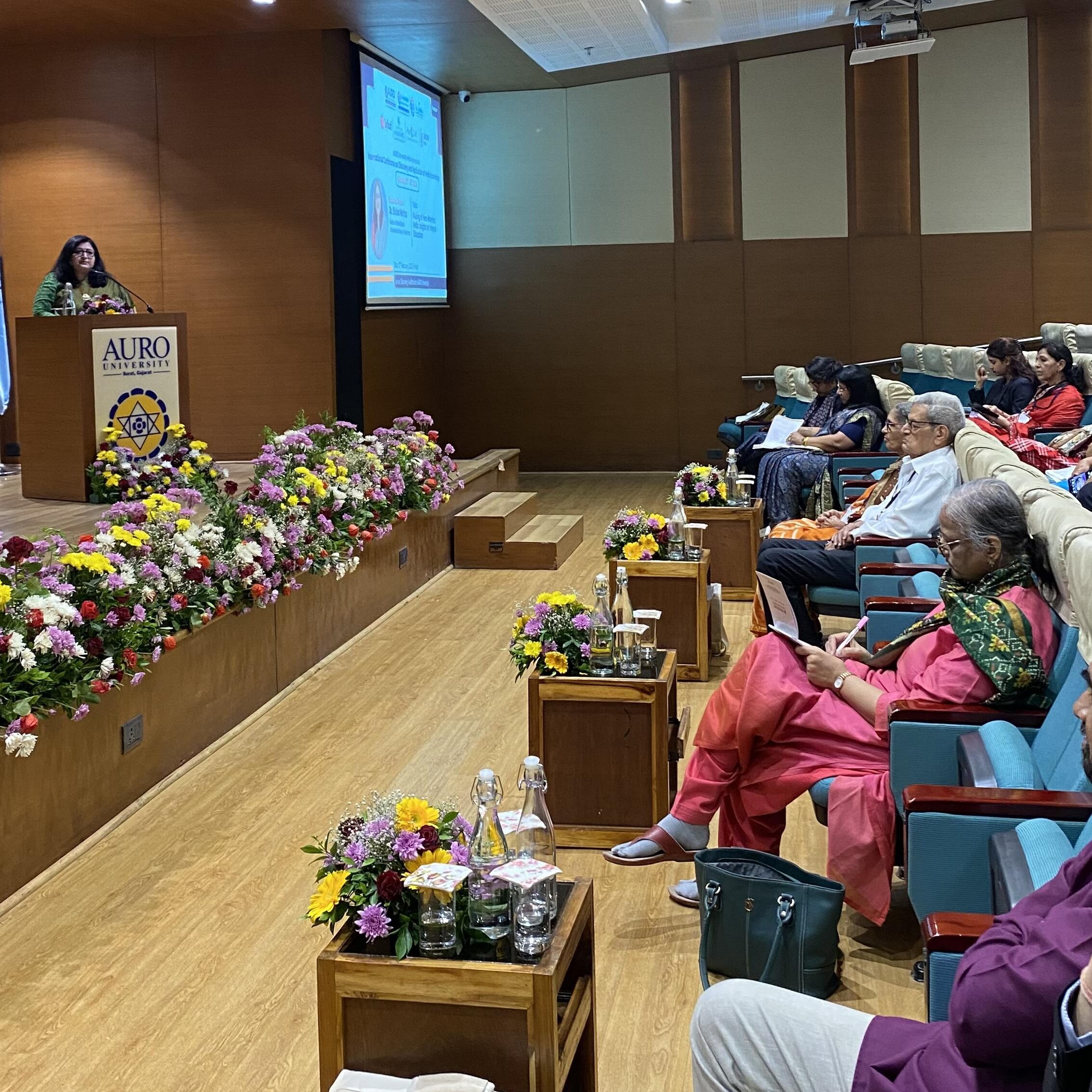
Dr. Mehra drew on key insights from Sri Aurobindo’s writings on national education, and briefly critiqued the persistent colonial frameworks which continue to inform mainstream pedagogical aims in India. She highlighted the need for an educational paradigm which moves beyond intellectual training to cultivate deeper faculties—revelation (drishti), inspiration (shruti), intuition (ketu), and discernment (daksha)—which are essential for arriving at truth‑perception and right action.
She mentioned how Sri Aurobindo has cautioned against only catering to developing reason and intellect through education. Such an education can only create an accurate and careful scholar, a rational politician, a sober critic, a conservative scientist but not the hero and originator or the inspired Prophet or the Nation builder who promises to transform with a deep and lasting impact.
A merely rational and mental education will miss the elevated understanding that invoking powers of inspiration, intuition, discernment and revelation can bring into an individual’s life and work. Dr. Mehra shared the Mother’s remarks on education on why it often leads to disillusionment. The precise reasons as pointed out by the Mother are: exclusive importance given to career success and money as well as completely missing the connect with the spirit in the process of education.
Dr. Mehra further elaborated upon the significance of psychic education as articulated by the Mother, emphasizing self‑knowledge, inner alignment, and the formation of genuine individuality as the true aims of education. Through the Vedic symbols of Agni and Aryaman, she illustrated how aspiration, tapasyā, and the upward striving for perfection can serve as guiding forces in contemporary educational practice.
Dr. Mehra also shared some practical steps when expounding on where our current education system cries for change. These may include: involving the student’s deeper needs when designing the curriculum and the mode of instruction, invoking higher presence in everyday classroom environment and consciously bringing a deep involvement of the institution in the self-progress and growth for both the students and the teachers. In essence, the work of teachin-learning cannot be separated from an aspiration for inner progress, psychic connection and a pursuit for Truth, and therefore true education cannot be general but must focus on each individual’s needs.
In explaining a few more insights from Sri Aurobindo, the Mother and Vedic knowledge, Dr. Mehra quoted relevant sections from other speakers who spoke before her, so the audience could make connections across sessions and build a set of synthetic takeaways for themselves.
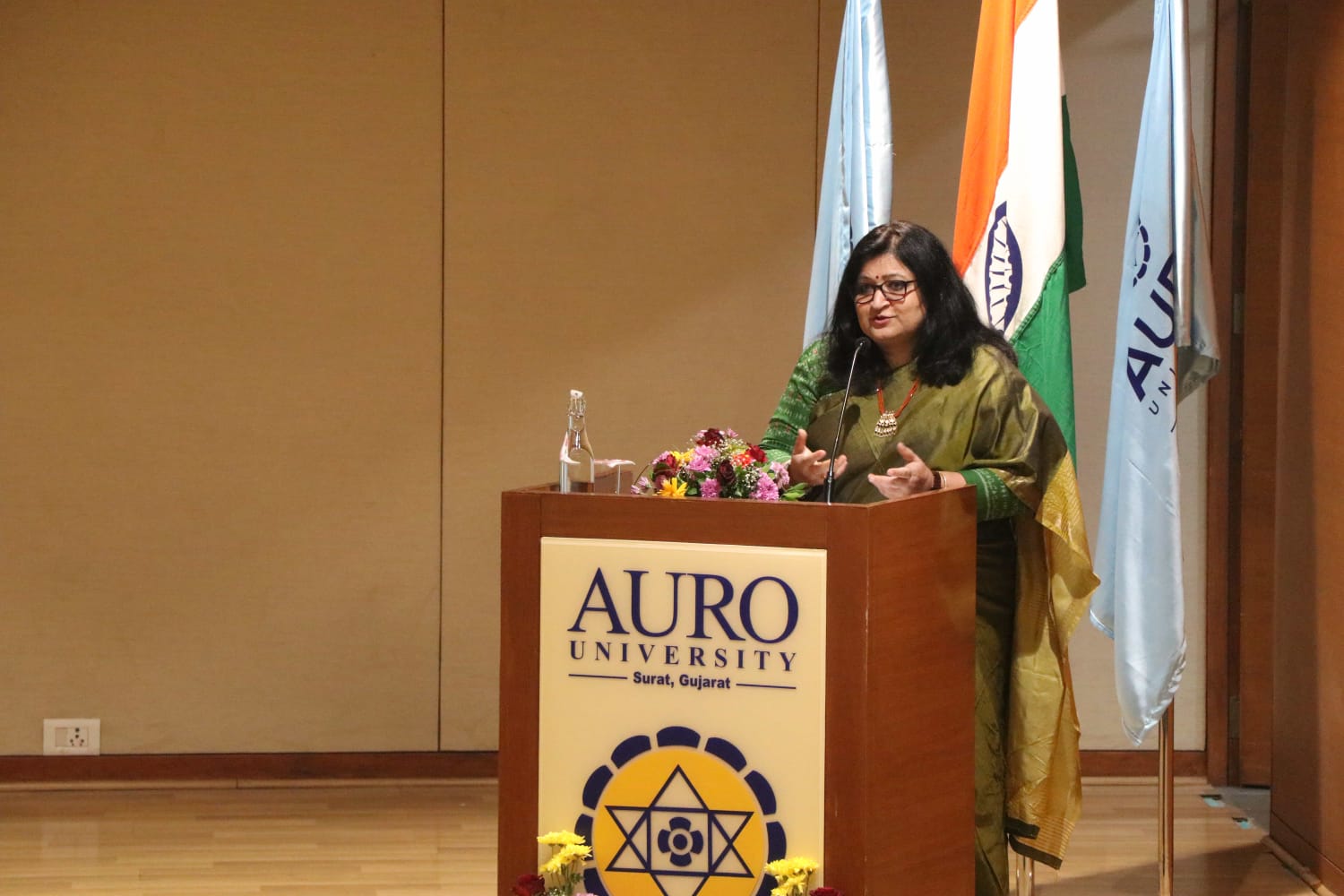
Dr. Beloo Mehra closed her talk with a note of encouragement to all educators and educational institutions to make the necessary attempts for rethinking the very purpose of education in the light of Sri Aurobindo’s vision for the future of humanity and the world. She emphasised that meaningful educational reform must integrate outer competence with inner awakening, preparing young learners to be Aryan builders of a new world—courageous, wise, self‑mastering, and committed to the discovery and realization of the deeper truth within. The presentation closed on a positive note of self-reflection and inspiration to go beyond the rational and comfortable and rethink education as it is practiced today.
WATCH
Read more details about the international conference HERE and HERE.
For more of BhāratShakti’s works on Education for New India, see HERE.
For more of BhāratShakti’s works on the theme – Re-awakening the Bhārata Shakti, see HERE.