
Date: April 11, 2026
Author: Beloo Mehra
A blog in the series – Films that Inspire
Much has been written by film critics and film enthusiasts about the two-part blockbuster film, Dhurandhar (2025) and Dhurandhar, the Revenge (2026). Actually, the second part completes the film’s narrative, so essentially it is one long film released in two parts. As someone who enjoys good stories and good cinema, I found both the parts highly engaging and far above anything that has come out of Indian cinema in the recent decades. (Read HERE and HERE for some of my thoughts on these films).
I consider cinema as one of the most important performing art forms of modern times with immense power to influence the aesthetic taste as well as the overall mental and emotional consciousness of large sections of society. Not only because cinema provides a multi-sensory experience, but also because it incorporates all possible visual and performing art forms which gives it a great potential for expressing deep symbolism through its narrative via story, music, visuals etc.
Because of Dhurandhar’s immense popularity, almost each and every frame of the film has been analysed by movie buffs. So there is hardly anything left to say. And yet, I feel an urge to express what I felt strongly especially after watching part 2, titled Dhurandhar, the Revenge.
Love That Grows
What I find most interesting in the 2-part film is the theme of Love. Yes, the underlying theme of Dhurandhar’s entire narrative is Love. After watching the first part of the film, I strongly felt that the film’s main theme was the single-pointed goal of protecting one’s nation at any cost, the deepest emotion of love for the nation and willingness to make unimaginable sacrifice for that love. But there was lot more to discover in part 2, a much greater emotional depth to the story. Ever since I watched the second part of the film, one aphorism of Sri Aurobindo has been going around in my mind.
Love of man, love of woman, love of things, love of thy neighbour, love of thy country, love of animals, love of humanity are all the love of God reflected in these living images. So love and grow mighty to enjoy all, to help all and to love for ever.
~ Sri Aurobindo, CWSA 12: 491
I felt that the entire narrative of the film can be explained through this fundamental truth — the truth of expanding one’s circle of love and in the process growing inwardly and becoming ready for that Love which never fades, which never disappoints, which always elevates. That is the Love of the Divine and for the Divine. But Divine is not only out there, That is in here as well – within me, in my family and friends, in my country and everything around me. If only we can see God in all, our love for all will be transformed. It will not be a love that demands something in exchange for what it has done; it will be a love that only gives and makes no show of its sacrifice.
The character arc of the protagonist in the film Dhurandhar (and by implication many others whom this character represents) unfolds a story of growing in love. First, it was a crazily intense love for his family which takes him to such a point from where there is no return. He does not act unthinkingly in a moment of rage; it is a thought-out and planned decision to carry out such an act which he feels will quench the fiery rage and unsurmountable pain he has been experiencing. He knows fully well that he will have to leave his loved ones behind after he finishes what he has decided to do. Yet, he is willing to sacrifice himself for the love of his family.
As his journey continues, he is given an opportunity to expand his circle of love beyond family. In another aphorism, Sri Aurobindo reminds us that nationality is a stride of the progressive God passing beyond the stage of the family; therefore, the attachment to clan and tribe must weaken or perish before a nation can be born.

Applying this objective truth to the subjective domain of the film’s protagonist, we see that his personal experience of what his nation means to him — not just in name but in a very lived manner — goes through a transformation. It is no longer an abstract love of the nation or a feeling of patriotism which he initially claims he has always had because of his family tradition. It is now a living, throbbing intense force which will drive him to cross all possible limits and do whatever is needed for the safety and security of his fellow countrymen. He again does all that is needed to be done thoughtfully and strategically, seeking guidance from those who have walked the path before, and with a willingness to sacrifice all that he has and all that he is. Complete self-giving is love’s only right, if at all it has one, says the Mother.
This is how he grows. And this is why by the end of the story after he has sacrificed all, he is now faced with a question — where do I turn? After he first sacrificed everything for his family, he had spoken of giving the remainder of his life to his God. But perhaps he wasn’t ready then because he had yet to experience a greater love, he had yet to make a greater sacrifice. Only that would perhaps make him ready for a yet higher act of complete self-giving, the highest surrender to the One True Beloved.
After he has done it all, after he has gone through all the battles of life, he must pause and ask — where to go next, which turn to take. He asks this to the Beloved within, the one true guide, the one true source of Love. All his identities are now dead for him and for the world. He is now a nameless entity, perhaps fully ready to devote himself to the seeking of that which transcends all outer identities. Love in him has grown; he has grown in love.
This is how I see the protagonist’s journey, journey of a dhurandhar who has attained great mastery at what he does and has borne well the burden of great responsibility. Now the Love in him will rise to even greater heights, expand to even wider horizons, and intensify to even profounder depths.
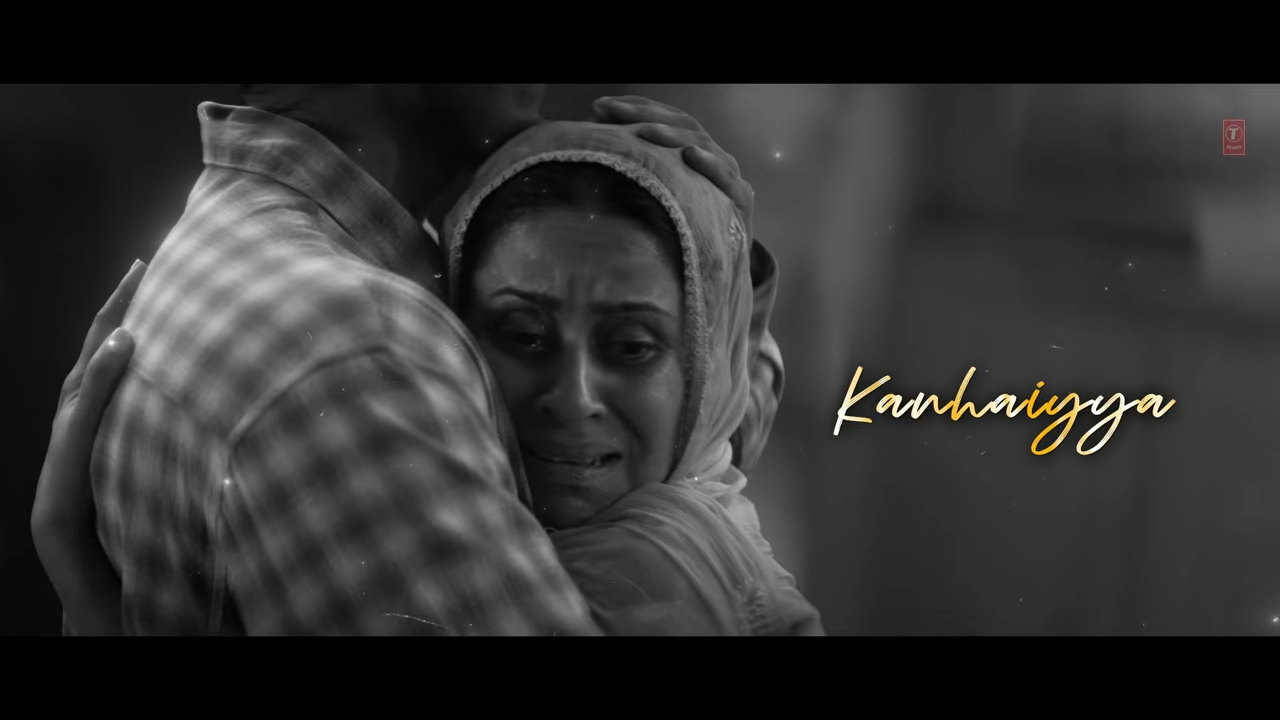
Now why do I feel so strongly this film is essentially a story of Love? Not because of the cliche that it is love that makes all go round in the world. But because almost every piece of music used in this this film claims it loudly. We just have to listen to it closely and feel the vibration of love wash over us. The genius of the film is that without incorporating any overtly patriotic song but loudly expressing the passionate human-ness of love through its carefully crafted musical narrative, it convinces us of the protagonist’s experience of an expanding circle of love. From love of family to the love of nation and then beyond. At least it did that for me.
Particularly this song.
What of the Propaganda?
Interestingly, this film, especially its second part, has been strongly dismissed by some sections of Indian society (as well as a few Western media outlets) as propaganda. Such voices have been countered with examples of countless other films — Indian and Western — which dished out the opposite propaganda. This is an endless debate and not of much interest, because it reduces the experience of enjoying cinema (or any art) to one’s preferred ideological lens. Good art should first speak to the audience on its artistic merit.
In one way or another all cultural products — cinema being one with most mass appeal in Indian context at least — can be easily seen through an ideological lens because they express or privilege only a selected, partial reality. All art, all literature, all cinema is essentially subjective. No single story or work of art can capture all possible sides of the reality, and even if they manage to somehow shove in multiple perspectives some would still be privileged over others simply because that is how creative process works. Art is a means to creatively express in a limited, measured form something that is essentially limitless — truth or reality. So, to comment on any artistic or cultural product from a specific ideological lens only speaks of our own ideological preference or bias.
I will, however, briefly note that the creative manner in which several true events and true contexts are seamlessly integrated in Dhurandhar’s plot and its narrative has made some people uncomfortable, especially those who have been long-standing gatekeepers of the socio-political discourse in India. For several decades, these bitter truths have been either suppressed because of selfish political agendas, or dismissed as jingoistic and not openly debated under the garb of political correctness. Seeing the film gain such wide and loud acceptance by ordinary Indians has made these powerbrokers uncomfortable because they may no longer be able to easily peddle their half-baked falsehoods. Hence their crude dismissal of the film as propaganda or loud jingoism etc.
This makes me think that in some ways this film may stand out as a bold example of popular art becoming a means of documentation while never losing its identity as a commercial cinema. Action drama done right, done with a larger purpose than merely making money; a spy thriller but with a deeper message.