
Date: December 7, 2025
Venue: Sharanam, Sri Aurobindo Society
As part of the 2-day retreat titled ‘Antarjyoti’ organised by Sri Aurobindo Complex Trust and Sri Aurobindo Society State Committee, Karnataka, which was held on December 6 and 7, 2025 at Sharanam, Sri Aurobindo Society, Pondicherry, Dr. Beloo Mehra, Director, BhāratShakti, was invited as a resource person.
Dr. Mehra was invited to speak on the topic – Love, Human Relationships and New Consciousness. The 2-hour-long session consisted of a talk by Dr. Mehra and an interactive reflective exercise. Dr. Mehra began by emphasising that no human experience is insignificant in the wider view of life and existence that has been given to us by great yogis, sages and seers such as Sri Aurobindo and the Mother. We find highly relevant insights on almost all aspects of life in their writings and teachings, which really helps us understand deeply how all life can truly become a path of yoga.
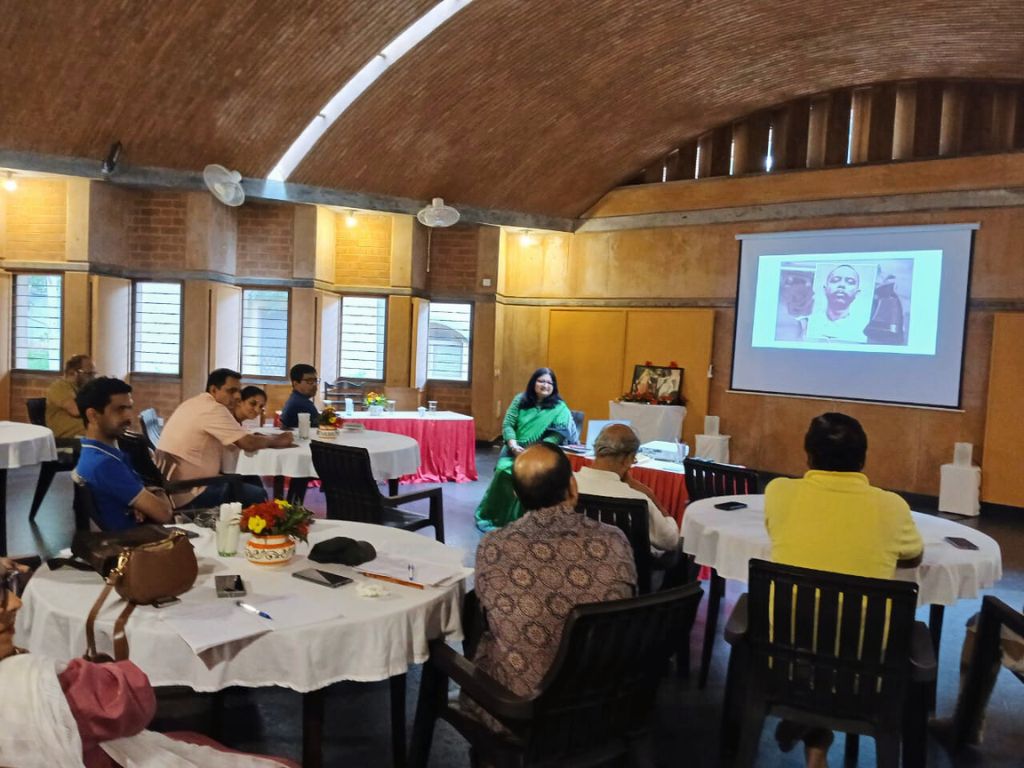
In her talk Dr. Mehra highlighted that a deeper awareness of the nature of human love and its expression through different relationships can prepare us to deal more effectively with inevitably shifting life situations. By becoming conscious observers of the various emotions and impulses and instincts that fill up the space of our human relationships we can also avoid going through unnecessary turmoil in our outer lives and needless disturbances in our inner lives.
Throughout her talk, Dr. Mehra shared some stories that exemplify the deeper dimensions of love and human relationships. Many of the participants were moved by these stories, particularly the story of Sri Aurobindo and Mrinalini Devi. Dr. Mehra also drew insights from Sri Aurobindo’s social philosophy to highlight the aspect of evolutionary nature of human societies and the necessity for a greater mental flexibility in understanding the right relations between individual and family.
Other key themes highlighted during the talk were inspired by the words of the Mother where she explains that love is one of the great universal forces which exists by itself and its movement is free and independent of the objects in which and through which it manifests. She adds further that the force of love manifests wherever it finds a possibility for manifestation, wherever there is receptivity, wherever there is some opening for it.
So how do we prepare ourselves as a receptacle for the force of love? What are the distortions that corrupt this force of love because of human egoism and the lower vital nature and instincts and impulses? How do we keep purifying our vital nature so that the distorting influence of our lower vital nature on this force of love begins to recede? These were some of the questions that were also taken up in Dr. Mehra’s talk and follow-up discussion.
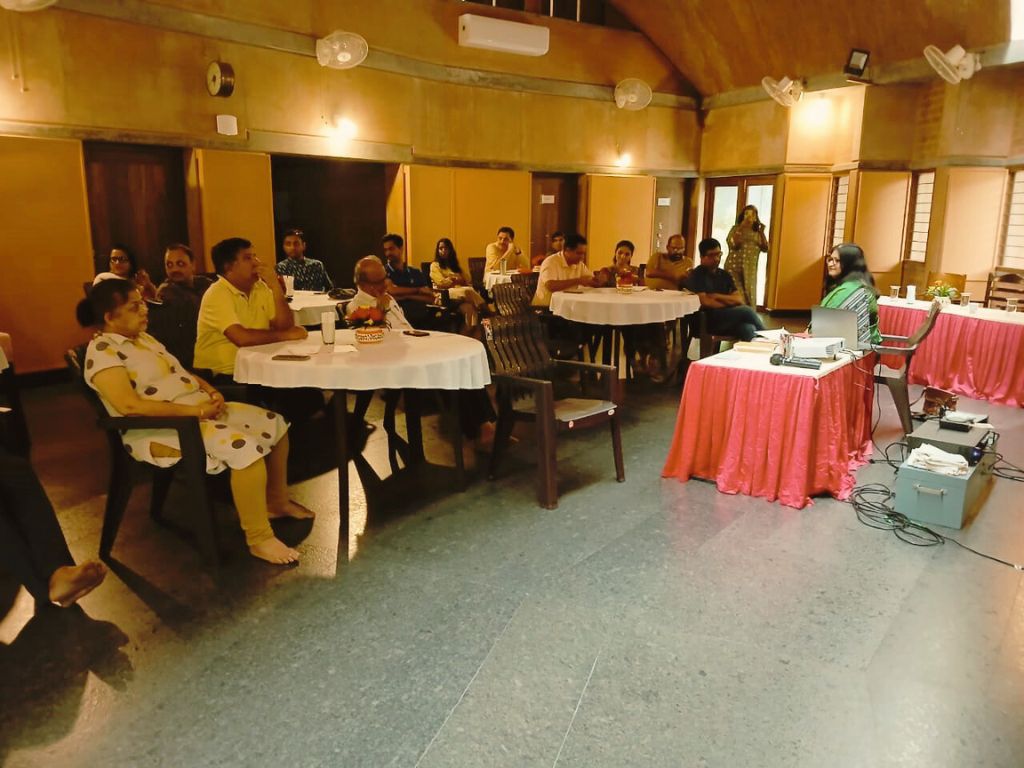
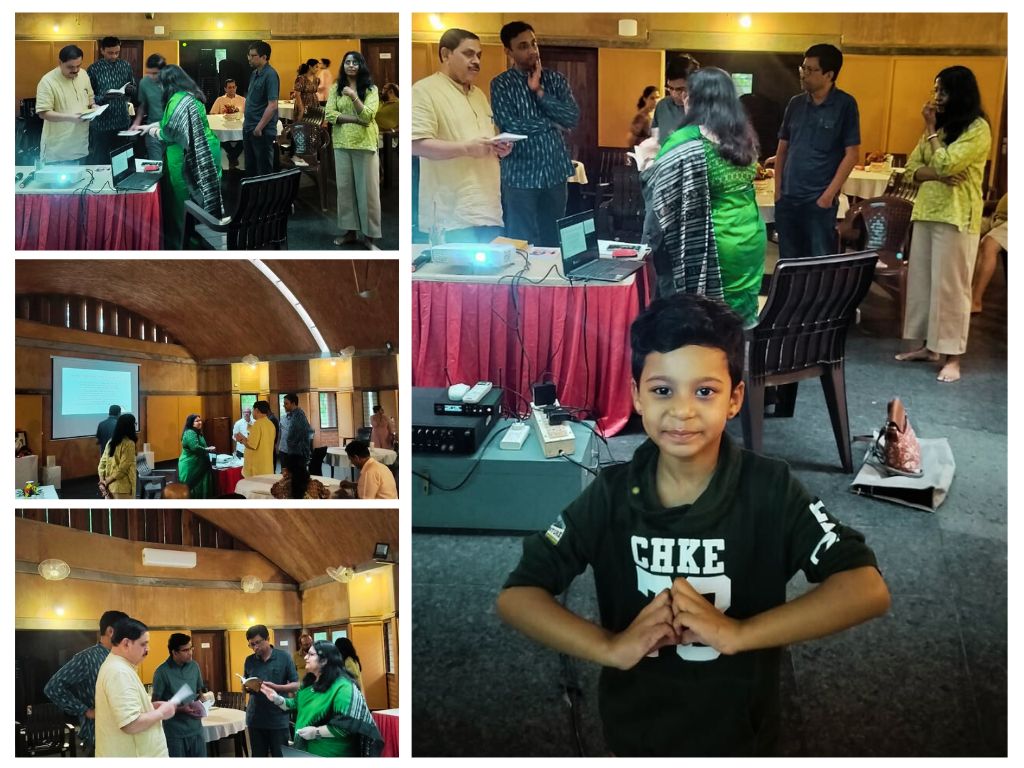
When the topic of family life and man-woman relationship was taken up, especially when one or both the individuals also aspire for a spiritual life, Dr. Mehra emphasised that it is important to remember that Sri Aurobindo and the Mother always pointed out that each case is different, and their guidance was directed to the specific context of each individual’s inner aspiration. Nonetheless, there are several nuggets of wisdom that are helpful to a vast number of aspirants, some of which were briefly shared by Dr. Mehra.
Dr. Mehra also highlighted that according to Sri Aurobindo one of the aims in Integral Yoga — which looks at all life as yoga — is to purify and transform the usual egoistic human love into a purer love towards the Divine at all levels of the being. He explained that after one enters the spiritual life, the relationship with the Divine takes precedence over the ordinary social relations. Either the family relations naturally fall off or become the ground for karmayoga based on the soul’s need. This point was discussed through several examples during the interaction part of the session.
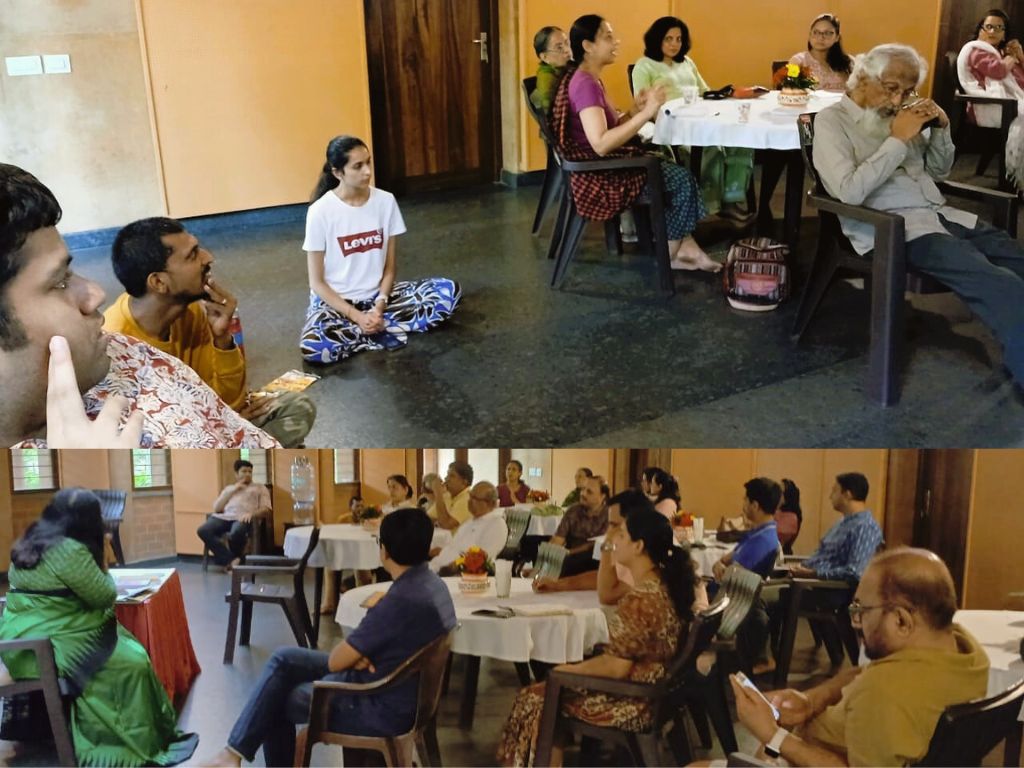
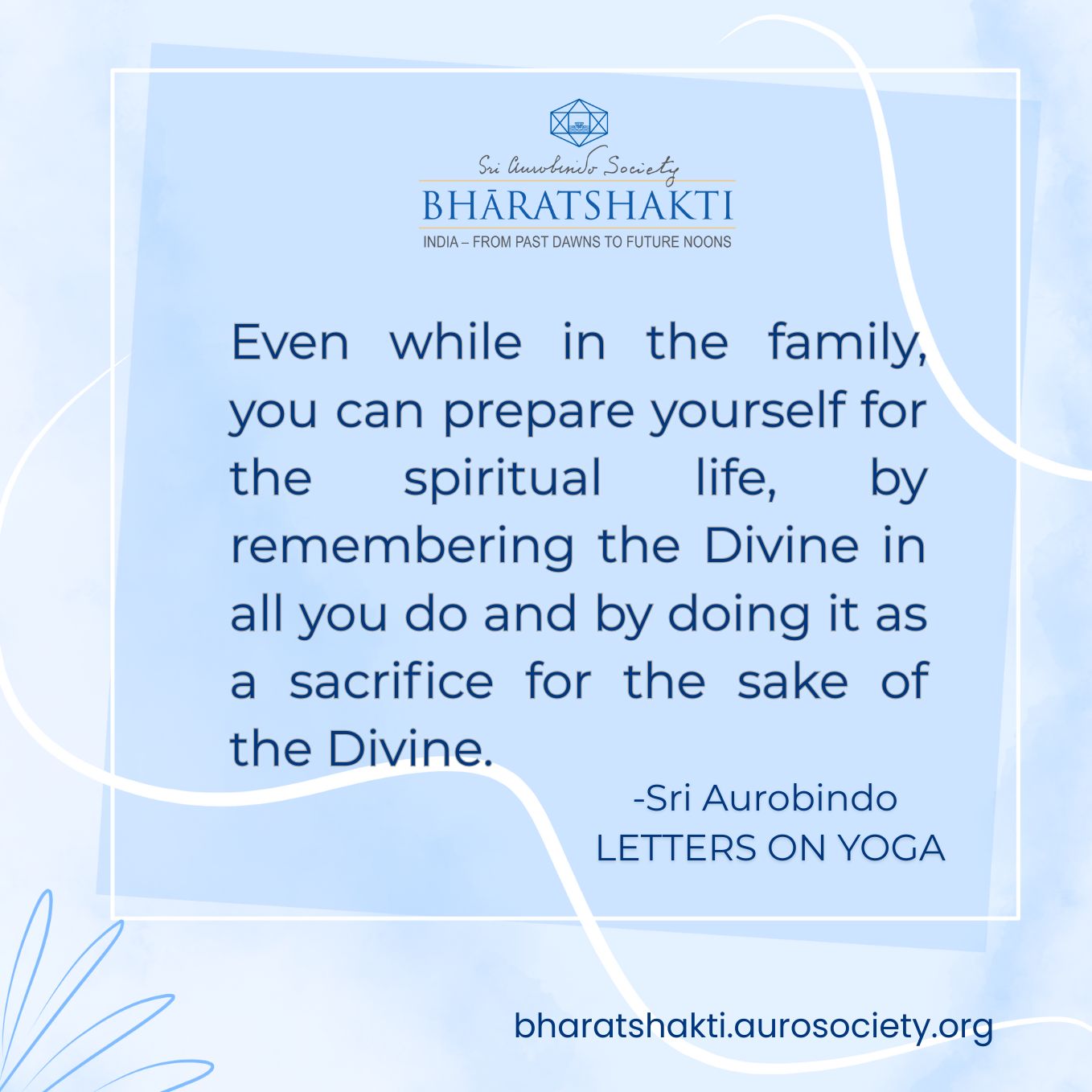
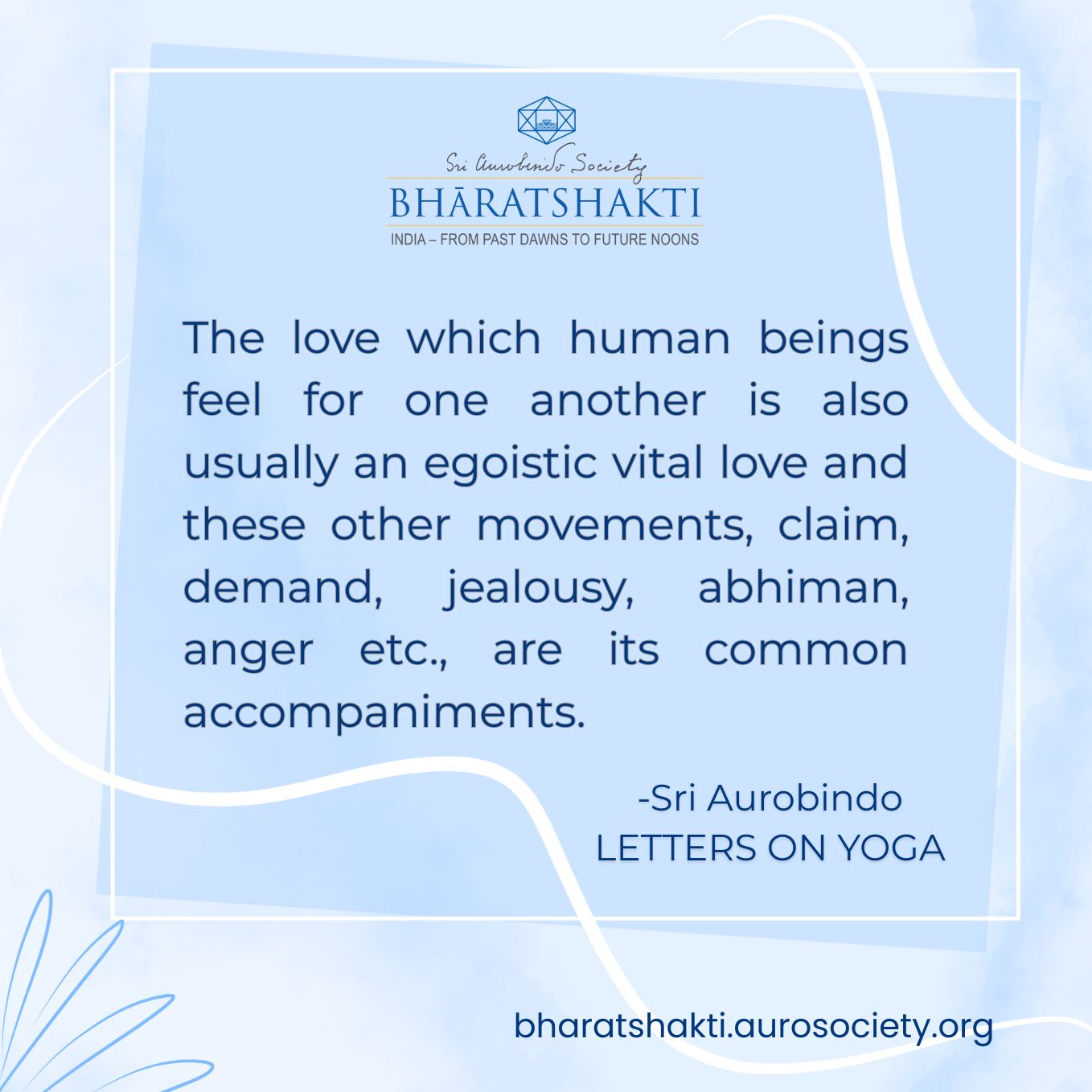
The second part of the session was dedicated to participants sharing their reflections on some quotes which were selected by Dr. Mehra from various letters and conversations of Sri Aurobindo and the Mother. Participants were asked to pick a flash card on which the quote was written and share their observations, understandings and reflections on that. This exercise highlighted for all some practical guidance given by Sri Aurobindo and the Mother on how to handle the sources of disharmony in human relations in daily life. These sources include narrowmindedness, dislike and fault-finding in others.
Overall the session was appreciated by all the participants.