
Date: March 25, 2026
Venue: Online
Watch the Recording
From March 24 to March 26, 2026, BhāratShakti organised a 3-day online programme to mark the Ramanavami celebrations. The programme included talks in English and Hindi, conversations and devotional music.
Day 1 focused on the theme: Ram-bhakti, Diasporic Consciousness and Cultural Continuity. Read the report of Day 1 program HERE.
DAY 2 – Ramayana in the Classroom
The second day of the 3-day programme focused on the theme ‘Ramayana in the Classroom’ and featured an engaging interaction with two educationists from Creative School, near Bengaluru.
After a brief silent concentration invoking the Divine Presence, Dr. Beloo Mehra, Director of BhāratShakti, Sri Aurobindo Society introduced the topic by emphasising that both Ramayana and Mahabharata can serve as important pedagogical and curricular means to bring higher knowledge in the classrooms. She then introduced the two guests – Ms. Jayashree Ashok and Ms. Shubha Rao – briefly mentioning about the work they are doing at Creative School.
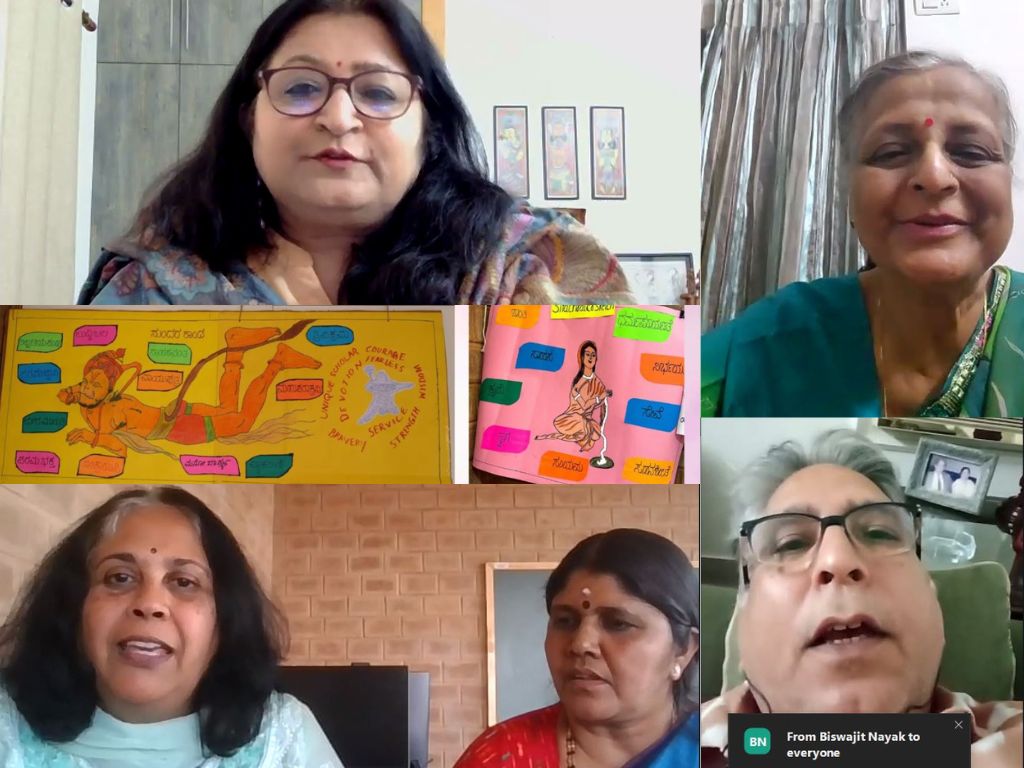
Ms. Jayashree Ashok
Deeply inspired by the teachings of Sri Aurobindo and the Mother on Integral Education, Ms. Jayashree Ashok is Co-founder and Director of Creative School and Prajña Living Wisdom Centre at Bengaluru. She has extensive experience in the area of education, working on the ground and researching alternative educational approaches including the time spent at Auroville schools. Sacred Parenting and Sacred Classroom Life and Living are some of the frameworks she has developed at Creative School for training the teachers and orienting the parents to Integral Education philosophy and practice. She has more than two decades of experience working with several healing modalities including Rebirthing Breathwork and Energy Healing methods.
Ms. Shubha Rao
Ms. Shubha Rao has extensive experience in curriculum development and currently serves as Program Advisor at Creative School, particularly working with the Parijatha group of students who come from different socioeconomic backgrounds. Her main areas of work include planning curriculum, teacher training, counselling children and teachers. Though initially trained in the field of Sericulture, the field of education was her true calling. She got herself a Diploma in Teaching Practice from Srishti School of Art and Design, followed by Advanced Vedic mathematics training from Vedic math Academy, UK. She found that working with children and teachers is actually an exercise similar to facilitating overall well-being, that is a harmony in mind, body and spirit. She is a Trained therapist from Prajna Wisdom Centre.
Dr. Mehra emphasised that Creative school is already committed to bring deep insights from Indian cultural and spiritual traditions to students and teachers through its educational approaches. She then invited Ms. Jayashree and Ms. Shubha to share their insights as to how they have been able to bring the insights and wisdom of Ramayana into the classroom.
Ms. Jayshree shared that tales from the Ramayana are shared regularly with the students and they are asked to express what they gathered from it. Emphasising that students are not just passively listening to the stories, but they are encouraged to share and express what they took from it. The school offers a dedicated class every week called “Life and Living” where edifying stories from Indian tradition are narrated and Ramayana is one of the main sources of such stories. Children are encouraged to present short plays on selected incidents from the Ramayana which helps them to demonstrate how much they internalised the teaching.
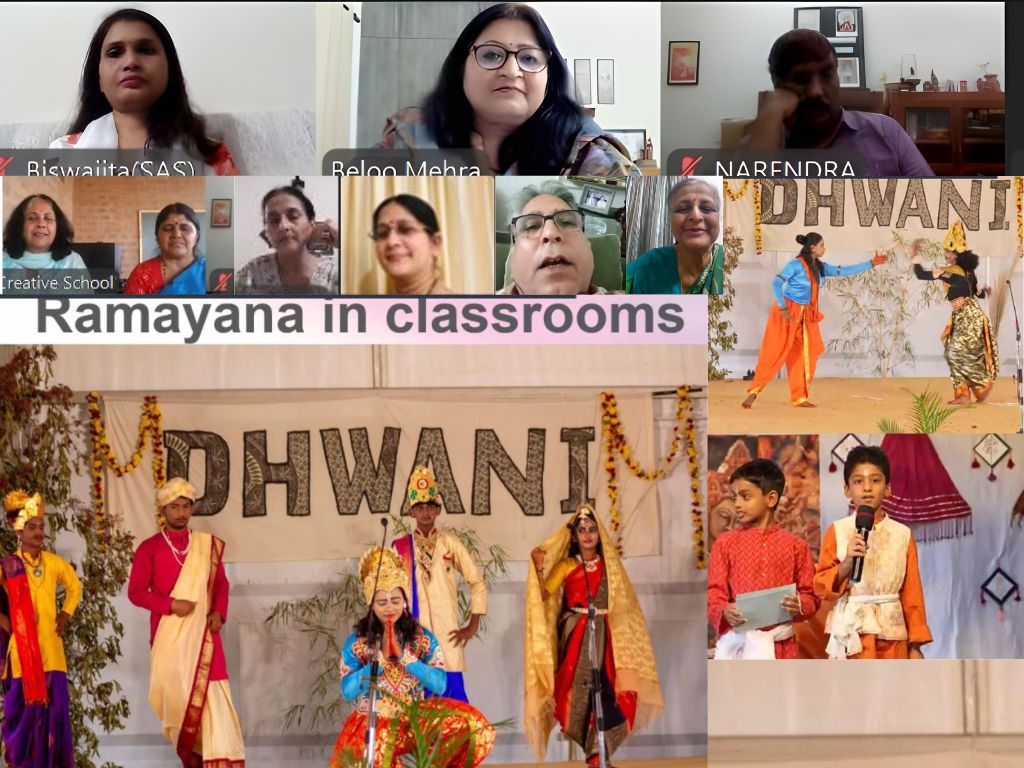
A beautiful video was played which showed the children of Creative School enacting the scene of Kaikeyi’s demand that her son be made the king influenced by the evil advice of Manthara and also Rama’s departure to the forest along with Sita and Lakshman. It was pointed out that what the children picked up from the story was the loyalty and love of Rama for his father and to what extent he was willing to go to keep his father’s word. The process which they went through to recreate that learning showed that they had internalised it.
Through a PPT, Ms. Shubha Rao showed the variety of learning modules they have developed using Ramayana as the starting point. She shared that through some creative thinking they have been able to integrate Ramayana in subjects ranging from languages, history, geography and science. She pointed out that students are encouraged to reflect on the actions and choices of individual characters from the Ramayana.
Thereafter, another video was shown which documented the students’ sketches and paintings inspired by the different characters of Ramayana along with the qualities that each one of them possessed. There was one display where inside the sketch of each character, the actual poetry from the Sundara Kanda of Ramayana was written. Another display showed the sacred geography of Ramayana sketched by the students, and yet another had different events of the Ramayana portrayed by the students on chart paper.
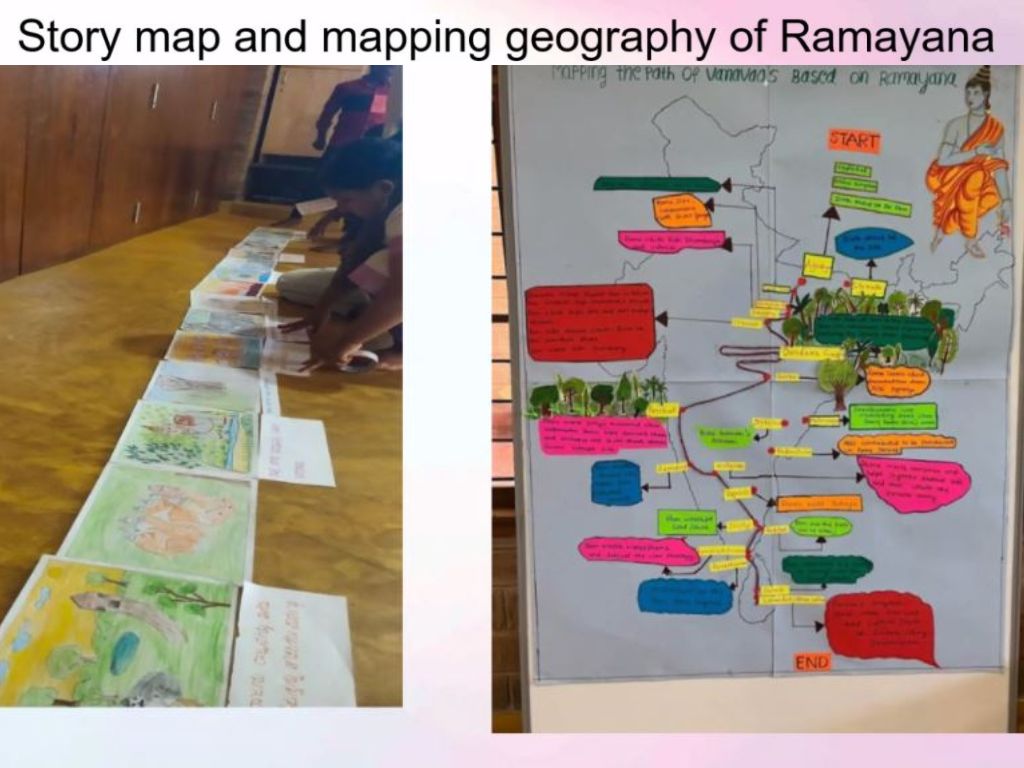
The panelists also talked about and showed images of how the school organises excursions to various historical places allowing the students to get a first-hand experience of the places making their learning more alive. They explained how their teaching methods differ from the regular schools; the school places great emphasis on arts-based learning activities and regularly use art as a means for the purification of the vital. It was pointed out that in their observation immersing in activities that relate to Ramayana also serves as a kind of inner healing and purification for students.
Further interaction with the panelists brought in different subjects like purification of the vital through art and the problem of screen addiction amongst children. Significance of rigorous training of the teachers and orienting them to the necessity of integrating deeper insights from the Indian cultural tradition was also discussed because unless the teachers are rightly oriented, it’s difficult to be a guide to the children.
Thereafter, another video was played which showed the students performing scenes from the Ramayana. During the interaction it was also pointed out that each character and situation of the Ramayana and Mahabharata can be deeply reflected upon for drawing psychological insights and lessons on how to be in the world, how to make choices, how to navigate the relativistic moral-ethical domain etc. And educators at Creative School are encouraged to approach these texts in this way which makes the learning experience more living and meaningful for all.
The panelists also shared how many of their students have been enthusiastically chanting Hanuman Chalisa and other bhajans dedicated to Sri Ram as a result of the diverse ways in which they have been exposed to the Ramayana.
The session was appreciated by all participants, several of whom said that they were deeply impressed by the innovative educational approach of Creative School. Dr. Mehra shared with the participants links to several other works BhāratShakti has done with Creative school, and also shared links to recordings of previous interactions on the educational approach at Creative.