
Date: April 3, 2026
Author: Narendra Murty
A blog inspired by selections from Savitri
Christ the Avatar, came to this world to bring to mankind a message of love and man’s divinity that was unheard of in the Western world. But it is one of the tragedies of history that humanity has persecuted those who brought a new light. Though worshipped after they are gone, a crown of thorns, a cross, the hemlock, the stake are their lot when they are alive.
Sri Aurobindo gives us some remarkable passages in his epic poem, Savitri which help us understand the nature of Christ’s sacrifice. This writing is inspired by those lines.
Before Christ came, the prevailing theology of Judaism asserted unequivocally that there is an unbridgeable gulf between the Divine being and human nature. God and man were forever separate, irreconcilable and two opposite poles. God resides in his high heaven and he can never assume the imperfect nature of man. Divinity and humanity were as disparate as heaven and hell.
Then comes Jesus and proclaims the divinity of man. He declares: The kingdom of God is within you (The Gospel of Luke, 17:21) implying that divinity is within man. And he announces his own Avatarhood by saying: I and the Father are one (The Gospel of John, 10:30). This was an unpardonable blasphemy and was perceived as a heinous crime that attempted to destroy the old faith by challenging its most basic tenet: the duality between man and God. The only punishment was death. That is why Jesus had to die.
To a world that believed in “If there is harm, then you shall pay life for life, eye for eye, tooth for tooth…” (Old Testament, Exodus 21: 23-25), Jesus proclaimed a new law of love and mercy: Love your enemies, do good to those who hate you, bless those who curse you, pray for those who mistreat you (Luke 6:27-28). He brought a new light, a new truth for which the world was not ready. And when a debased humanity cannot receive the gift of Light and Love that a World-Redeemer brings,
It turns against the saviour hands of Grace;
It meets the sons of God with death and pain~ Savitri, Book I, Canto 1, p. 7
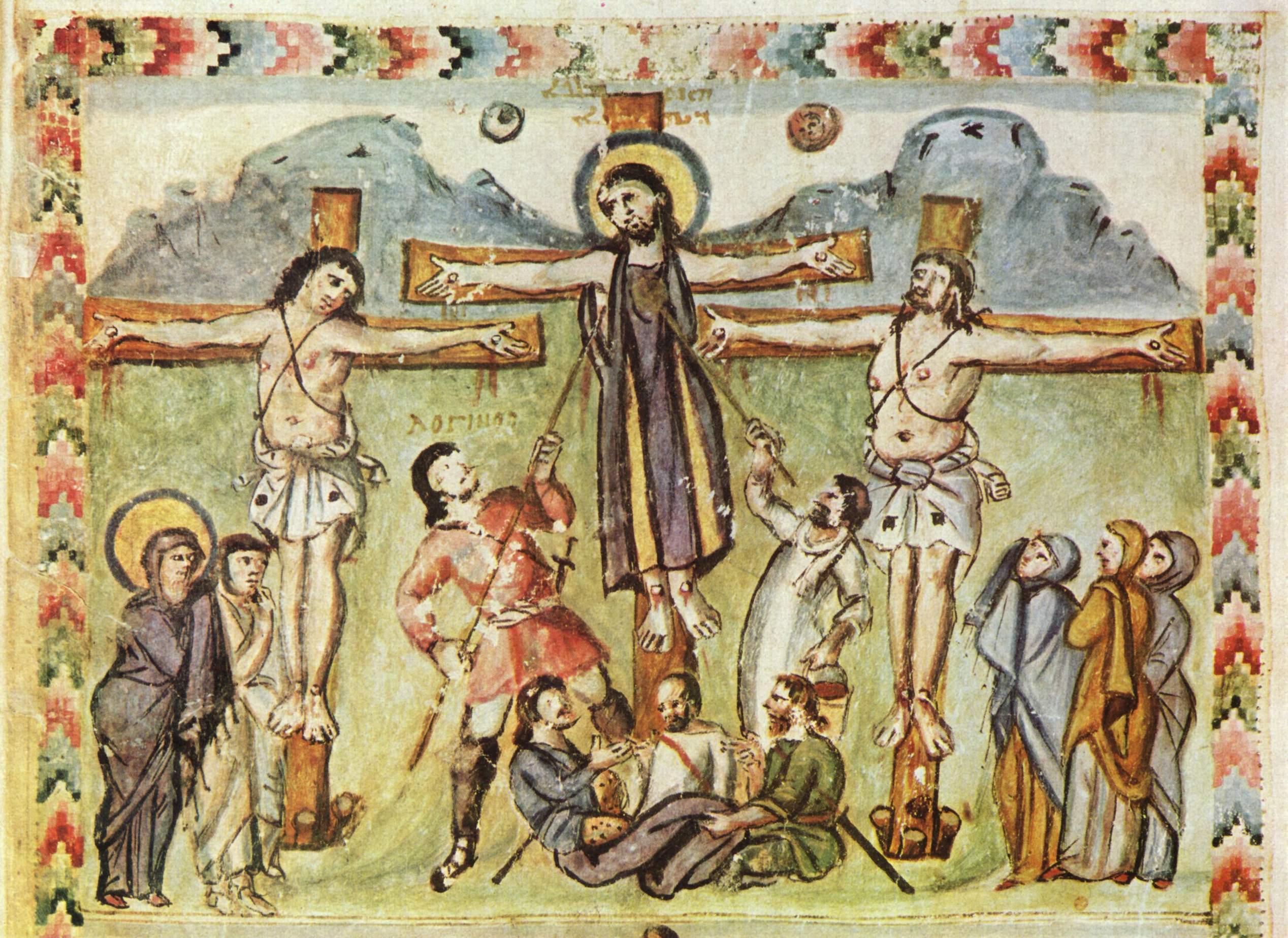
The saviour who has in his heart the highest good of man has to suffer and go through pain when he chooses to descend on the terrestrial plane. Sri Aurobindo sheds light on this when he writes:
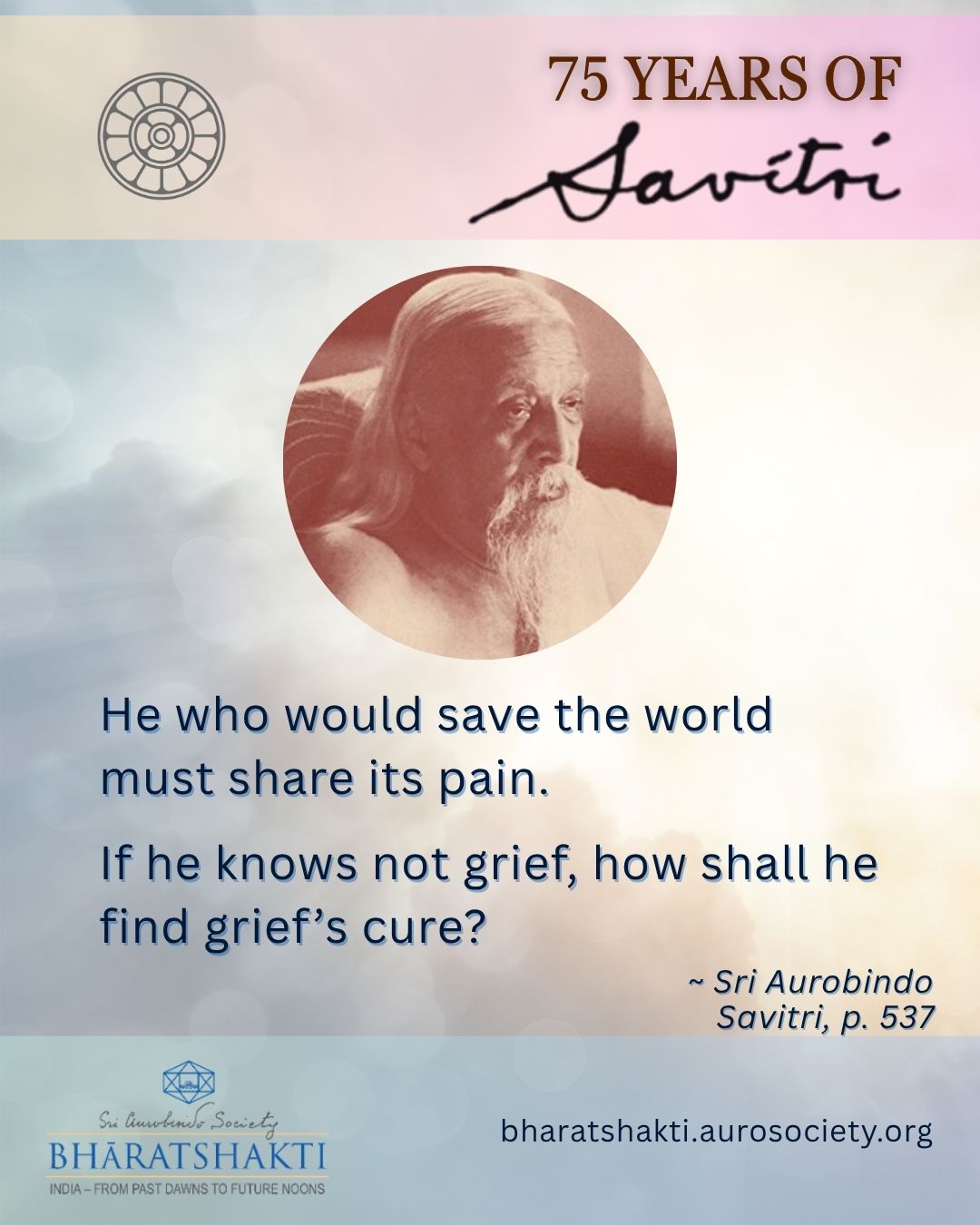
He who would save the race must share its pain
This he shall know who obeys the grandiose urge~ Book VI, Canto 2, p 445
When the Divine descends as an Avatar, he is not exempt from the pain and suffering that human beings are subject to. Choosing to be human, to live in a human body is to assume the suffering that comes with earthly life. But the Avatar comes driven by the grandiose urge – to show a new path to the humanity for rising in the consciousness.
The great who came to save this suffering world
And rescue out of Time’s shadow and the Law,
Must pass beneath the yoke of grief and pain;(Ibid)
Sitting in his high heaven of invincibility, the Divine Avatar cannot show mankind a new path; he must walk the same path on the earth with human beings who suffer. Only then the duality between man and God can be transcended. That is why he has to become one of the humans and must pass beneath the yoke of grief and pain.
They are caught by the Wheel that they had hoped to break,
On their shoulders they must bear man’s load of fate.(Ibid)
Every time the Divine comes as the Saviour, he too is caught by the ever-turning Wheel of ignorance and darkness that pervades earth. On their Atlas-like shoulders the Saviours must bear the cross, the suffering of the world – man’s load of fate.
The Son of God born as the Son of man
Has drunk the bitter cup, owned Godhead’s debt,
The debt the Eternal owes to the fallen kind(ibid.)
Revenge was the spirit of the times (Time’s shadow) and violence was the Law of life before Jesus came. He came to raise man from this Law to the mercy of God and the grace of Love. Jesus who is actually the Son of God had to be born as the Son of man and drink the bitter cup of pain and suffering.
Sometimes, even an Avatar baulks at the suffering he has to endure for the sake of his mission. When Jesus became aware of his impending death, on the night of his arrest before the crucifixion, he prayed thus: “My Father, if it be possible, let this cup pass from me…” (Matthew 26:39). Yet he goes ahead and repays God’s debt to man – the debt the Eternal owes to the fallen kind. Because God does not simply abandon man to his fate and suffering. He assumes responsibility for the suffering of man and treats it as a debt he owes to man whom he had created. Thus, God redeems his debt through the self-sacrifice of his own son. Hence, the Avatar suffers on behalf of man.
The Eternal suffers in a human form,
He has signed salvation’s testament with his blood:
He has opened the doors of his undying peace.(Ibid)
The incarnate God suffers when he assumes the human form because he assumes the limitations of mortal existence. But with his suffering, love and compassion he signs with his own blood, the testament of man’s salvation. Wearing the crown of thorns, crucified on the cross with the nails driven through his body, he can still cry out his divine appeal: “Forgive them Father, for they know not what they do,” and thereby opens the doors of his undying peace.
The Deity compensates the creature’s claim,
The Creator bears the law of pain and death;
A retribution smites the incarnate God.(Ibid)
The Divine hears the cry of humanity for relief from suffering, and an Avatar descends taking upon himself the sentence that is due for man’s sins by bearing the law of pain and death, the law of mortal existence on earth. The Divine makes his own son (incarnate God) suffer the divine retribution.
His love has paved the mortal’s road to Heaven:
He has given his life and light to balance here
The dark account of mortal ignorance.(Ibid)
Jesus who embodied Love in his being showed to mankind the way to a divine life – mortal’s road to Heaven; and with his own life and light redressed the dark deeds of the ignorant mortals.
It is finished, the dread mysterious sacrifice,
Offered by God’s martyred body for the world;(Ibid)
Now the dreadful, painful sacrifice is done and the Son of God has offered his own martyred body for the world. That is why,
Gethsemane and Calvary are his lot,
He carries the cross on which man’s soul is nailed;(Ibid)
For the love that Christ brought, Gethsemane[1] and Calvary[2] were the rewards. And the burden of man’s sins that nails his soul to a cross – that burden is carried by the Saviour himself.
His escort is the curses of the crowd;
Insult and jeer are his right’s acknowledgment;
Two thieves slain with him mock his mighty death.(Ibid)
Who escorts the Son of God in his final journey? Angels and fairies of a heavenly choir singing celestial songs? No. Curses of the crowd; insult and jeer – that is what he gets for being right. And his companions in death are not saints or holy men but two thieves slain with him mock his mighty death.
He has trod with bleeding brow the Saviour’s way.
He who has found his identity with God
Pays with the body’s death his soul’s vast light.
His knowledge immortal triumphs by his death.(Ibid)
Carrying the burden of the cross of man’s sins, he walked all the way to his martyrdom with a bleeding brow – he who is supposed to be the Son of God; he who said he was one with his Father in Heaven. For the soul’s vast light that he brought, he had to pay with the body’s death. Such is the path of thorns the Saviour has to walk spilling his blood along the way. But he is not defeated after all. For his knowledge immortal triumphs by his death. The light of knowledge, the gift of divine love that Jesus brought, lives to this day in the hearts of his true devotees.
Notes
[1] Gethsemane – the garden at the foot of Mount of Olives in Jerusalem where Jesus was arrested on the night before his crucifixion.
[2] Calvary – the hill top where Jesus was crucified.