
Date: February 16, 2026
Venue: Sri Aurobindo Sadhana Kendra, Vallabh Vidyanagar, Gujarat
See full photo-gallery HERE.
Sri Aurobindo helps us understand culture as a soul-mind-body complex through which a people’s collective consciousness is expressed. What is the place of art in this view of culture, and how does Art help us know a culture and a nation? These and other related questions were explored as part of a recently concluded workshop for the youth of Sardar Patel University at Vallabh Vidyanagar (VVN) in Gujarat.
This 5-hour-long workshop was organised by BhāratShakti department of Sri Aurobindo Society at the invitation of Sri Aurobindo Sadhana Kendra (SASK) and Sri Aurobindo Chair of Integral Studies Sardar Patel University, Vallabh Vidyanagar Gujarat.
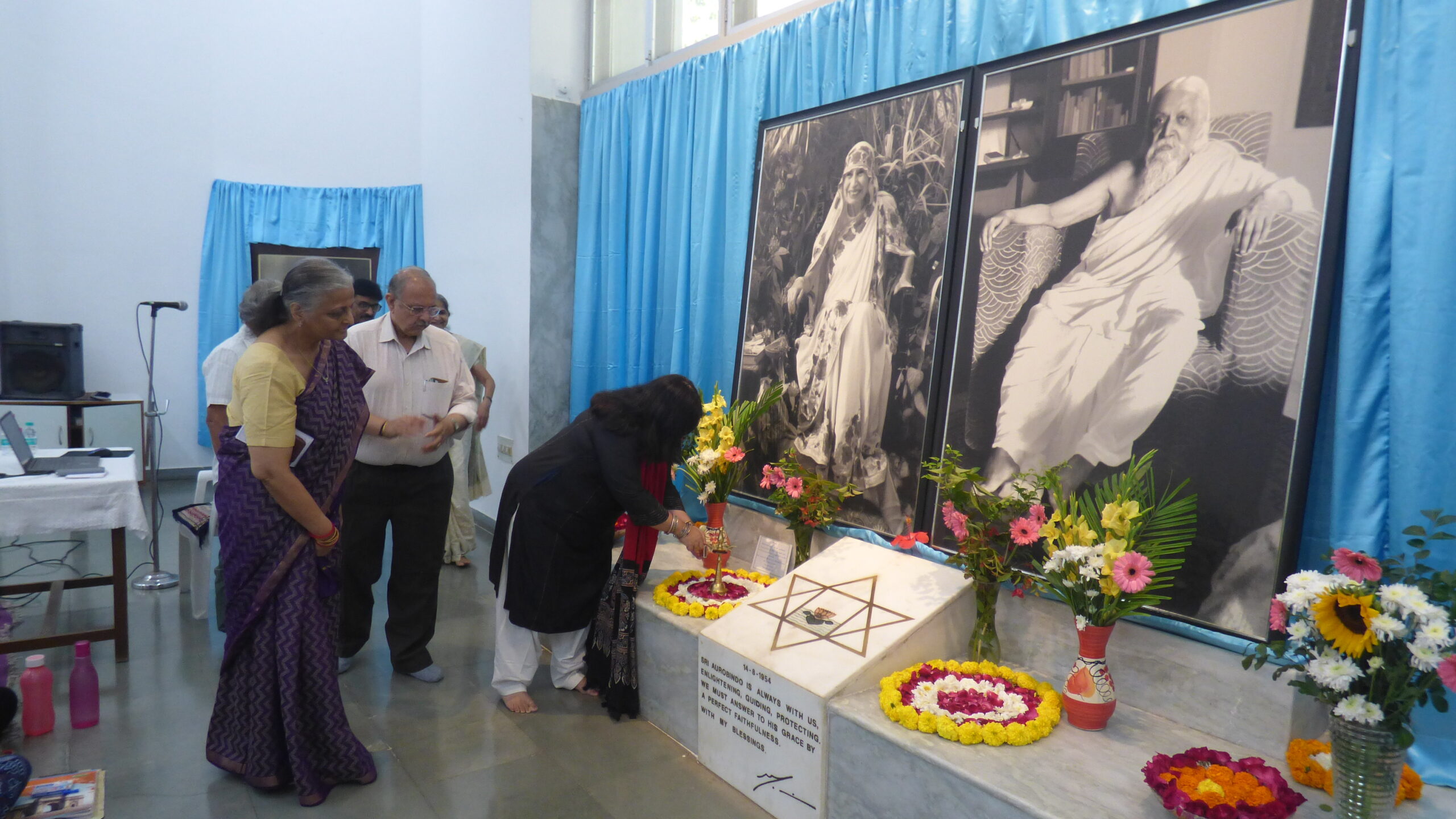
The workshop began with the lighting of a lamp and some silent concentration, invoking the Divine Presence.
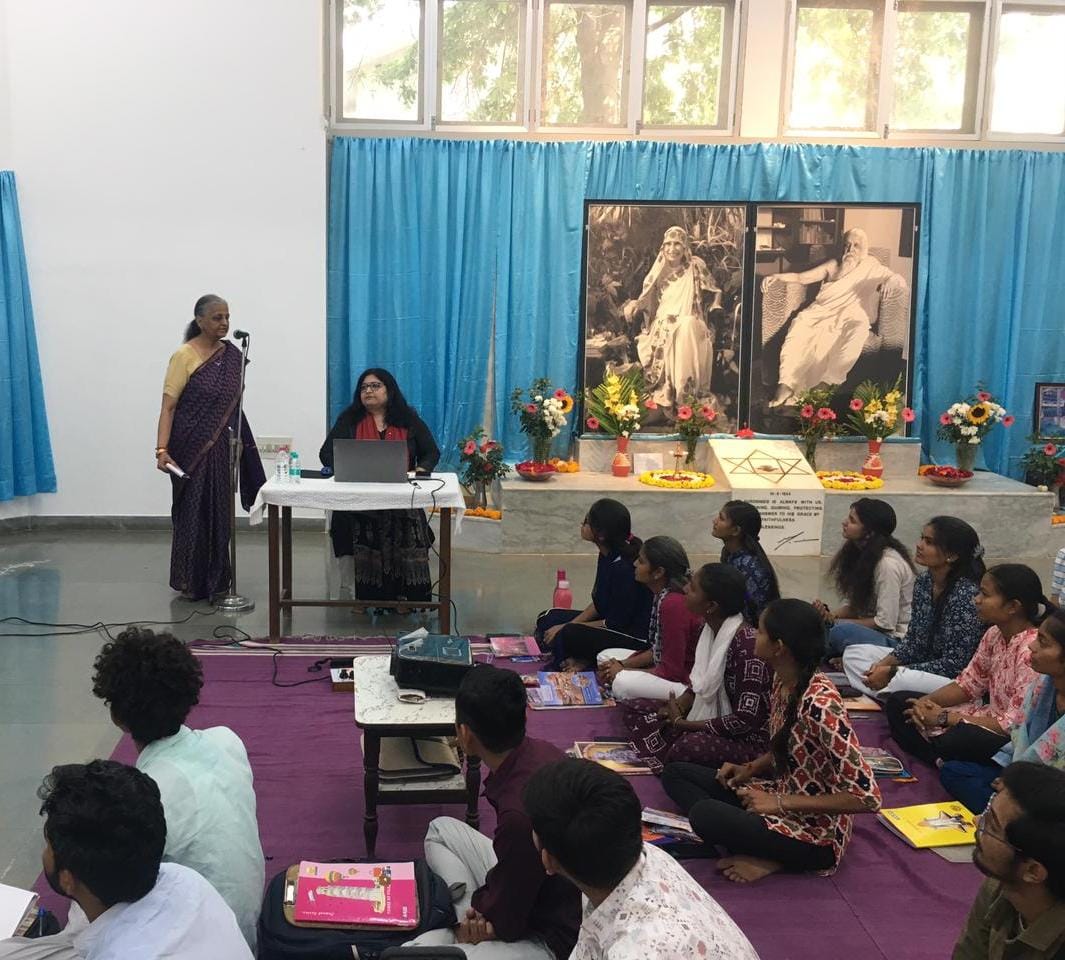
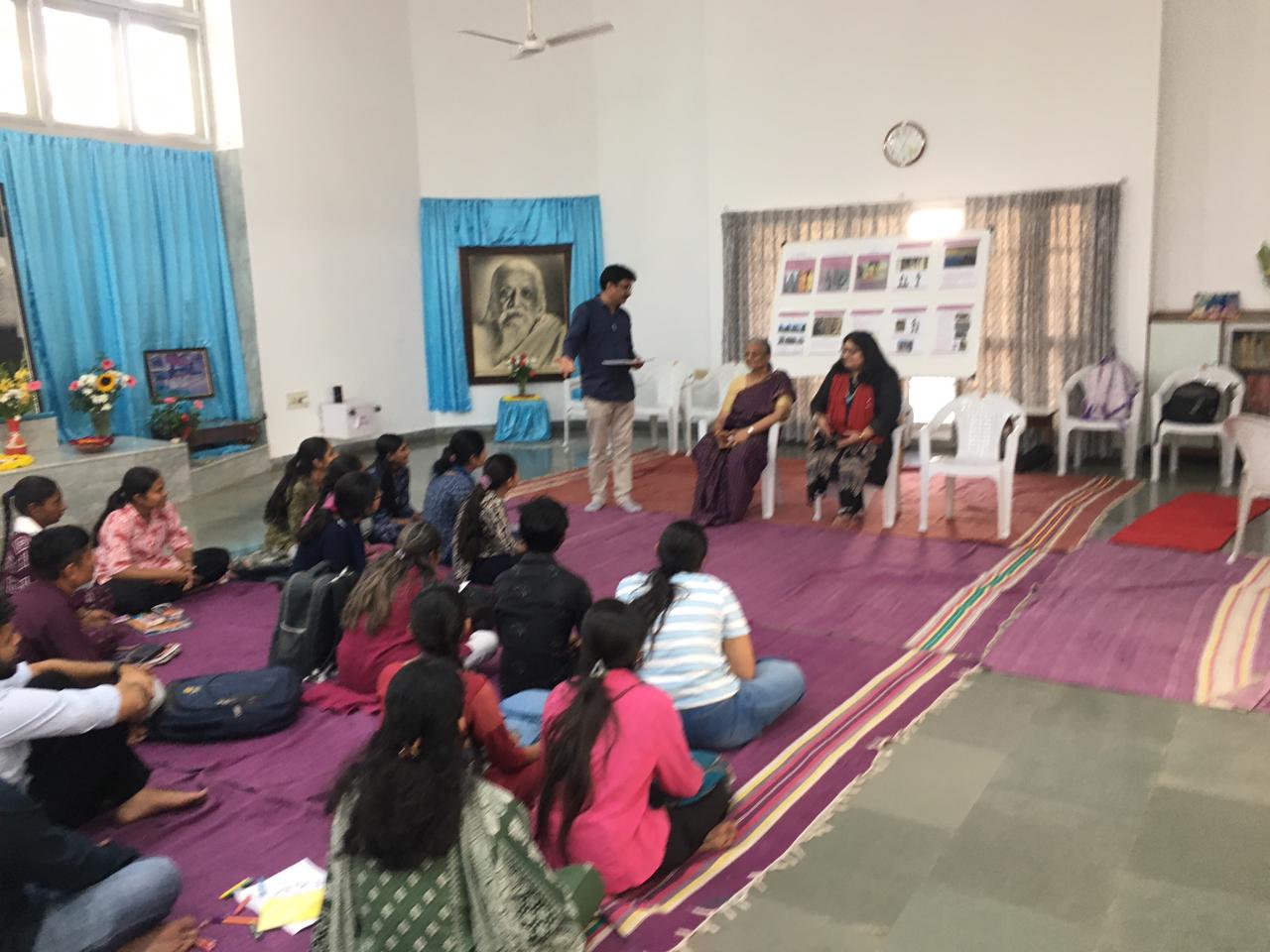
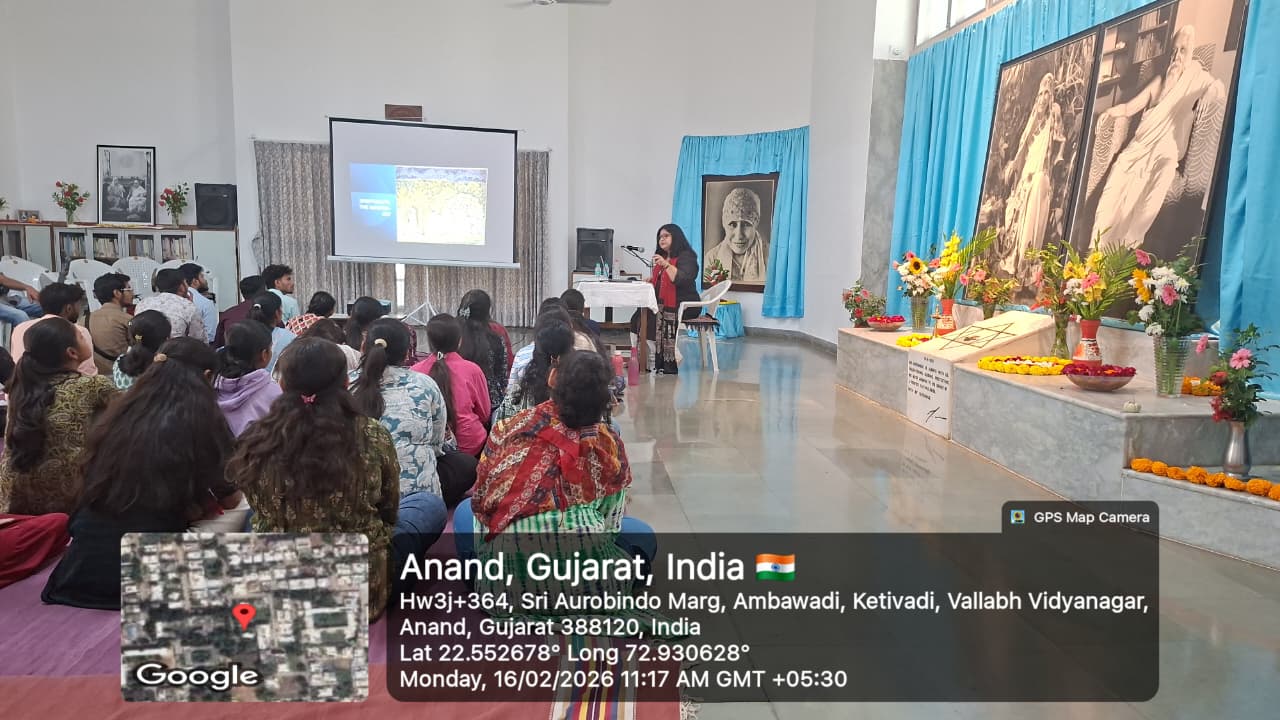
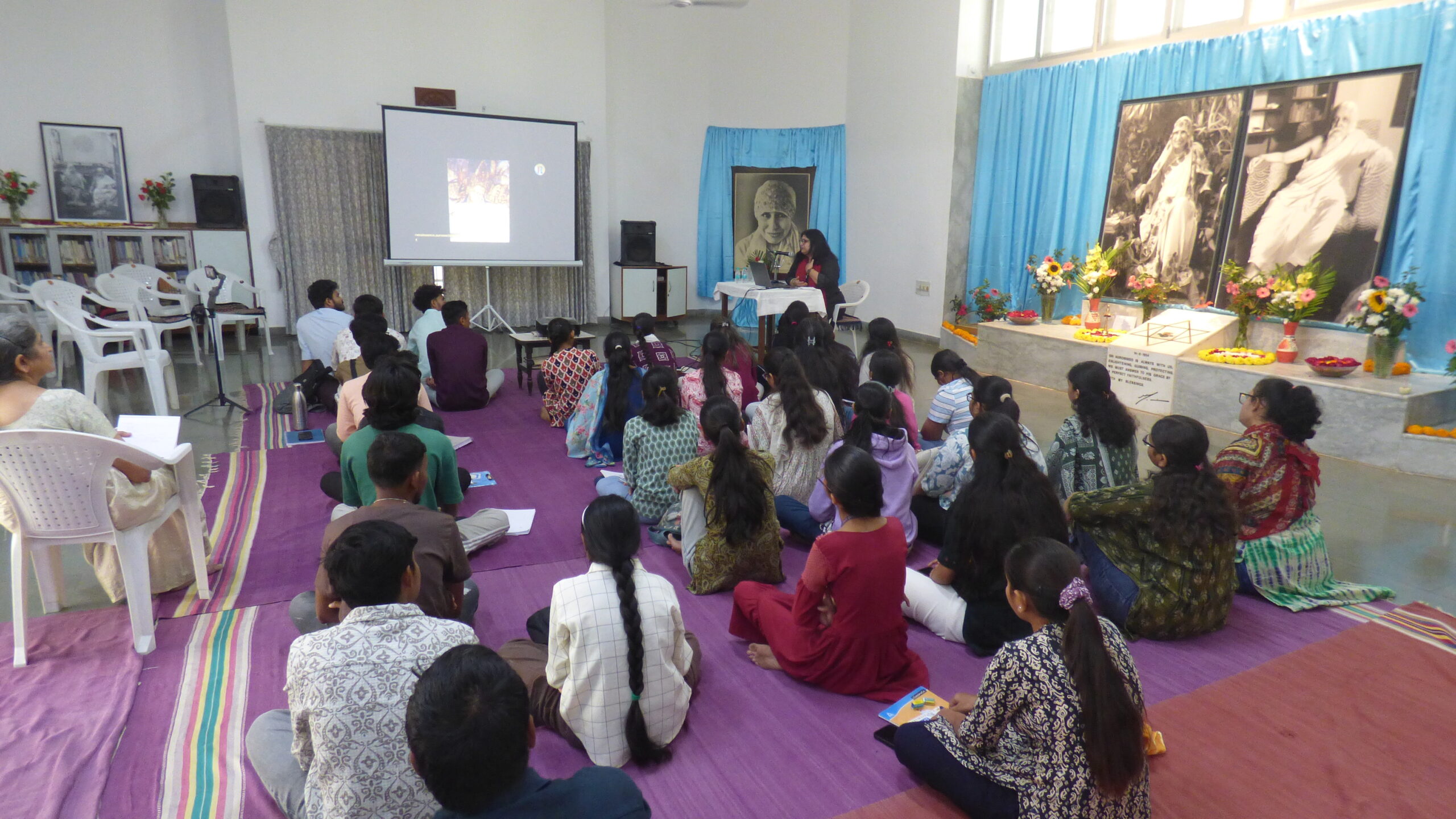
This workshop is part of an ongoing learning initiative developed by the BhāratShakti, Sri Aurobindo Society, for the youth from Sardar Patel University titled ‘Yuvā Shakti‘ under which for the last three years, educational programmes have been conducted at Sri Aurobindo Society campus.
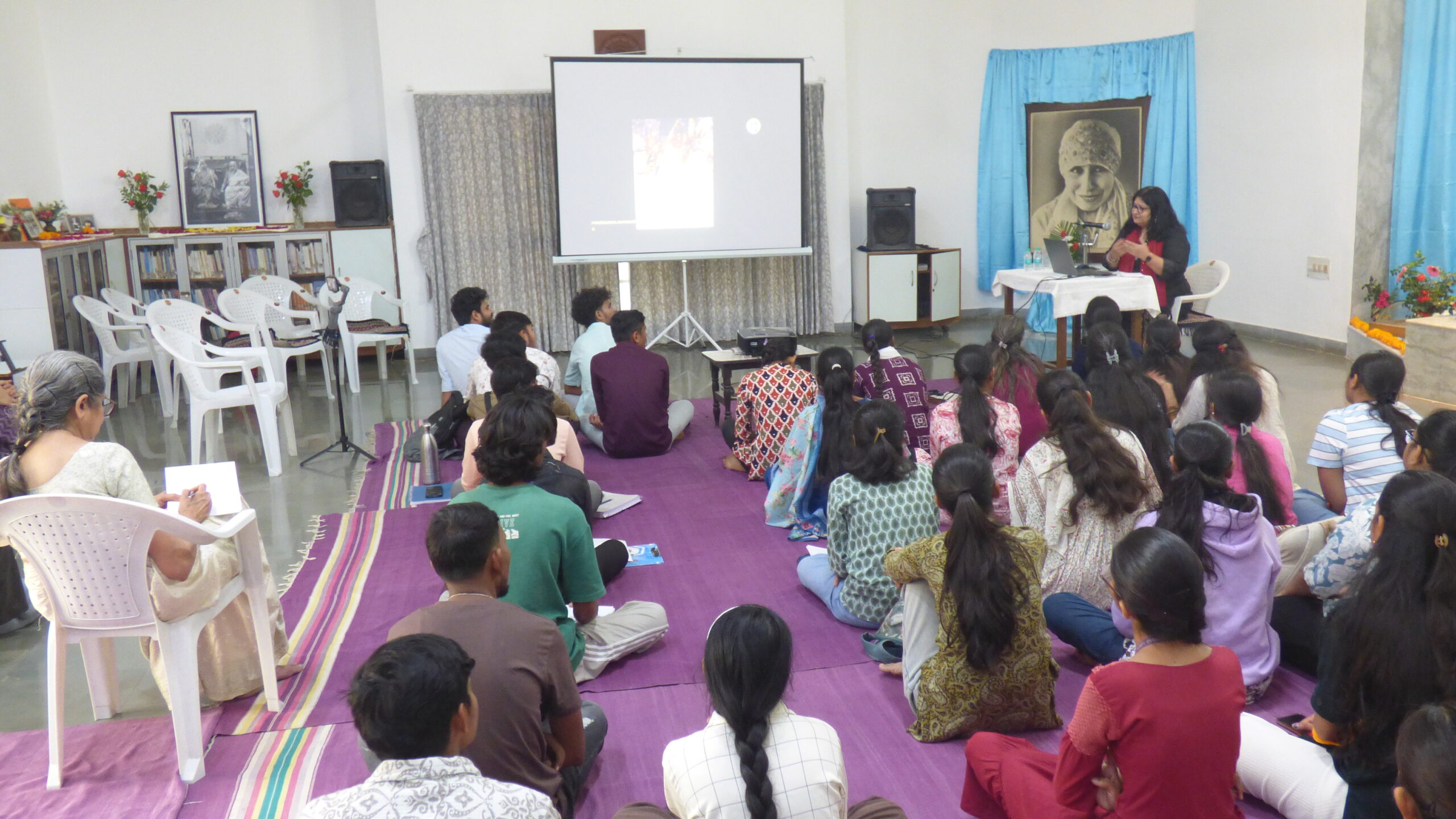
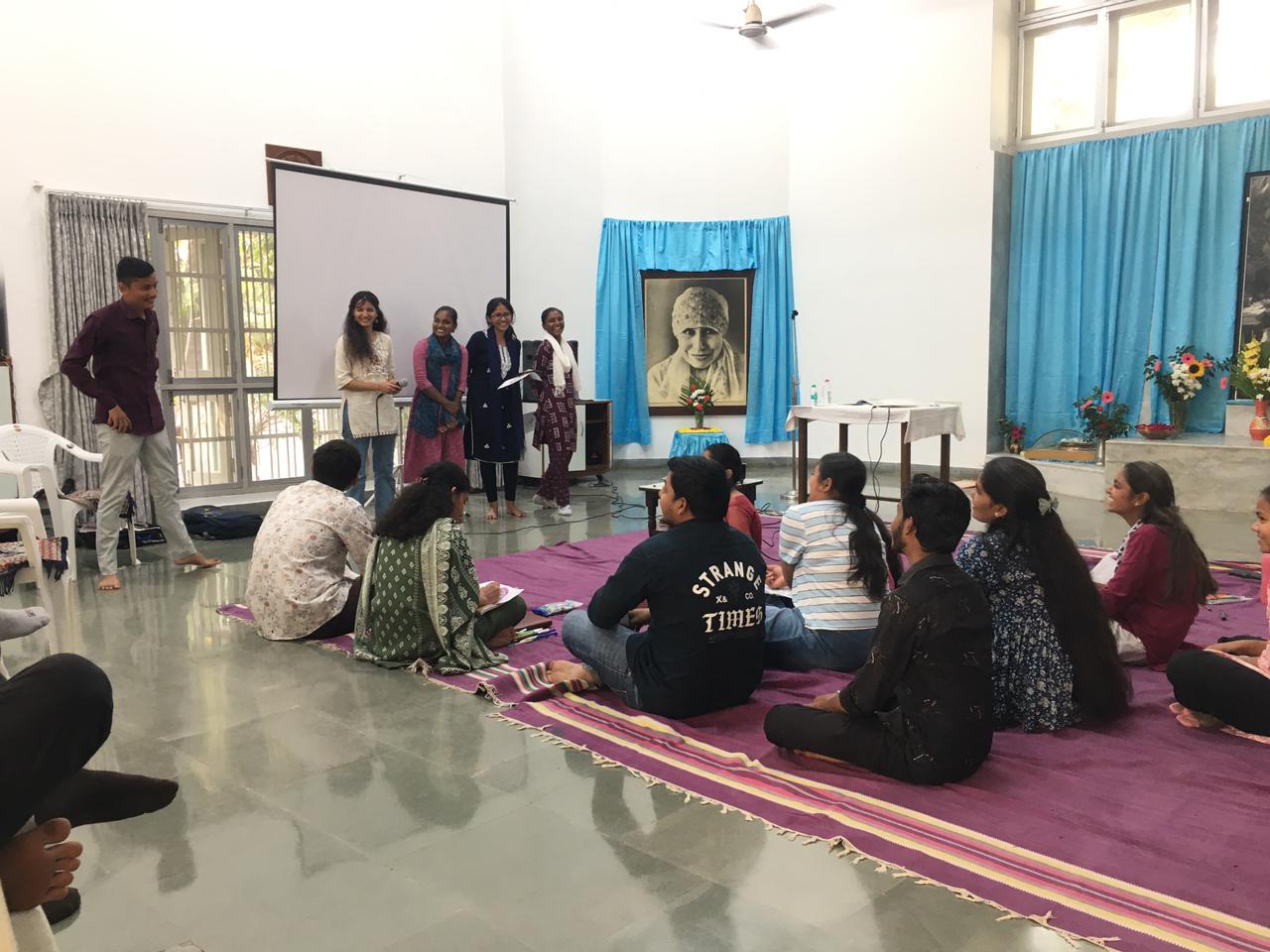
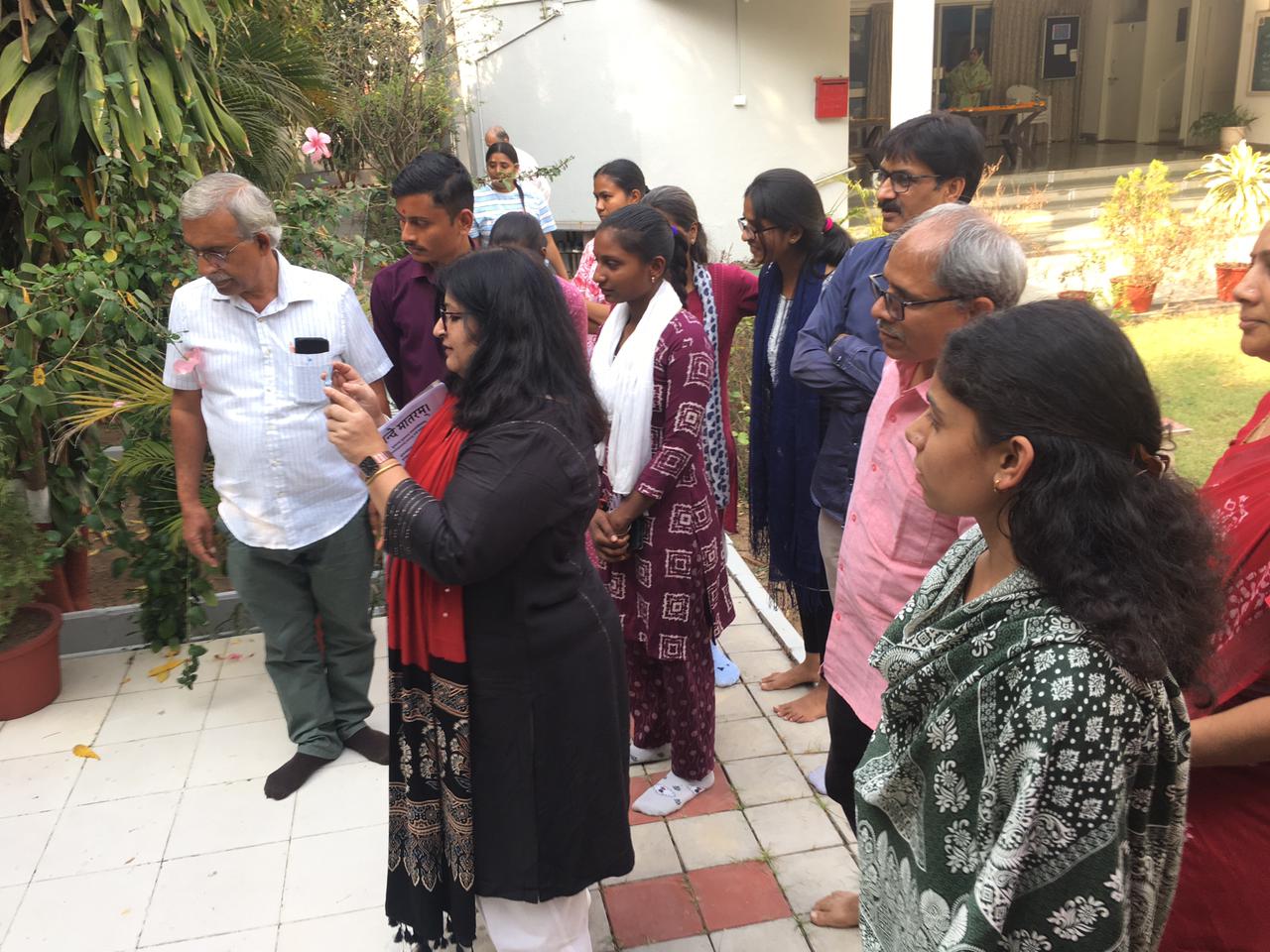
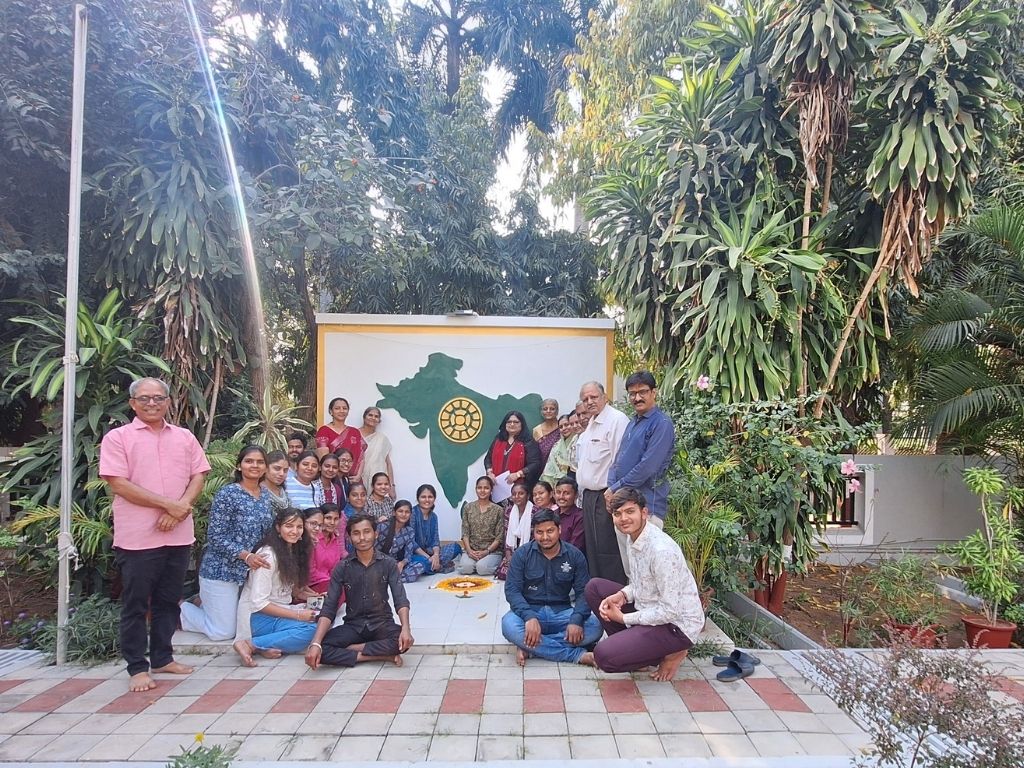
This year, the programme will be conducted in two phases. The first phase was conducted at the beautiful campus of Sri Aurobindo Sadhana Kendra, VVN where about 40 university students attended the workshop. The second phase will involve about 25 students and shall be conducted at Sri Aurobindo Society in Pondicherry in the month of May or June.
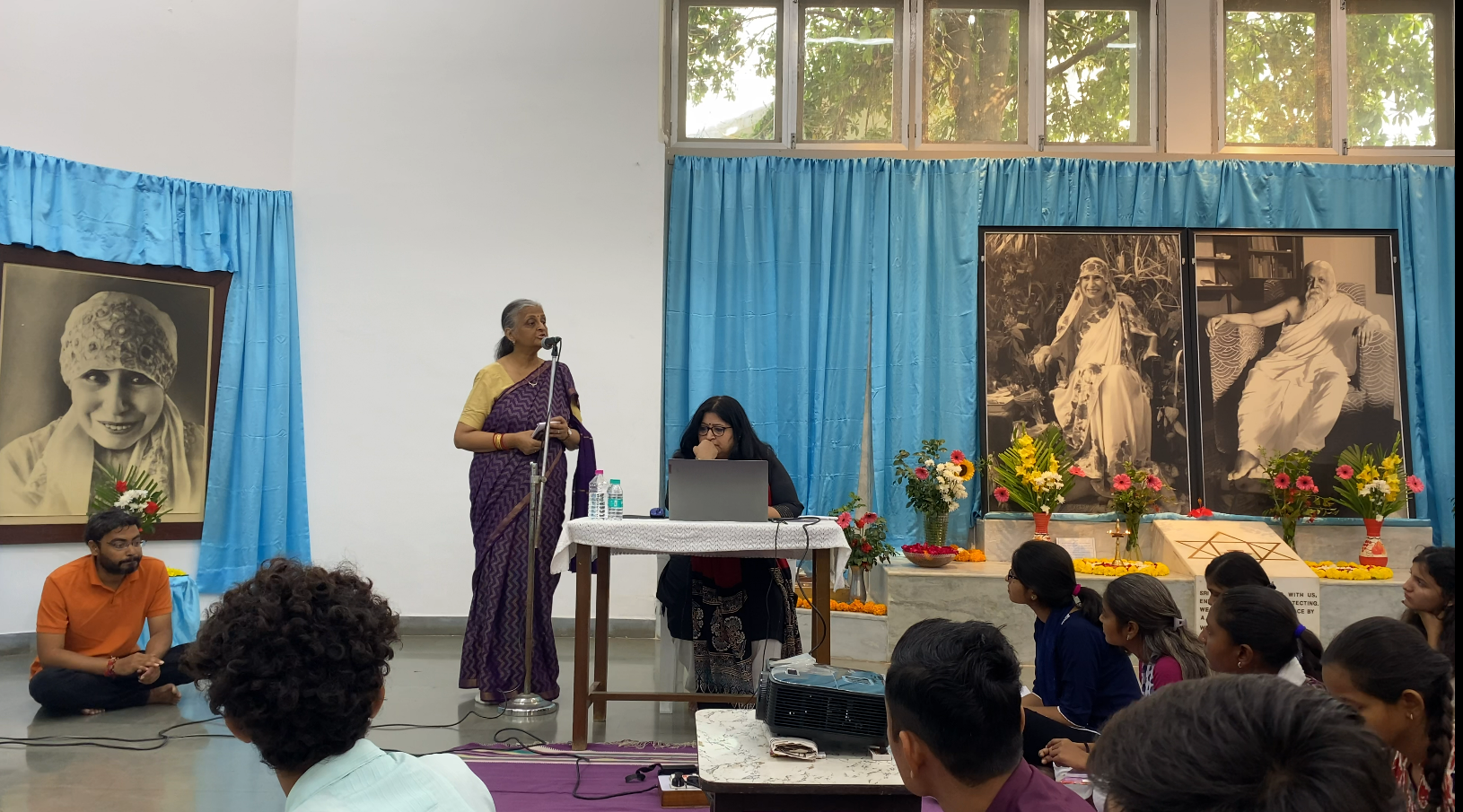
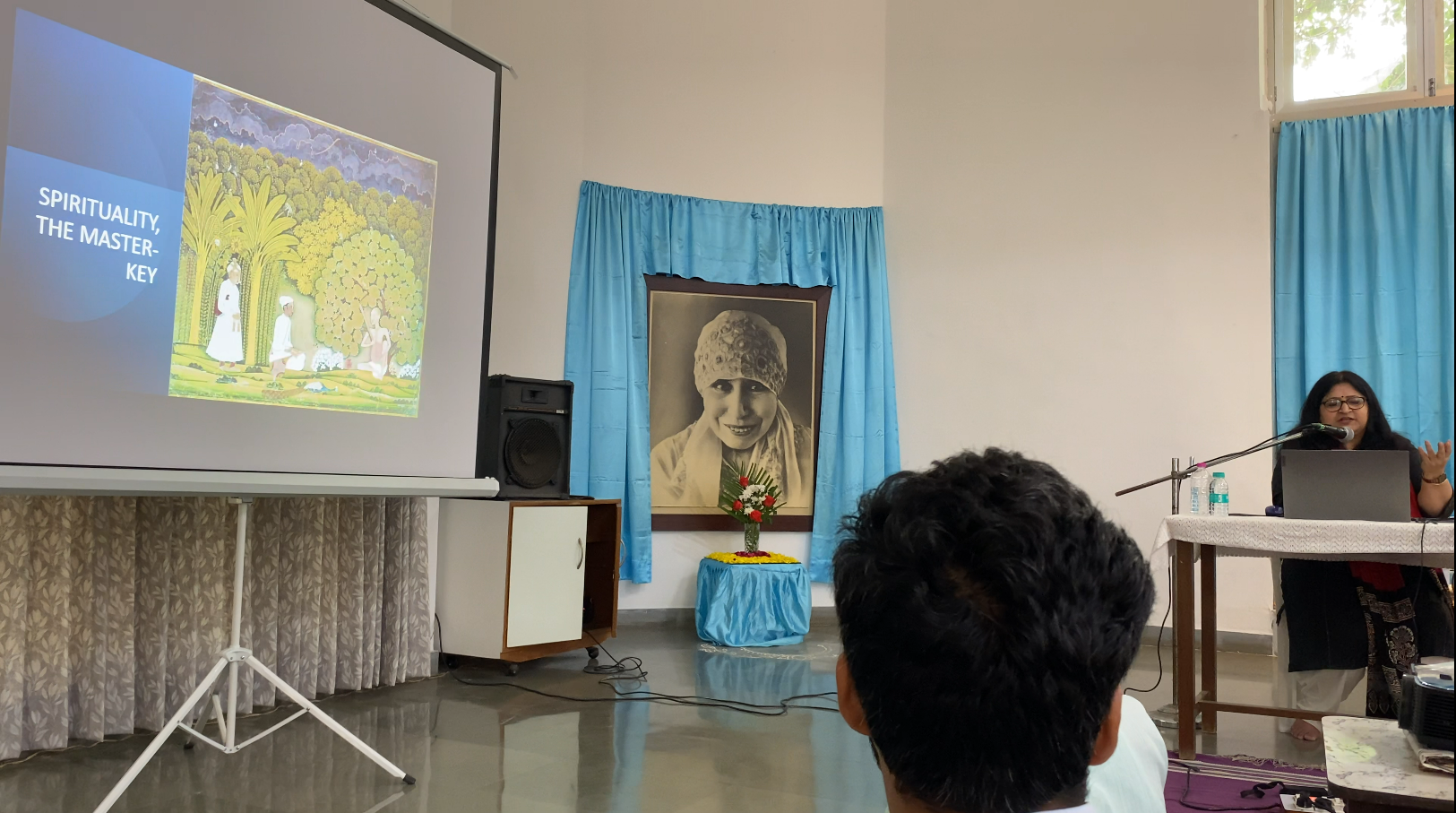
The workshop content was prepared by Dr. Beloo Mehra who was also the key facilitator for 5-hour-long workshop. Dr. Rajeshwari Singh, President of Sri Aurobindo Sadhana Kendra was the key coordinator of the workshop from SASK, Vallabh Vidyanagar. Dr. Utpala Kharod, Secretary of SASK and former Pro-vost of Bhaikaka University introduced Dr. Mehra.
Several prominent faculty members of Sardar Patel University were also present during most of the workshop. Dr. Bhalendu Vaishnav, Chairperson of Sri Aurobindo Chair of Integral Studies, Sardar Patel University and Dr. Vibha Vaishnav, coordinator of the Sri Aurobindo Chair programmes and Head of the Electronics Department at Sardar Patel University were also present during the workshop.
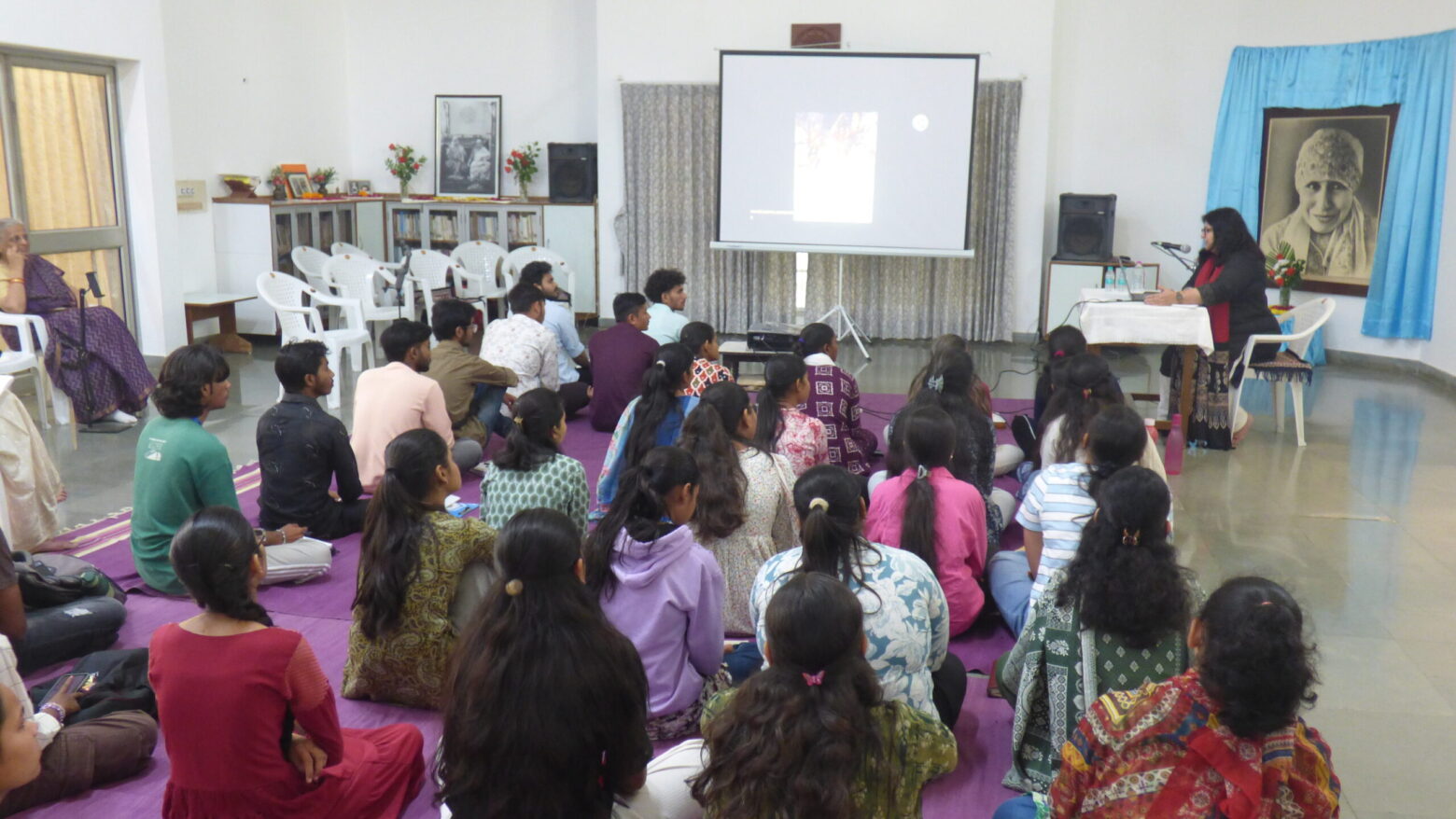
In her talks, Dr. Mehra explored the spiritual foundations of Indian culture, emphasizing that its distinctive character arises from the soul leading the evolution of civilization, with mind and body following its guidance.
She explained that the soul of a culture can be understood as the domain of thought, ideals, upward aspiration, philosophy, higher thinking, and religion. The mind of a culture expresses itself through creativity, imagination, intelligence, and the arts—poetry, literature, art, and science. And the body represents the practical and outward structures of society, including social, political, and economic forms.
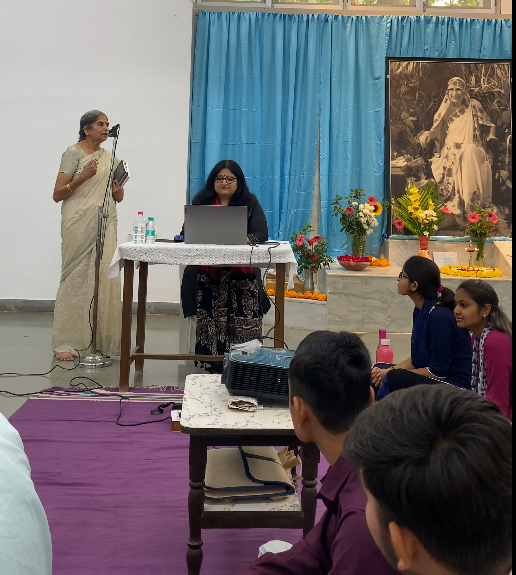
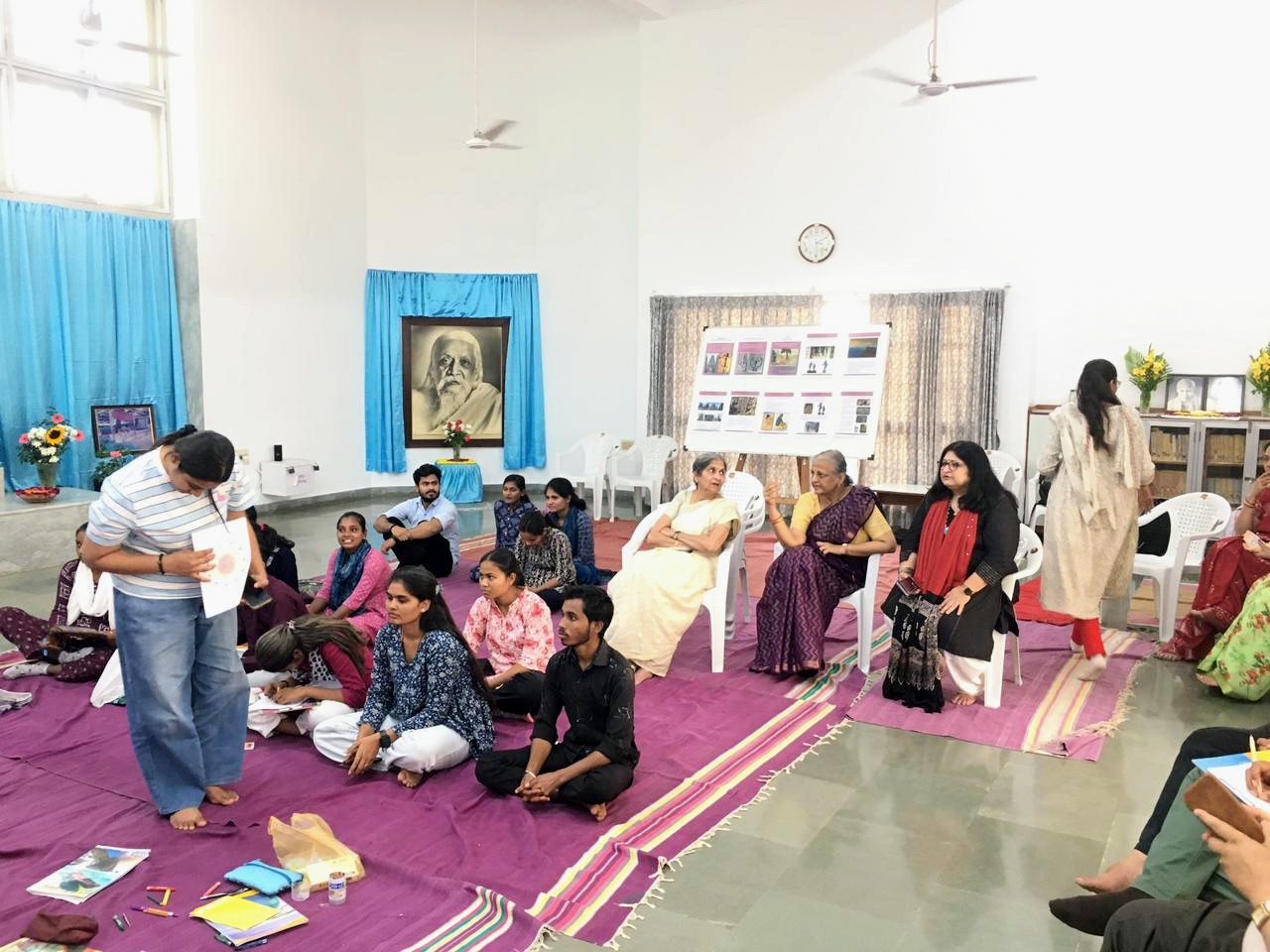
Dr. Mehra then spoke briefly about Art as deeply connected to India’s spiritual worldview, and the way to understand Art is that it is that which delights, enchants, and also requires skill. She emphasised that the highest vision of Indian art is rooted in India’s spiritual orientation to life and existence, and hence such Art also aims to evoke deeper understanding rather than mere aesthetic pleasure.
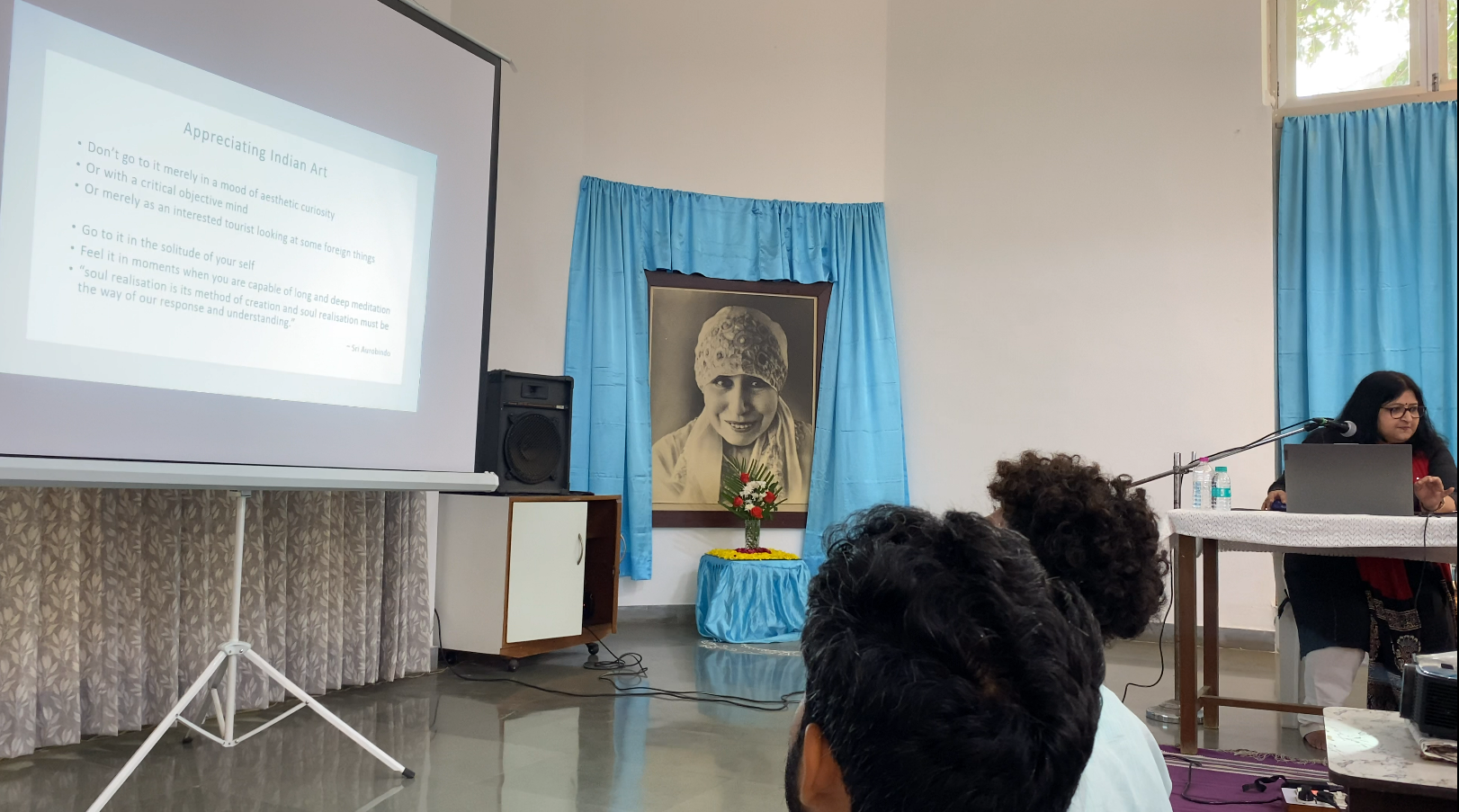
She also spoke about three purposes of art—aesthetic, educative, and spiritual. Art refines conduct, purifies emotions, sharpens intellect, fosters empathy, and supports humanity’s aspiration toward divine knowledge, love, joy, and strength. All these explanations were given using relevant examples with which students could relate.
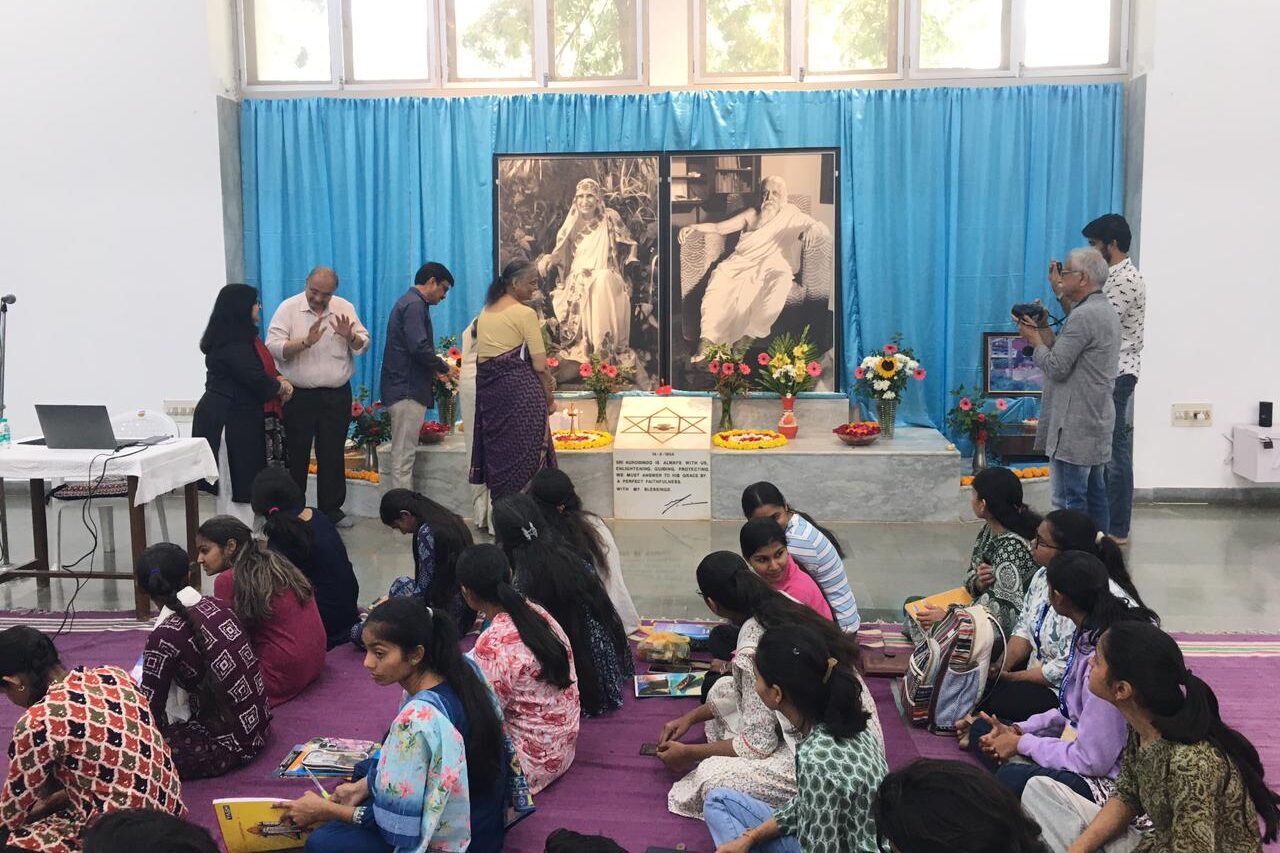
The entire presentation happened in a story-telling format with much interaction with the students, keeping the whole session alive and engaging for the youth. During another short presentation post-lunch, Dr. Mehra introduced the students to the concept of Rasa, Navarasa, 64 arts of India, and also a few key details about Natyashastra such as the training and discipline of artists, and 64 Arts.
Some interesting short videos were also used to illustrate some of these concepts along with several contemporary relevant examples. Dr. Mehra also shared a few stories related to the divine origin of all art forms in India. The students found the story of divine origin of Natya or drama highly engaging.
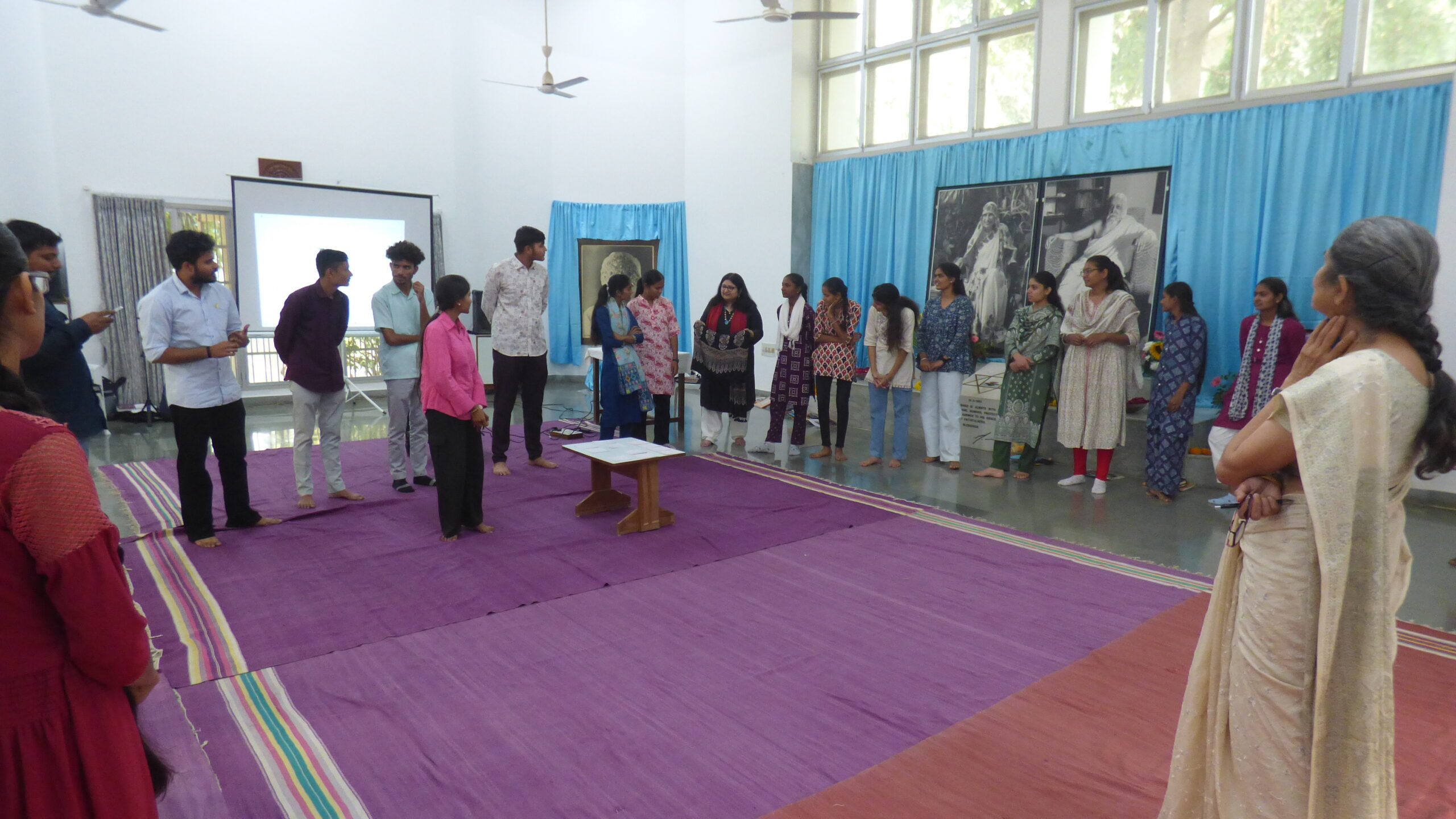
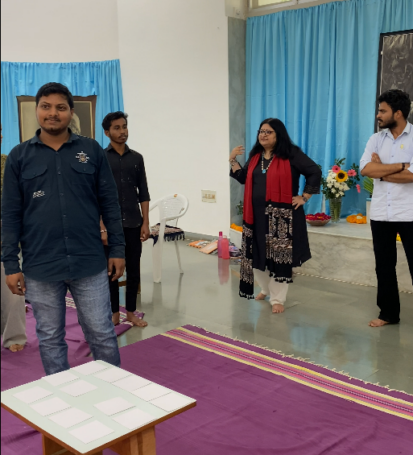
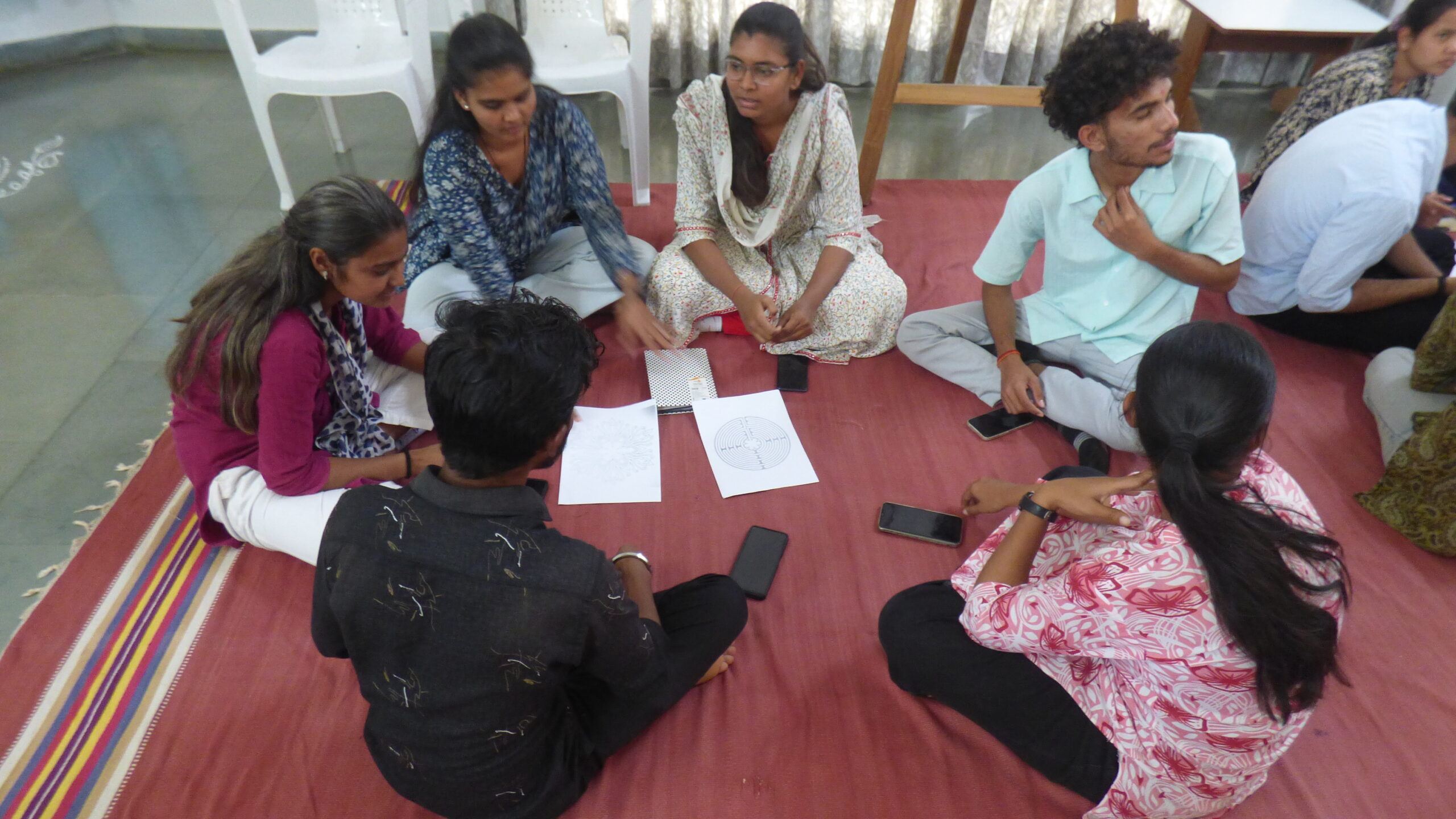
The workshop also involved two activity-based learning sessions. One of these activities involved a learning game for which specially designed flash cards were used to introduce the students to the diversity of Indian art forms, including topics such as 64 arts, preservation of cultural heritage, rich sculptural arts, temple architecture, diversity of painting traditions, appreciation of weaving and needlework, and many other topics related to Indian art.
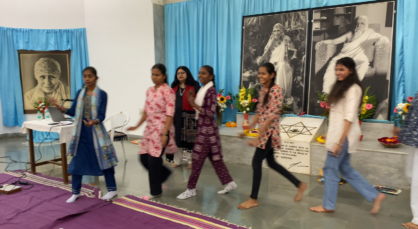
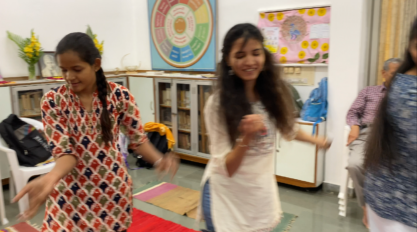
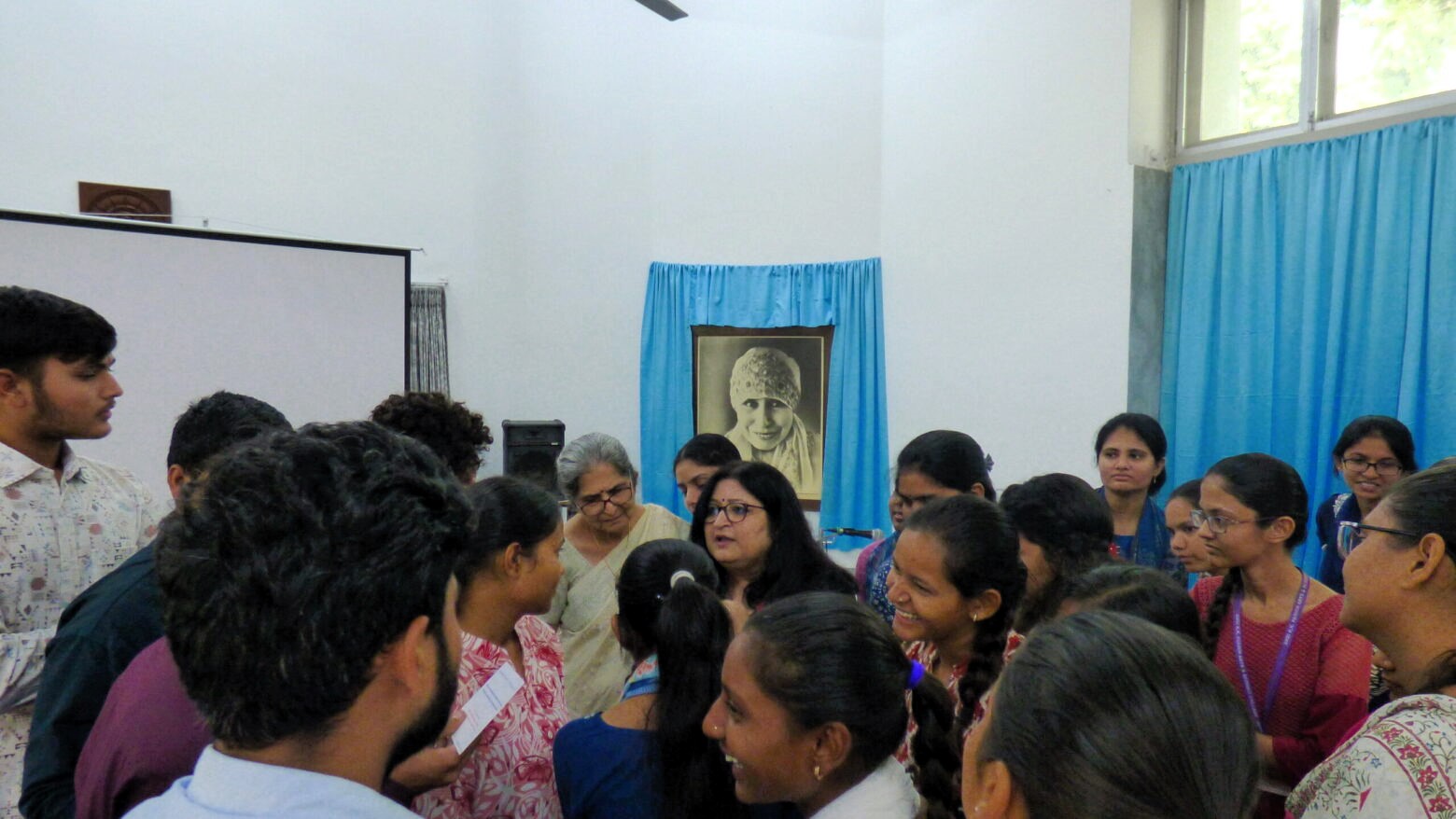
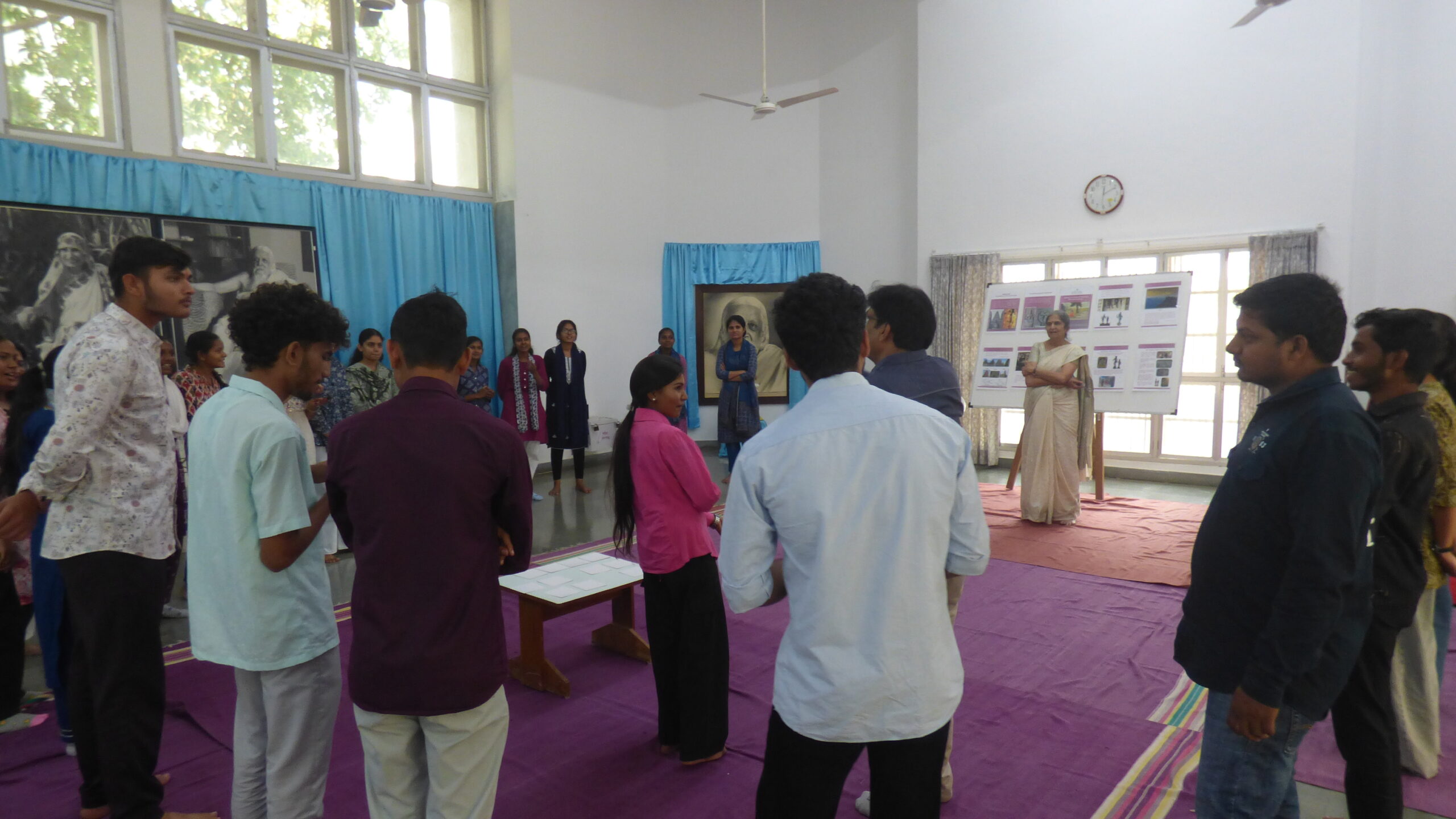
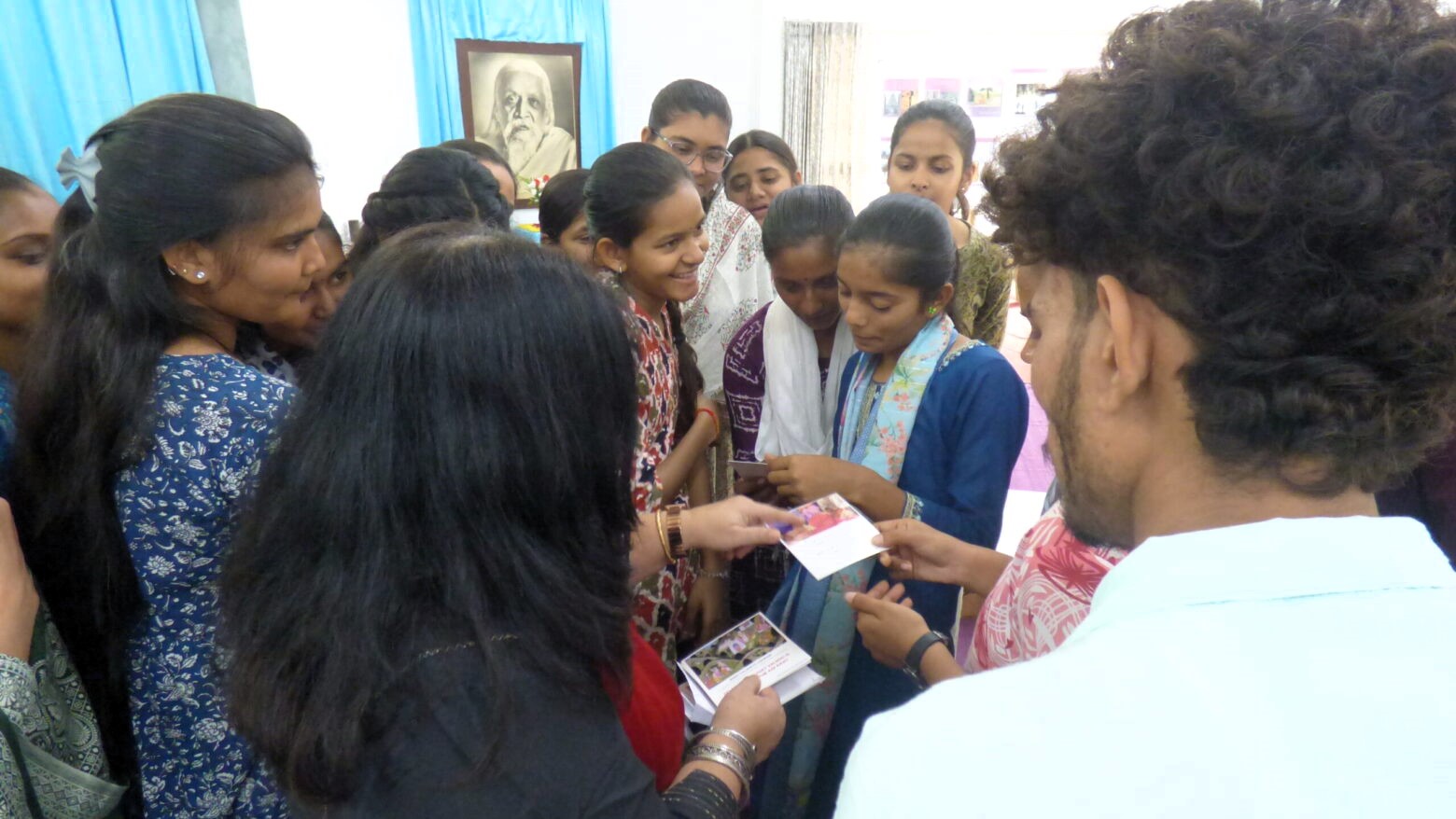
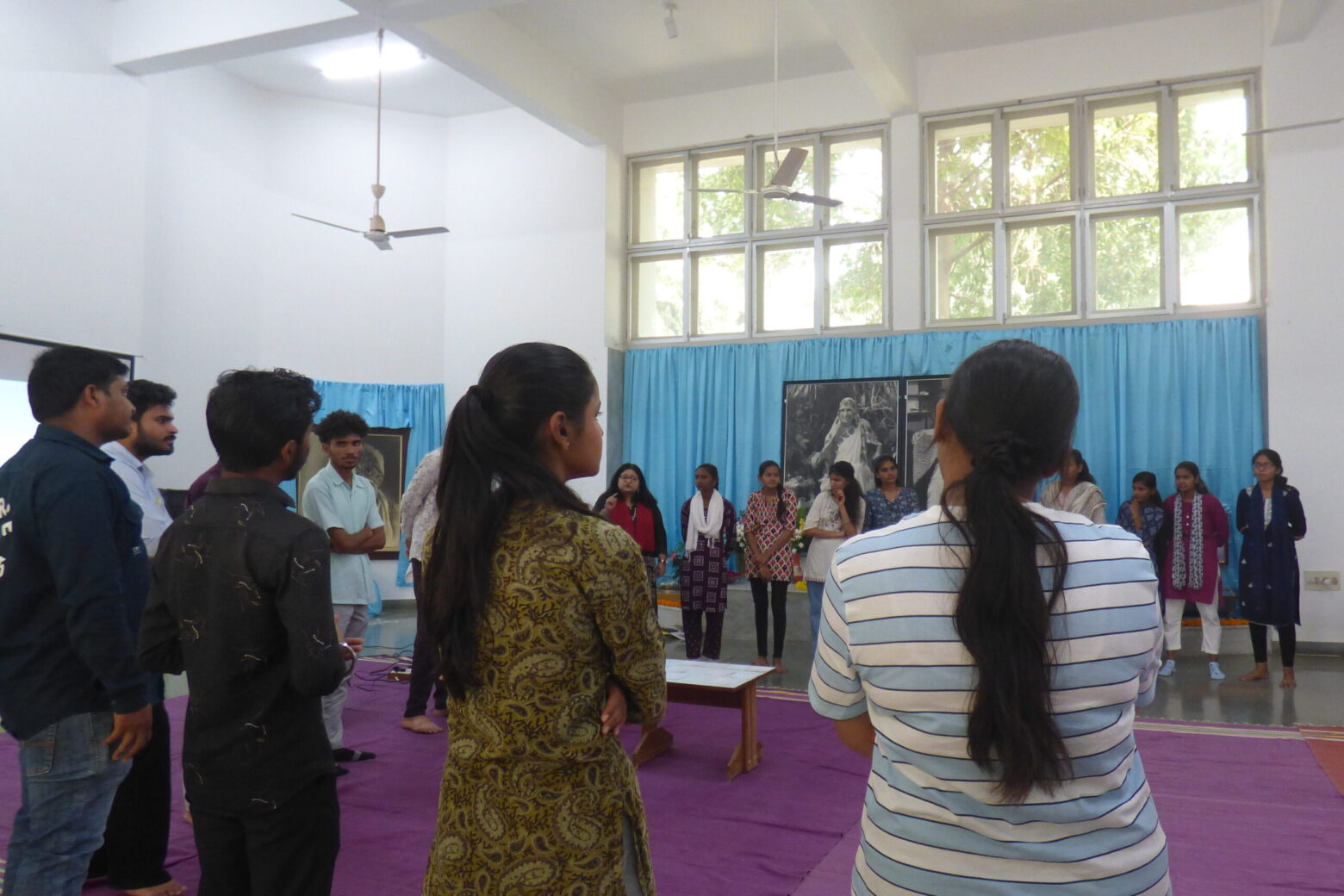
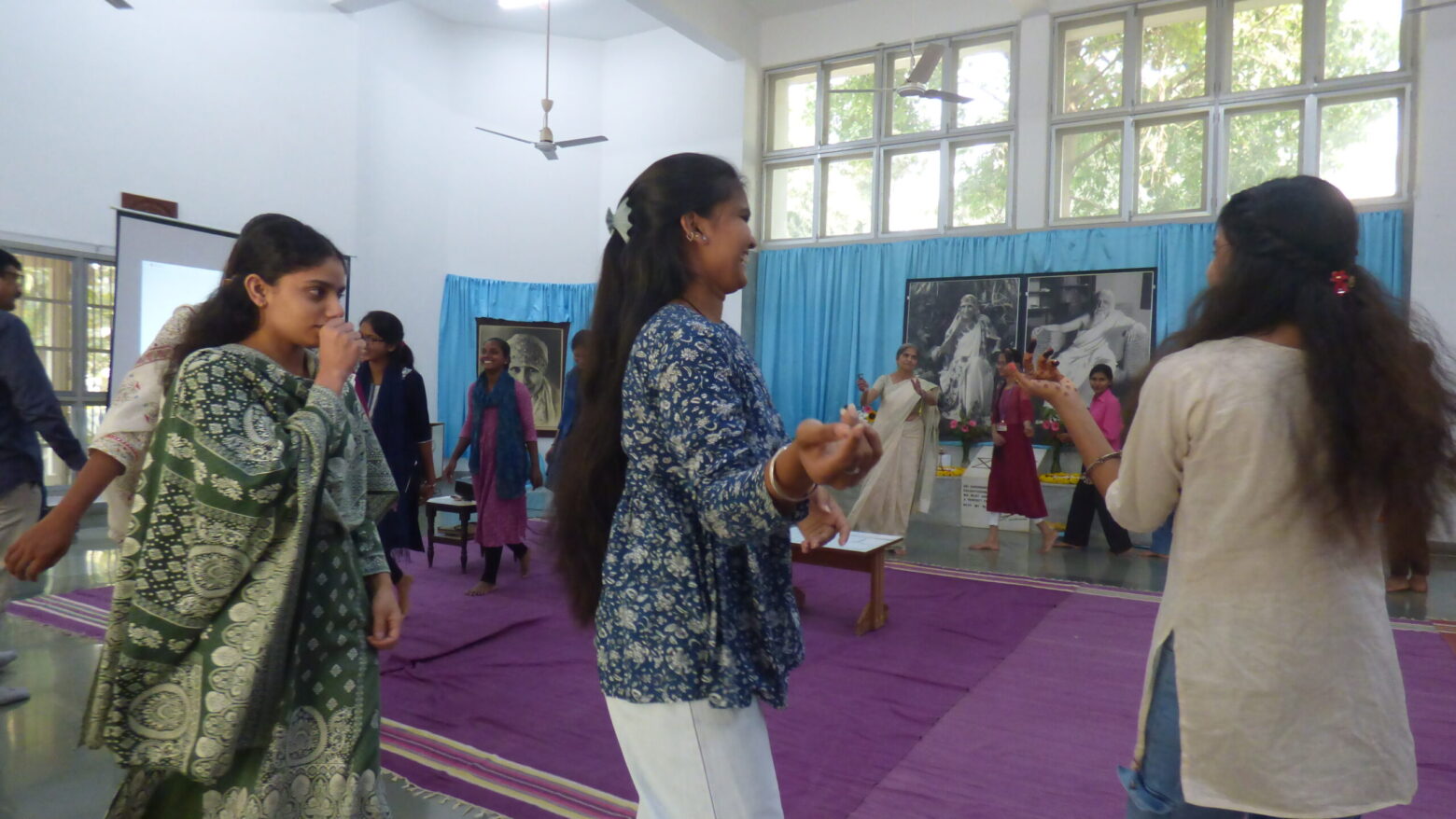
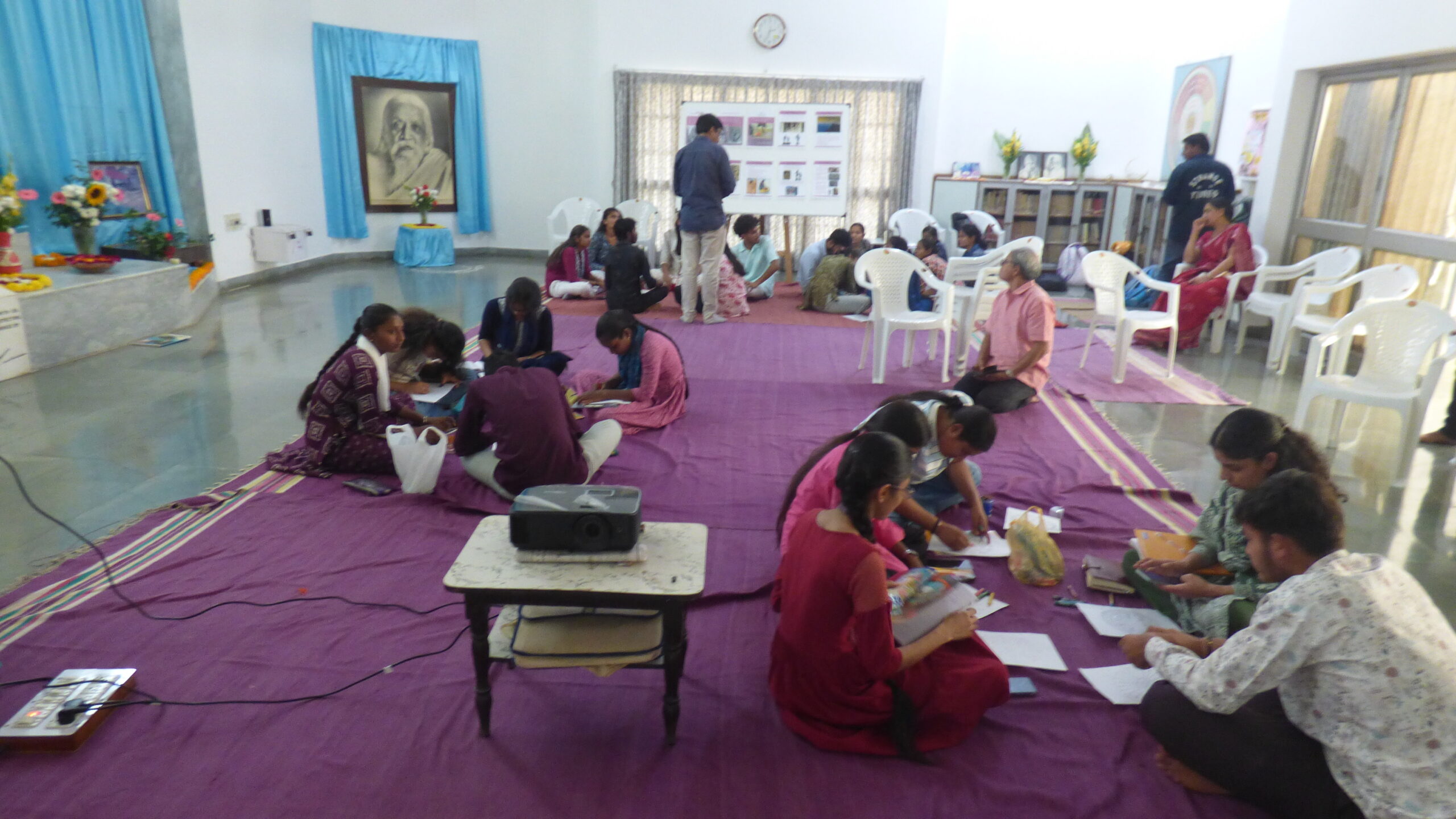
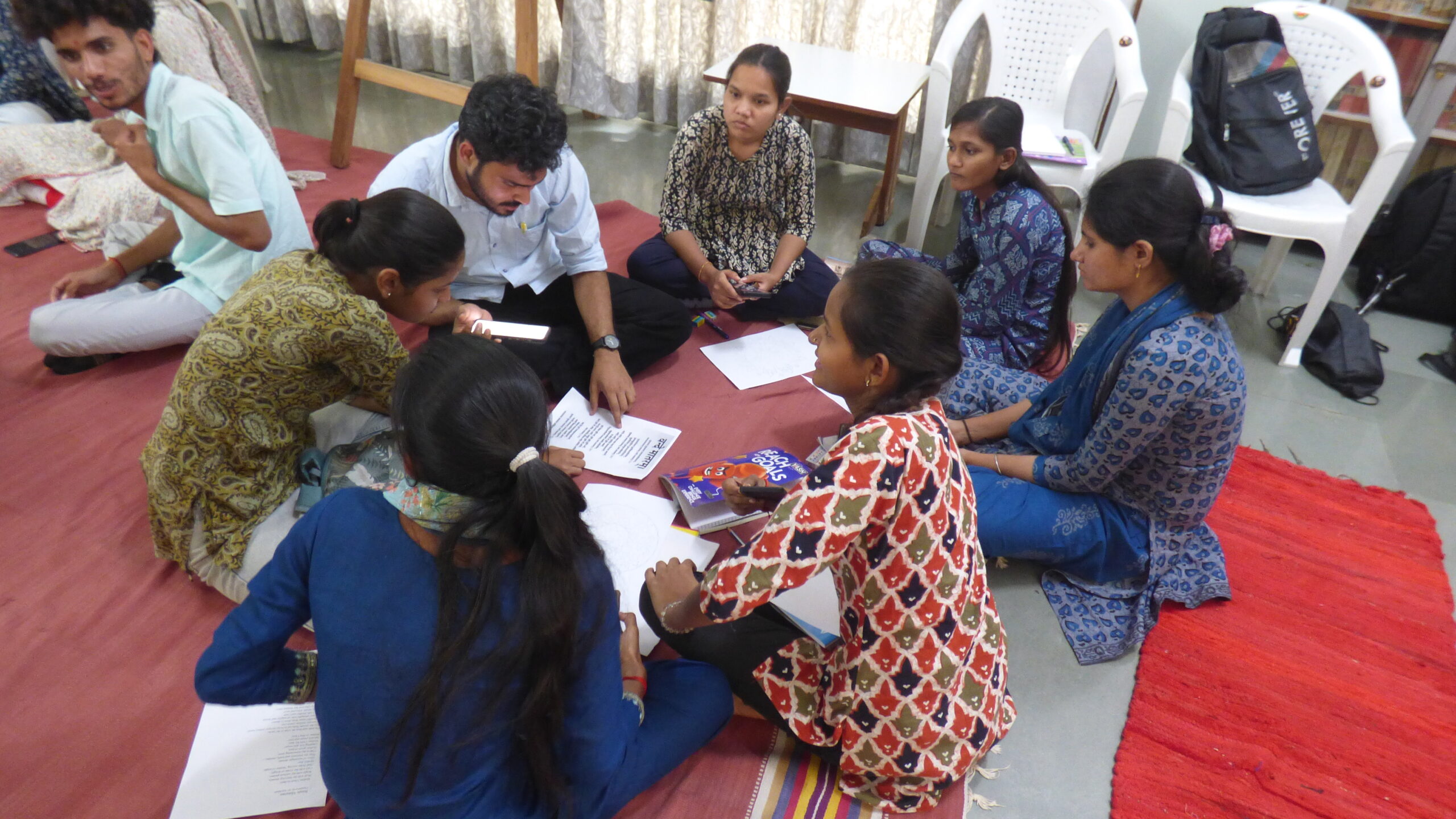
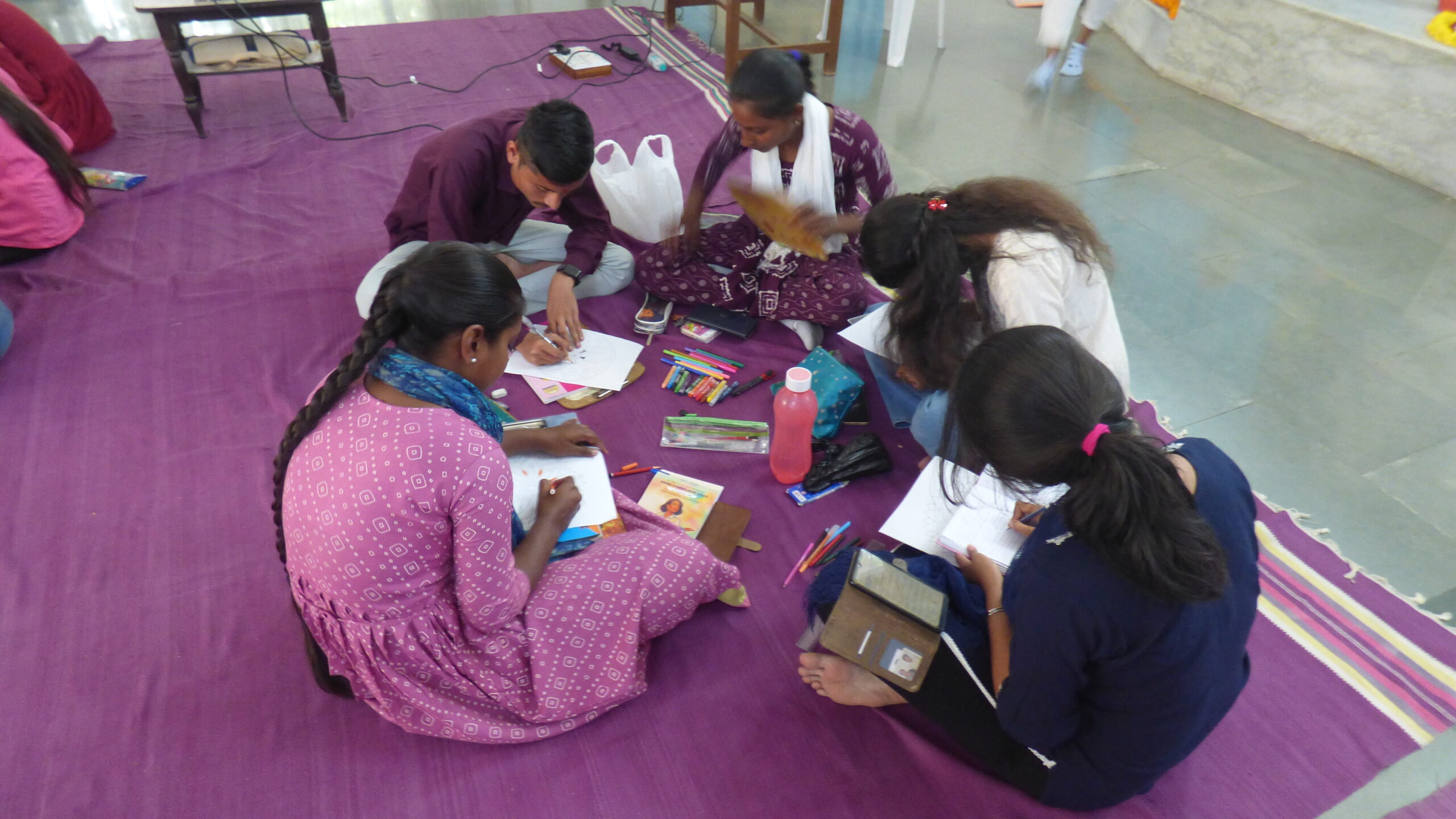
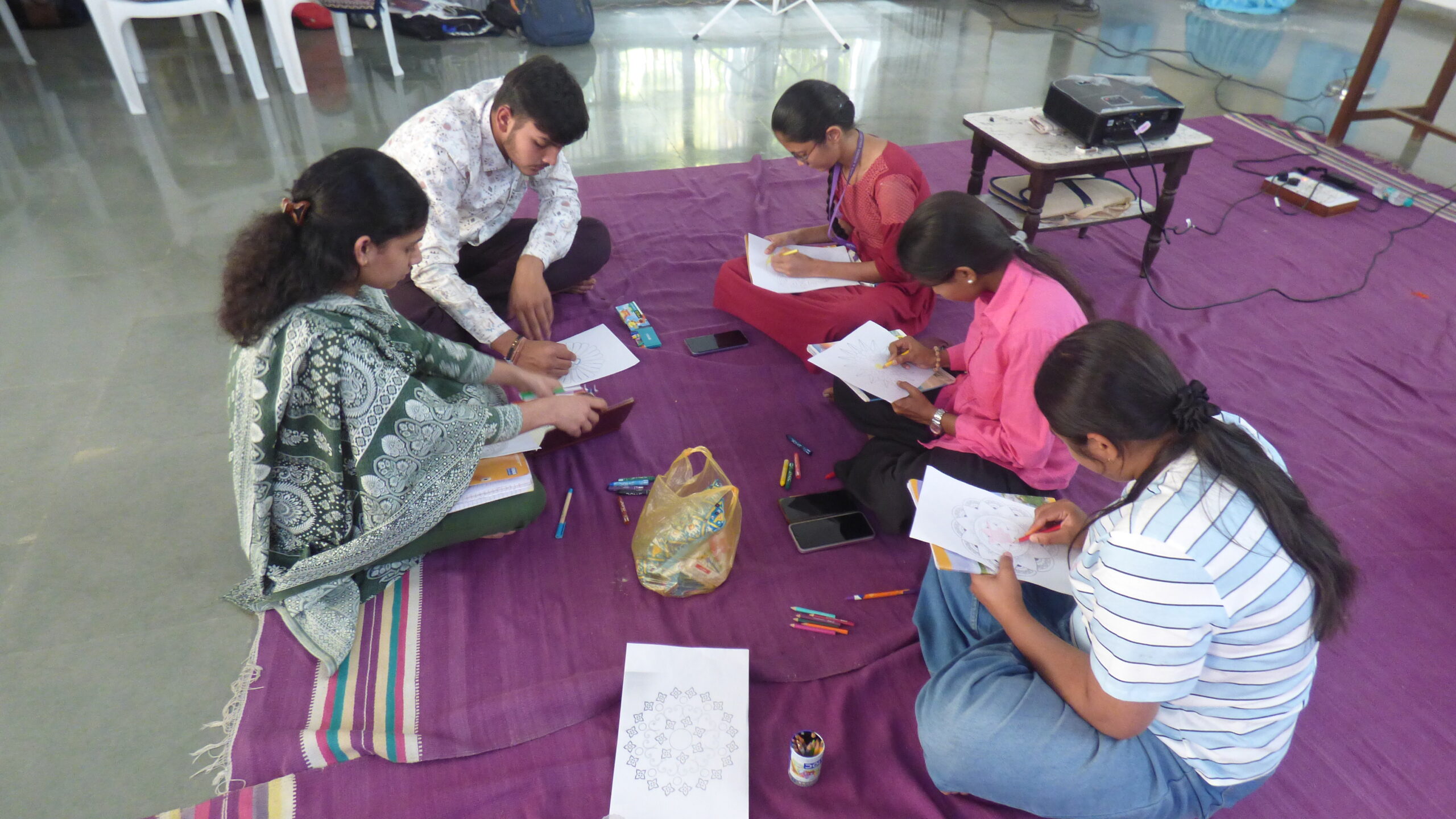
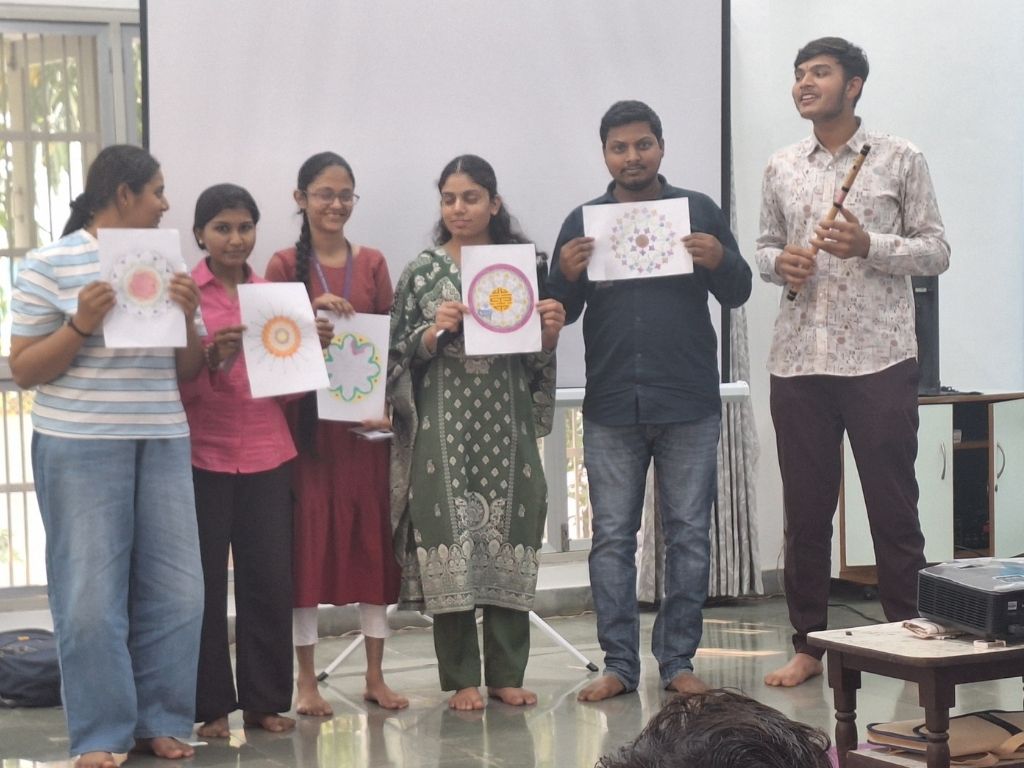
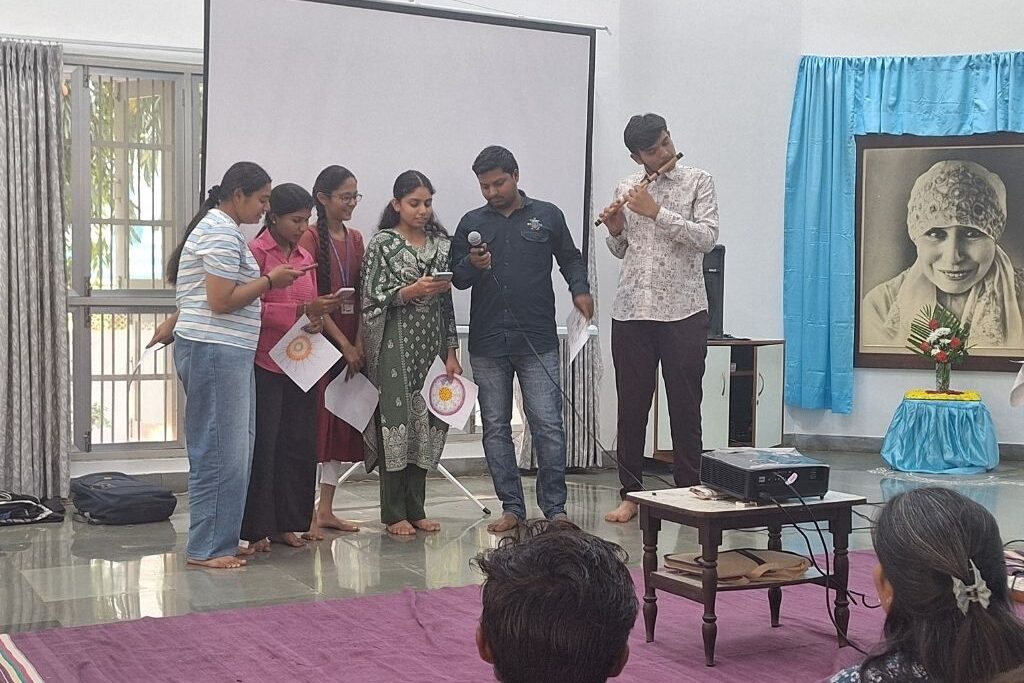
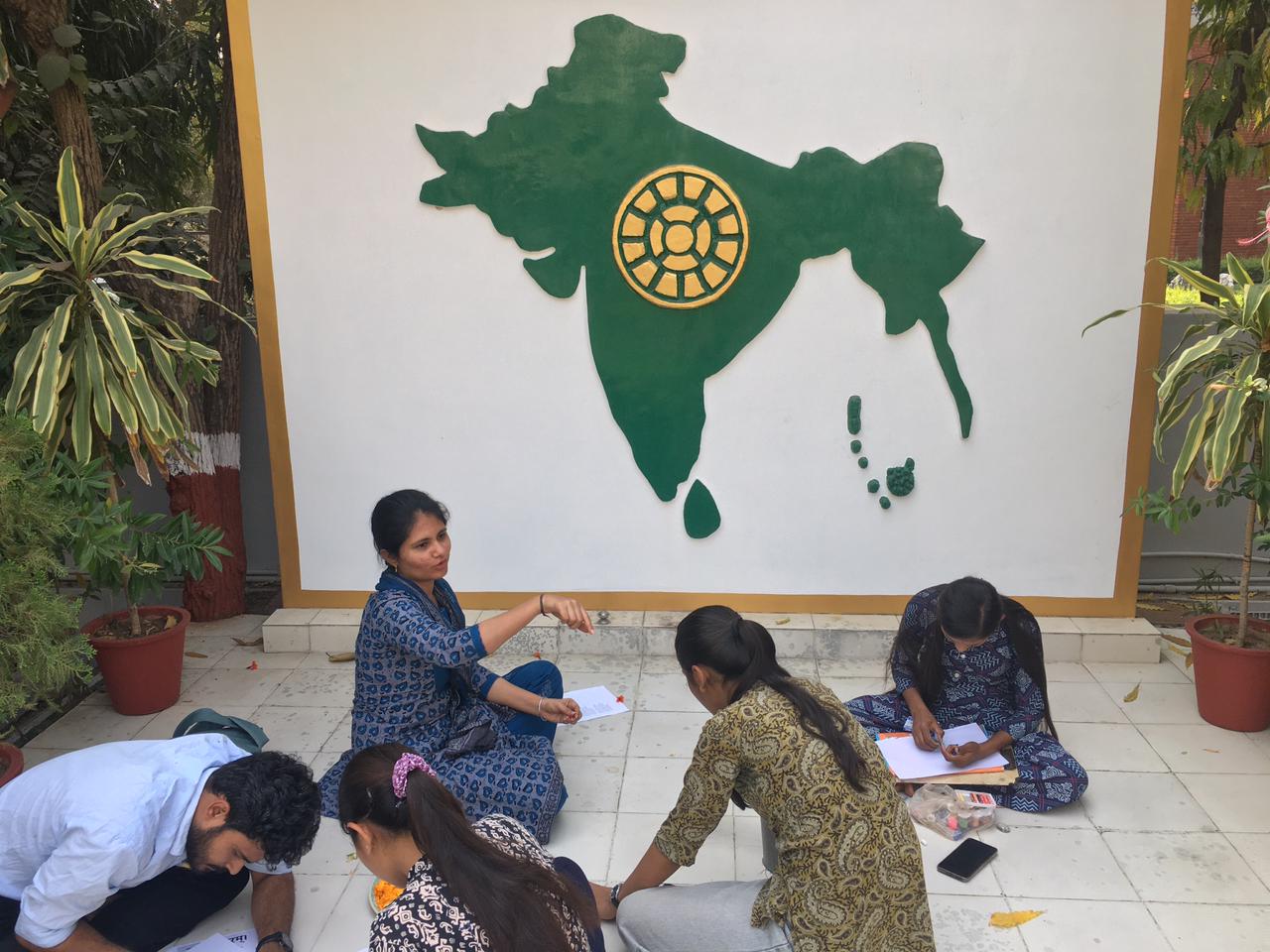
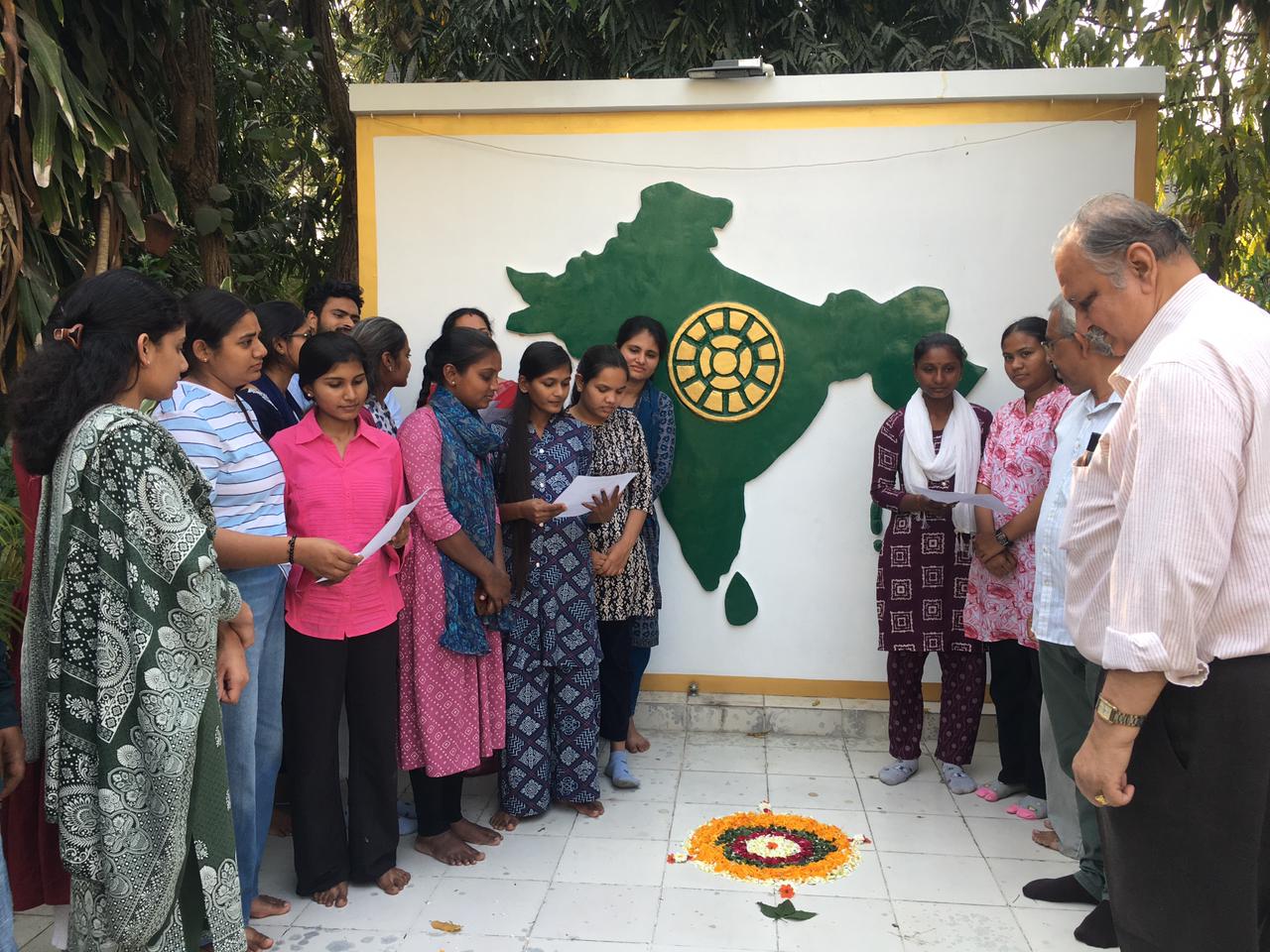
The second activity was a group-work during which students shared their creative expressions on topics of their choice and also worked on a flower mandala to demonstrate harmonious creative process. Students participated actively in both these activities.
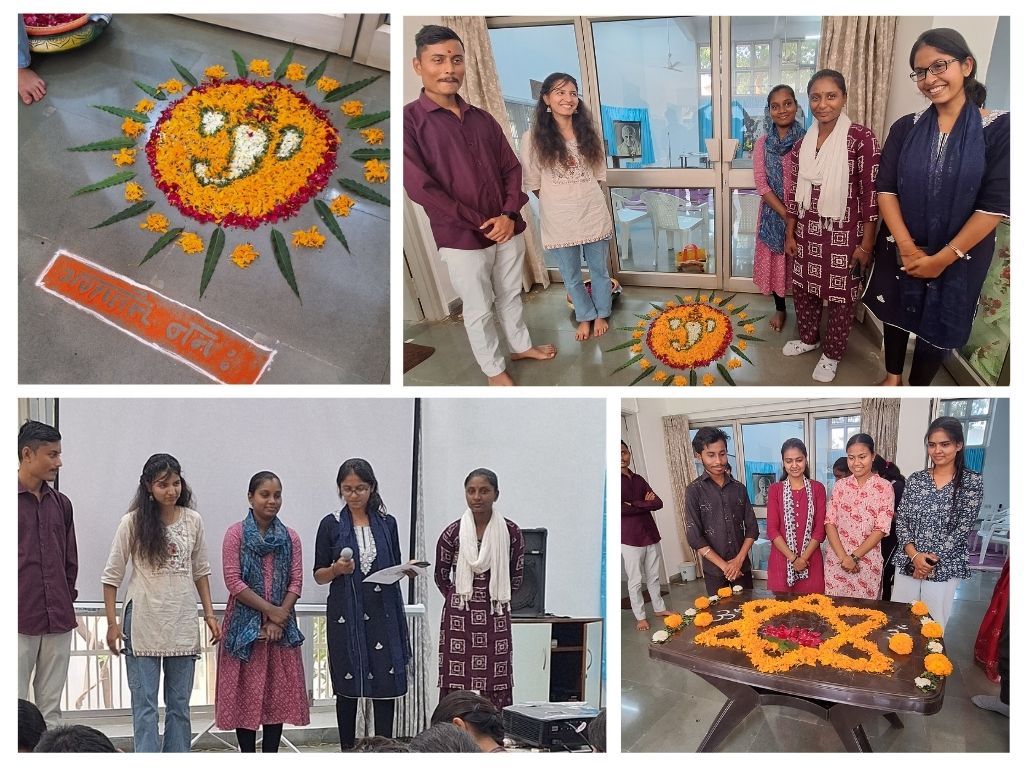
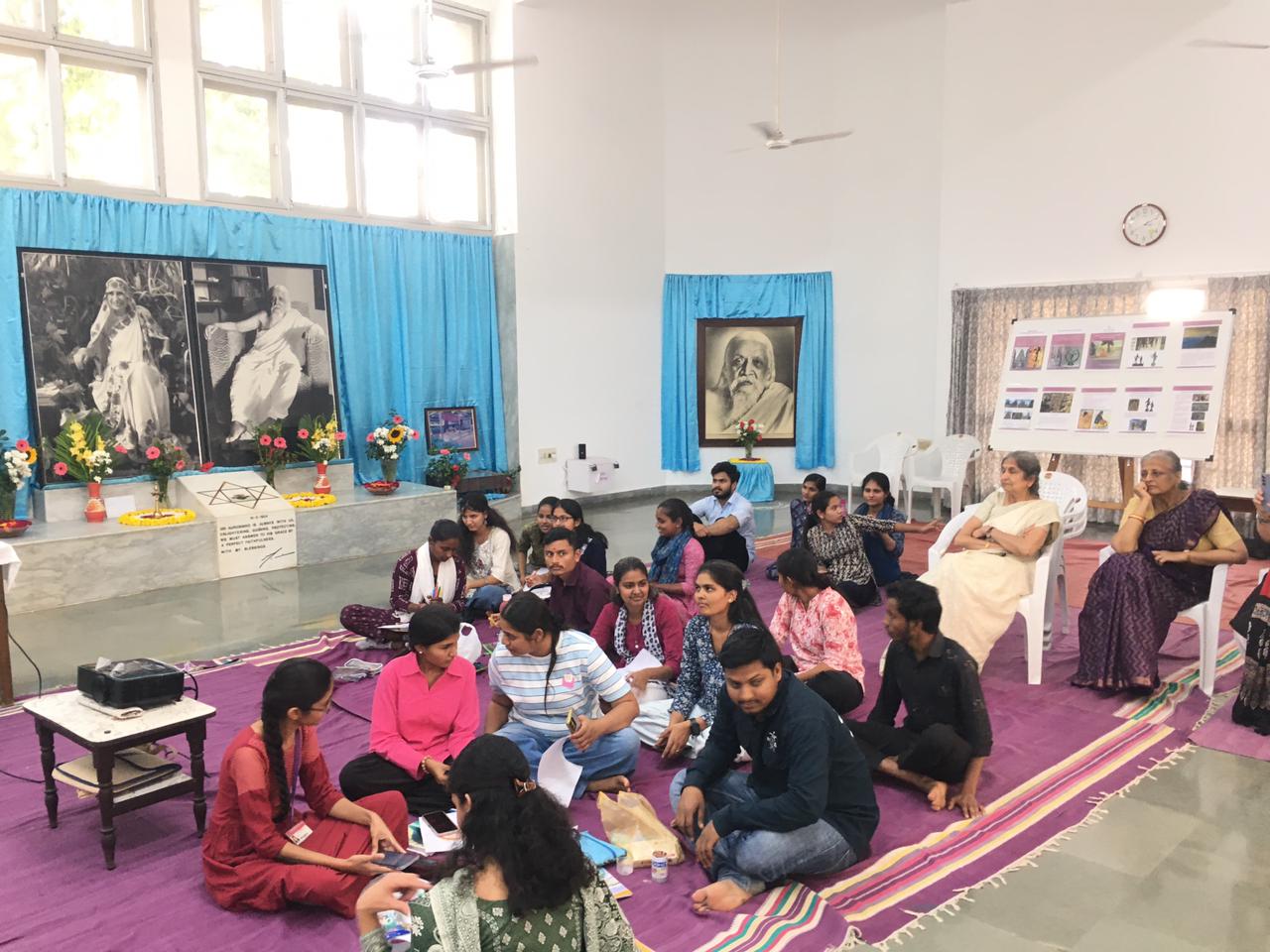
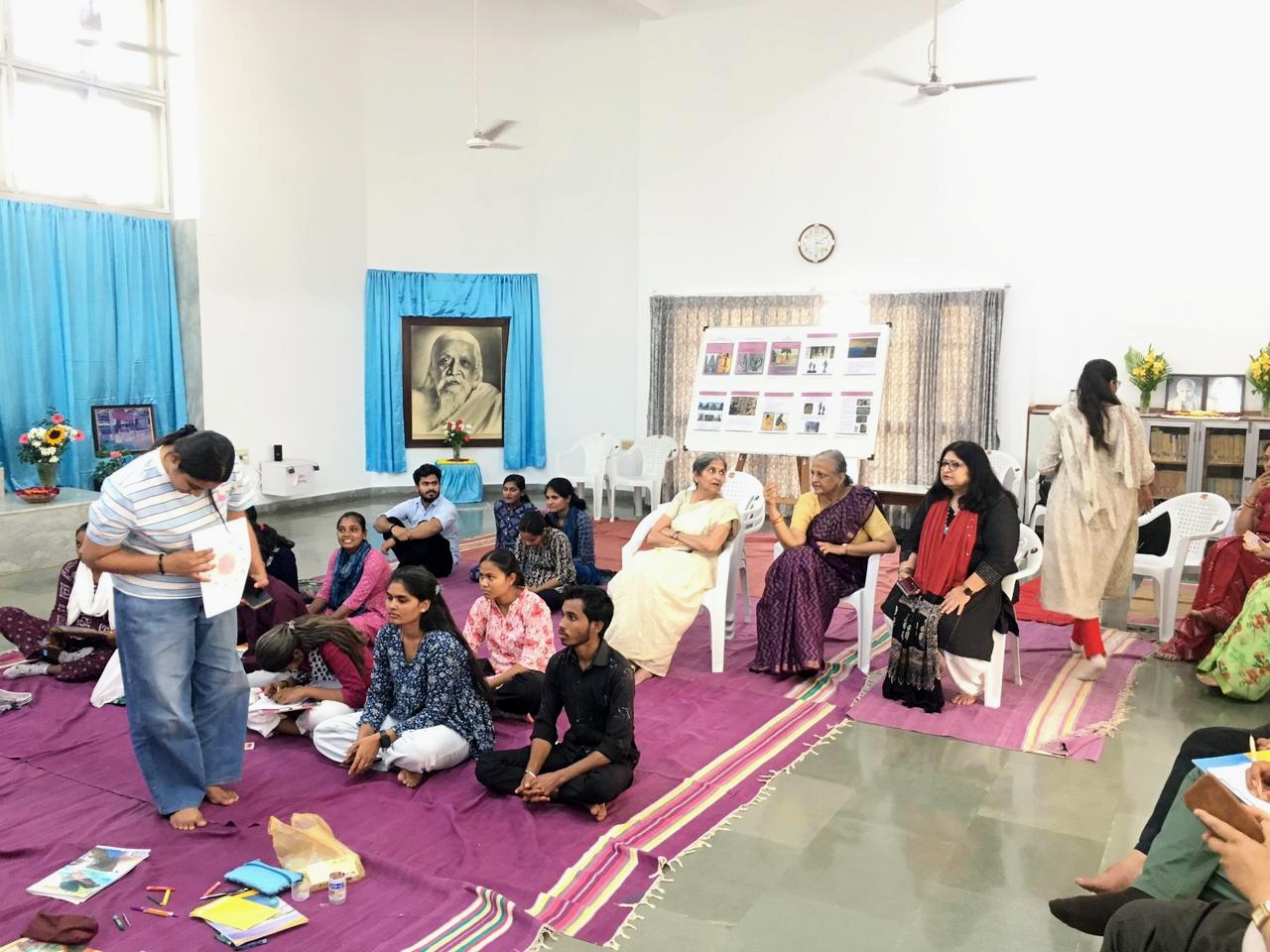
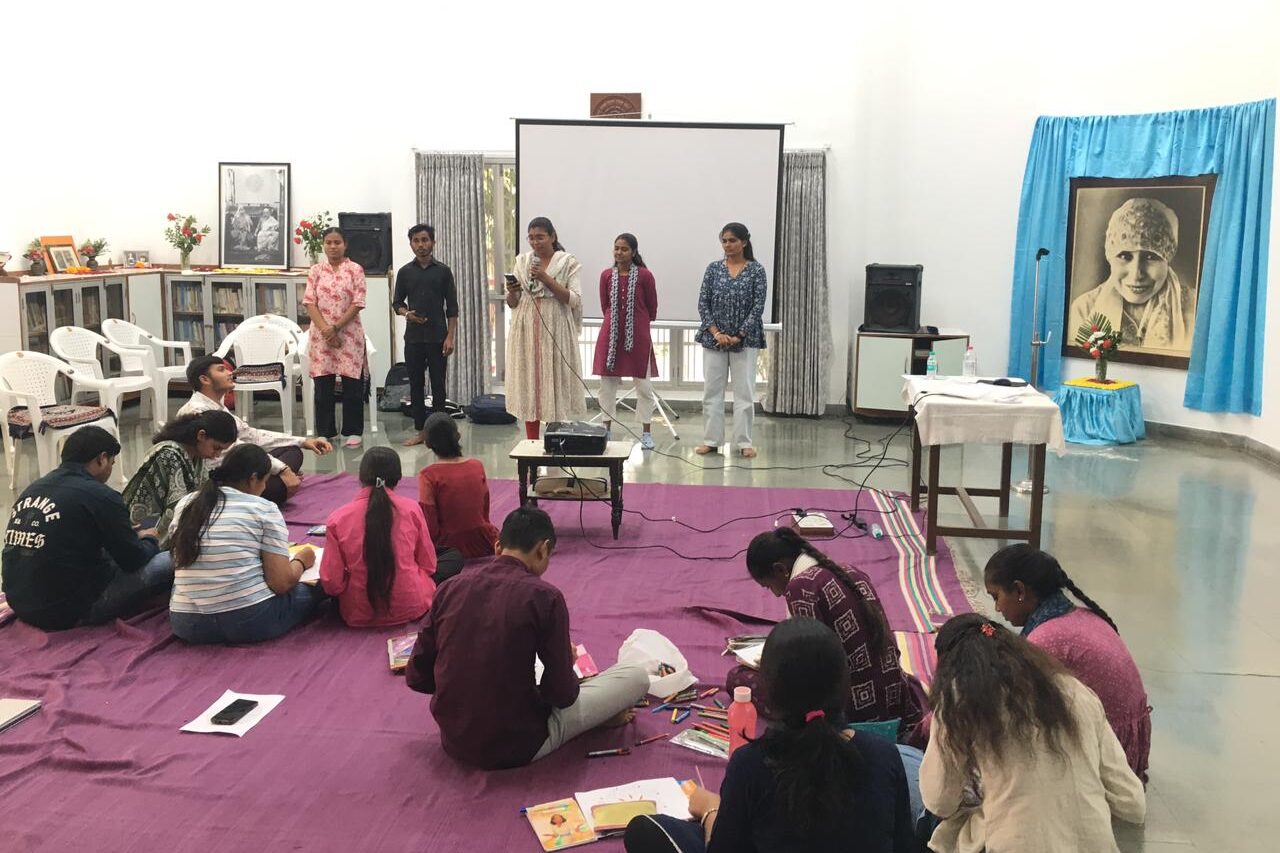
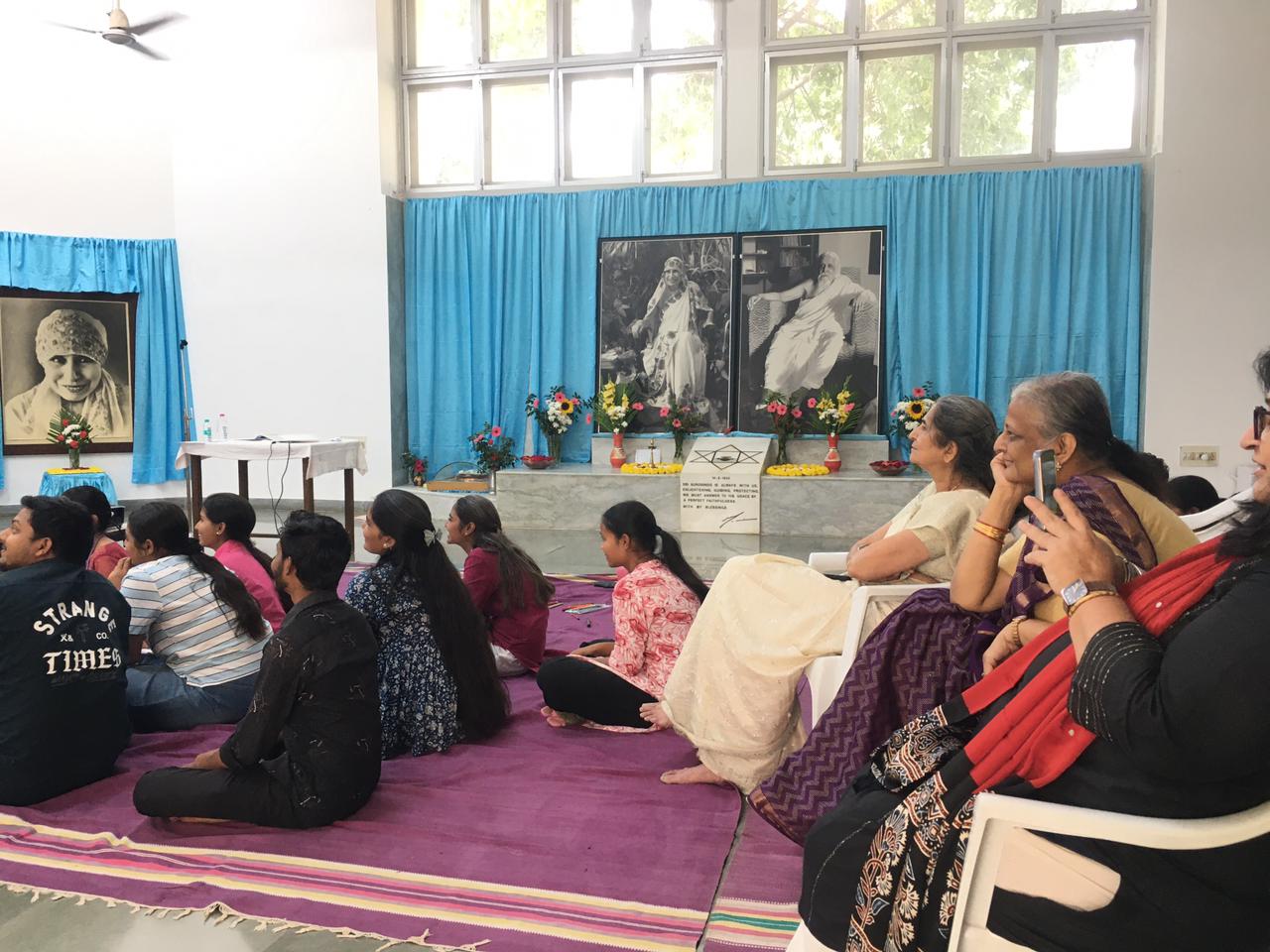
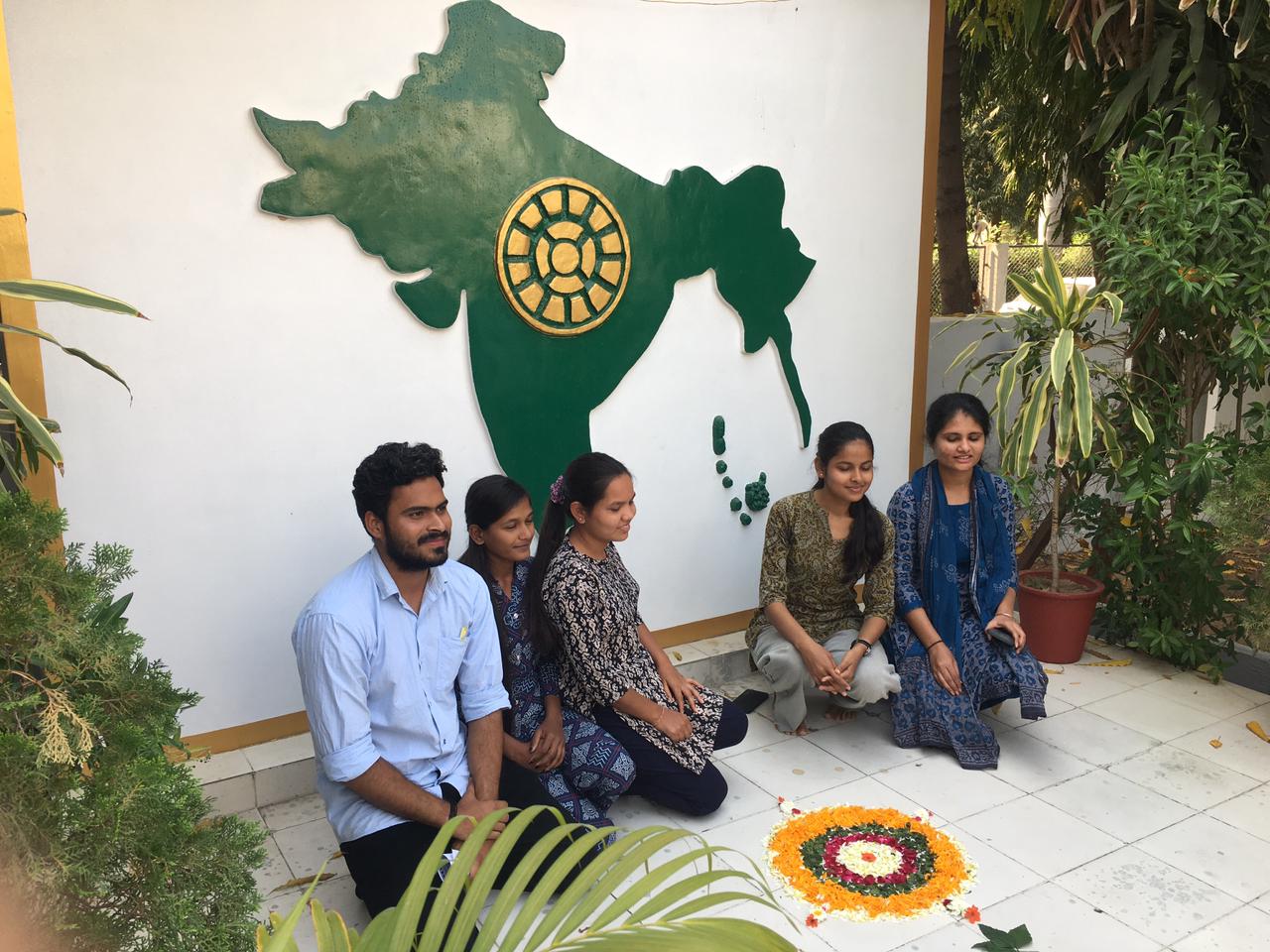
The workshop concluded with an enthusiastic rendition of Vande Mataram near the spiritual map of India at the lush green campus of Sri Aurobindo Sadhana Kendra. All the students were presented with a certificate of completion. With a few words of gratitude shared by all, the workshop came to a close.
A poster-exhibition was also curated for this workshop by BhāratShakti team. Read more about it HERE.
Watch some snippets from the workshop
See full photo-gallery HERE.
To know more about BhāratShakti Workshops see HERE.
To know more about BhāratShakti programmes under the theme Art and Spirituality see HERE.