
Date: January 24, 2026
Venue: Matriniketan
As part of the residential programme organized by Uditam: Institute for Integral Healing, Sri Aurobindo Society, Dr. Beloo Mehra, Director, BhāratShakti, was invited to facilitate a group discussion session, on Friday, January 24. For her session, Dr. Mehra focused on the topic – Soul of Bhārat.
She started her talk with the idea that as India’s 77th Republic Day is approaching on 26th January, it is a good time to remember once again that India that is Bhārat is not merely the modern nation-state. India is a millennia old civilisational-nation, and Bhāratvarsha in fact has had a long history of experimenting with organizing its collective life in the form of Republics. She then spoke briefly about Sri Aurobindo’s explanation of what is a Nation.
Dr. Mehra said that Sri Aurobindo founded his view of nation in the authentic Indian vision of the existence, of the primacy of spirit as the fundamental reality which expresses and manifests itself in various ways. She explained that in such a view, a nation is not just land or people. Comparing the nation to the existence of a human being with multiple layers, Sri Aurobindo spoke about three bodies of a nation – gross body, subtle body and causal body.
The land is the physical body; the people form the life-force; Culture, literature, and thought form the subtle body of a nation; and a nation’s causal body is the innate temperament it has developed over a long time period, something that makes the nation unique and distinct from others. There in lies the soul of a nation — the eternal essence unique to itself but also connecting all nations to the Divine, as each nation-soul is one of the many manifestations of that One Supreme Source. All these were explained with relevant examples in a friendly interactive manner.
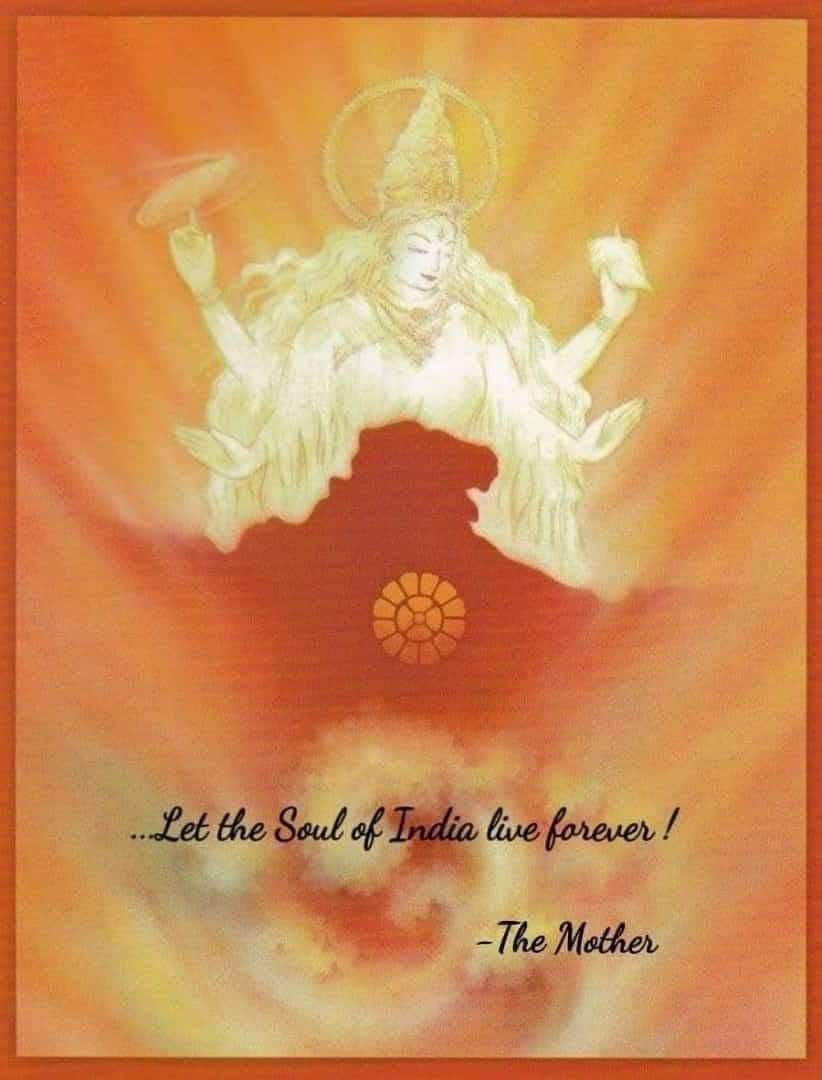
Reminding the group of the 2026 Republic Day’s theme, namely, 150 years of Indian National Song, Vande Mataram, Dr. Mehra pointed out that both this phrase and the song, penned by Bankim Chandra Chatterjee, had deep connections with Sri Aurobindo’s revolutionary work as well as his deeper vision of the soul of Bhārat. She briefly narrated those connections highlighting about the journal Bande Mataram and how it awakened the Indian youth through its feiry articles.
Dr. Mehra also spent some time sharing how the soul of a nation expresses itself through our knowledge traditions, our arts, architecture, literature, sciences, practices, customs etc. And therefore it is important to know how we understand our past shapes how we see our present and perceive our future. It is critical that we see our history from our perspective, rather than the perspective of those who invaded our land and plundered the wealth and made us feel ashamed of all that was noble in our civilisation.
As an example, Dr. Mehra reminded the group that the year 2026 marks thousand years of the first attack on the Somnāth Temple at Prabhas Patan by Mahmud of Ghazni. The temple went through 17 brutal attacks at the hands of invaders and haters of Sanatana Dharma. But every time there was an attack there was also a strong resistance and a rebuilding. This latter truth is generally not taught in our history textbooks, nor is taught the history of reconstruction of this temple after Indian independence in 1947.
Dr. Mehra emphasised that the fact that there was a strong resistance and rebuilding says something about the Indian character, India’s soul-temperament which must never be ignored if we want to deepen our awareness of what is the soul of Bhārat. She then briefly narrated how the long-lasting influence of Sri Aurobindo’s famous Uttarpara shaped the dedication and devotion with which one of his former students, K.M. Munshi worked for the rebuilding of Somnath temple after 1947.
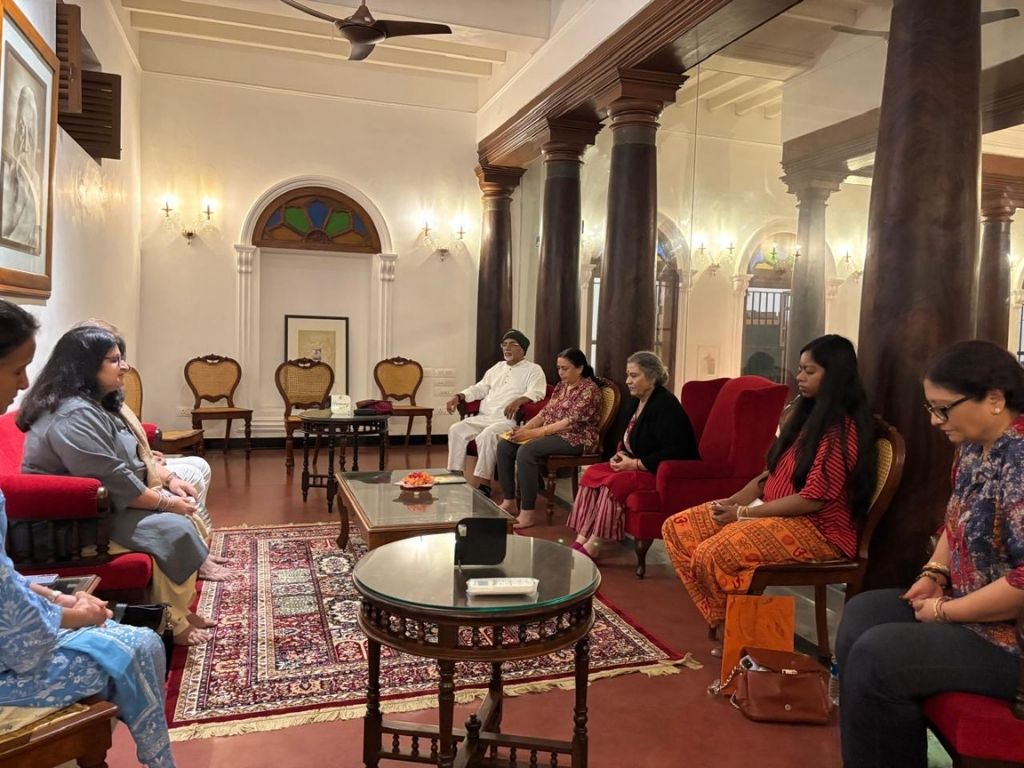
The participants appreciated the rich session and some interesting discussion ensued covering several points shared during the session.
To learn more about our sessions conducted for Uditam, see HERE.
Also read on BhāratShakti Blog
From Uttarpara to Prabhas Patan:
Sri Aurobindo’s Force and the Reconstruction of the Somnāth Temple