
Date: December 17, 2025
Venue: Franco-Tamil Villas, Art and Craft Village, Puducherry
On December 17, 2025, the BhāratShakti team organised a symopsium titled ‘ANTARYĀTRA: A Spiritual Exploration of Puducherry’ in collaboration with Indira Gandhi National Centre for Arts, Regional Centre, Puducherry at the Franco-Tamil Villas situated near the Art and Craft Village. The programme was intended to introduce the artists and artistans working at the Art and Craft Village to Puducherry’s cultural, intellectual and spiritual legacy.
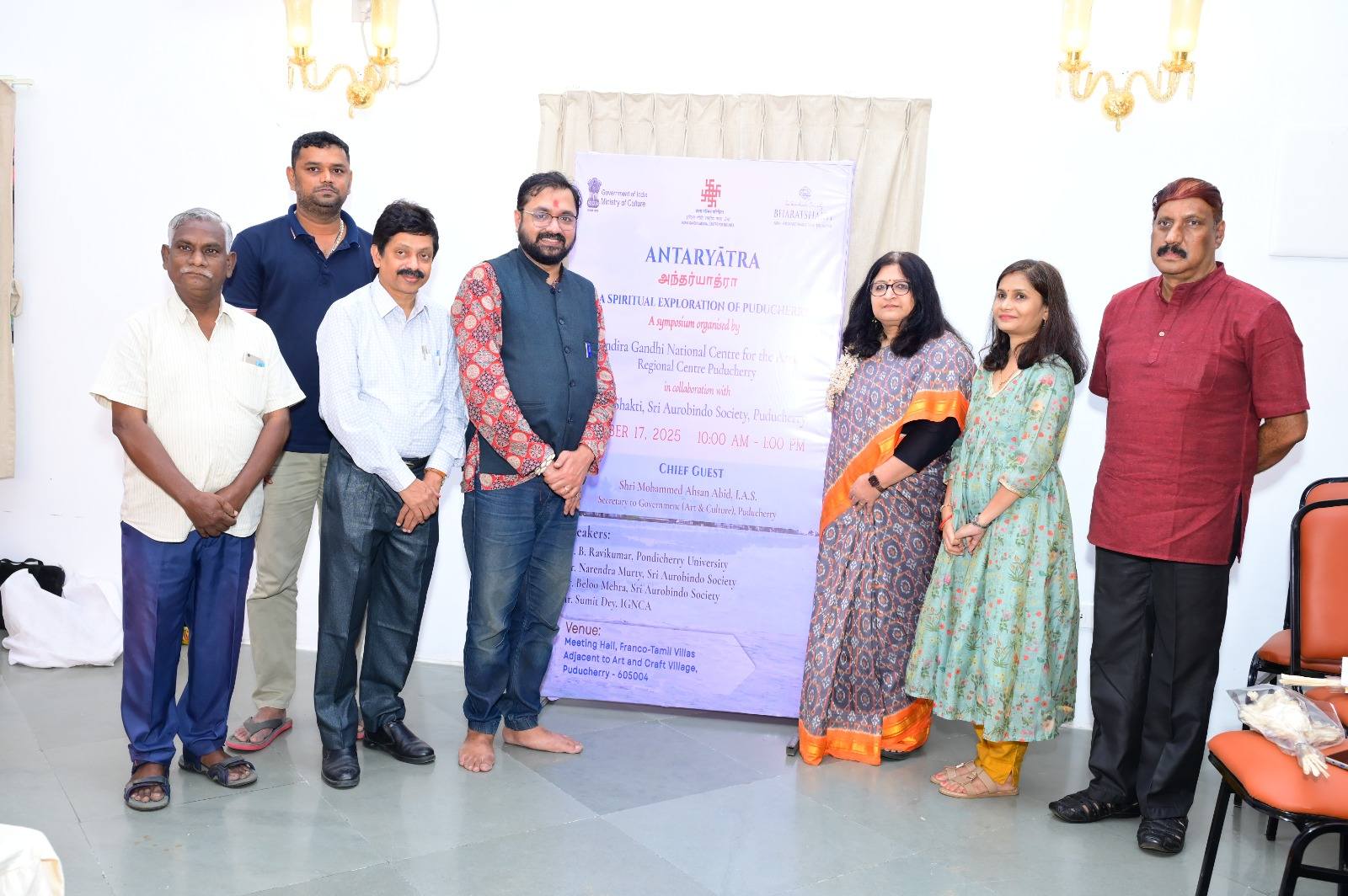
The speakers included Dr. Beloo Mehra, Director, BhāratShakti, Dr. B. Ravikumar, Professor, Subramania Bharathi School of Tamil, Pondicherry University, Mr. Narendra Murty, Research Associate, BhāratShakti, and Dr. Sumit Dey, Regional Director, IGNCA, who also moderated the entire session.
After the inauguration with the traditional lamp lighting, Dr. Sumit Dey gave a brief welcome address. In his remarks, he highlighted the antiquity of Puducherry’s spiritual heritage which includes its connection with Rishi Agastya and being regarded as an important center of Vedic learning during Pallava period.
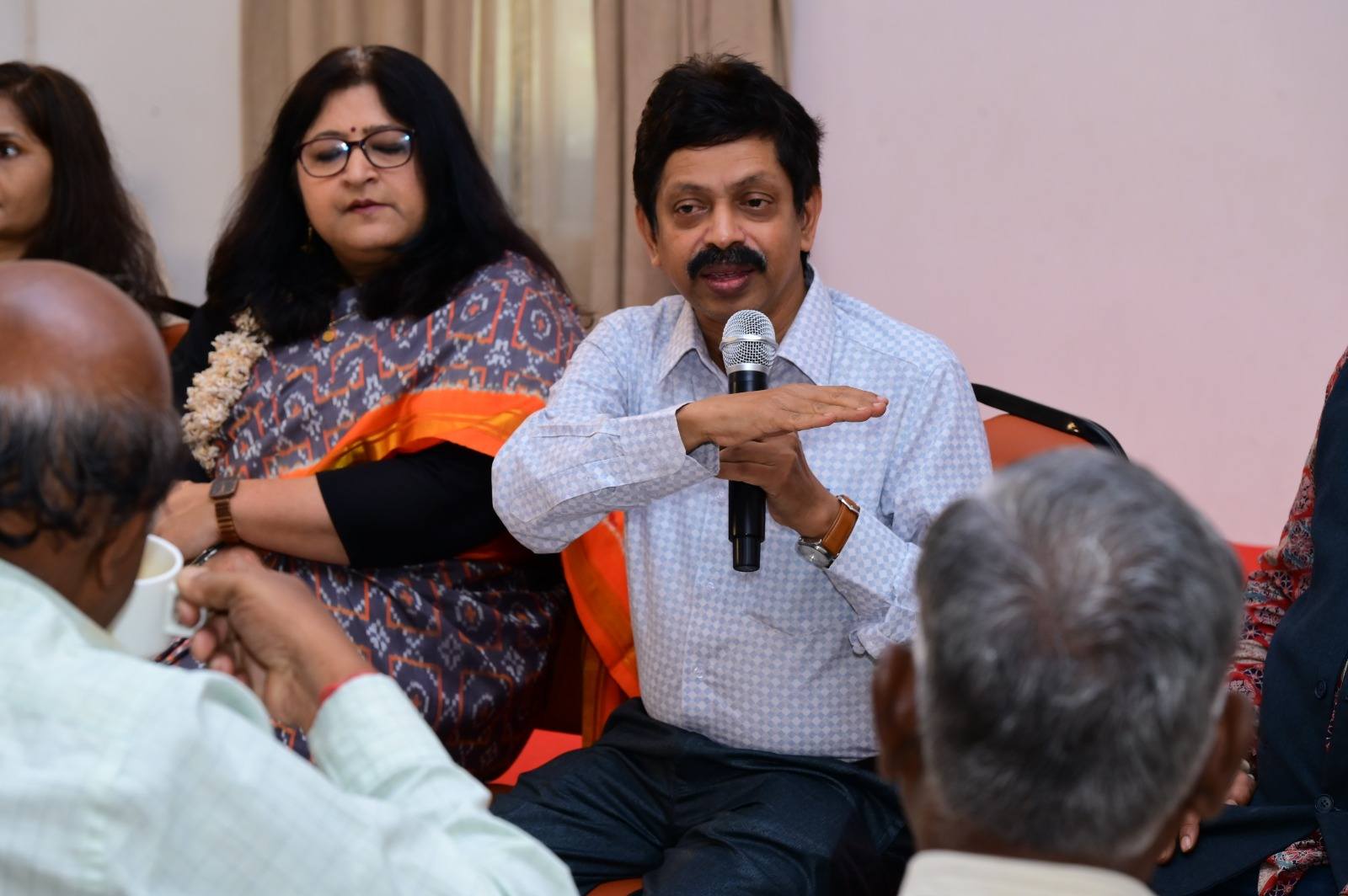
Dr. Beloo Mehra spoke about the significance of Puducherry as Sri Aurobindo’s “cave of tapasya”. She also highlighted that this was a meeting place and association between Sri Aurobindo and the nationalist poet Subramania Bharati. Considering the audience’s interest, she mentioned a few interesting details about Sri Aurobindo’s revolutionary work. Her remarks were translated in Tamil by two volunteers to ensure that all participants would benefit from the discussion.
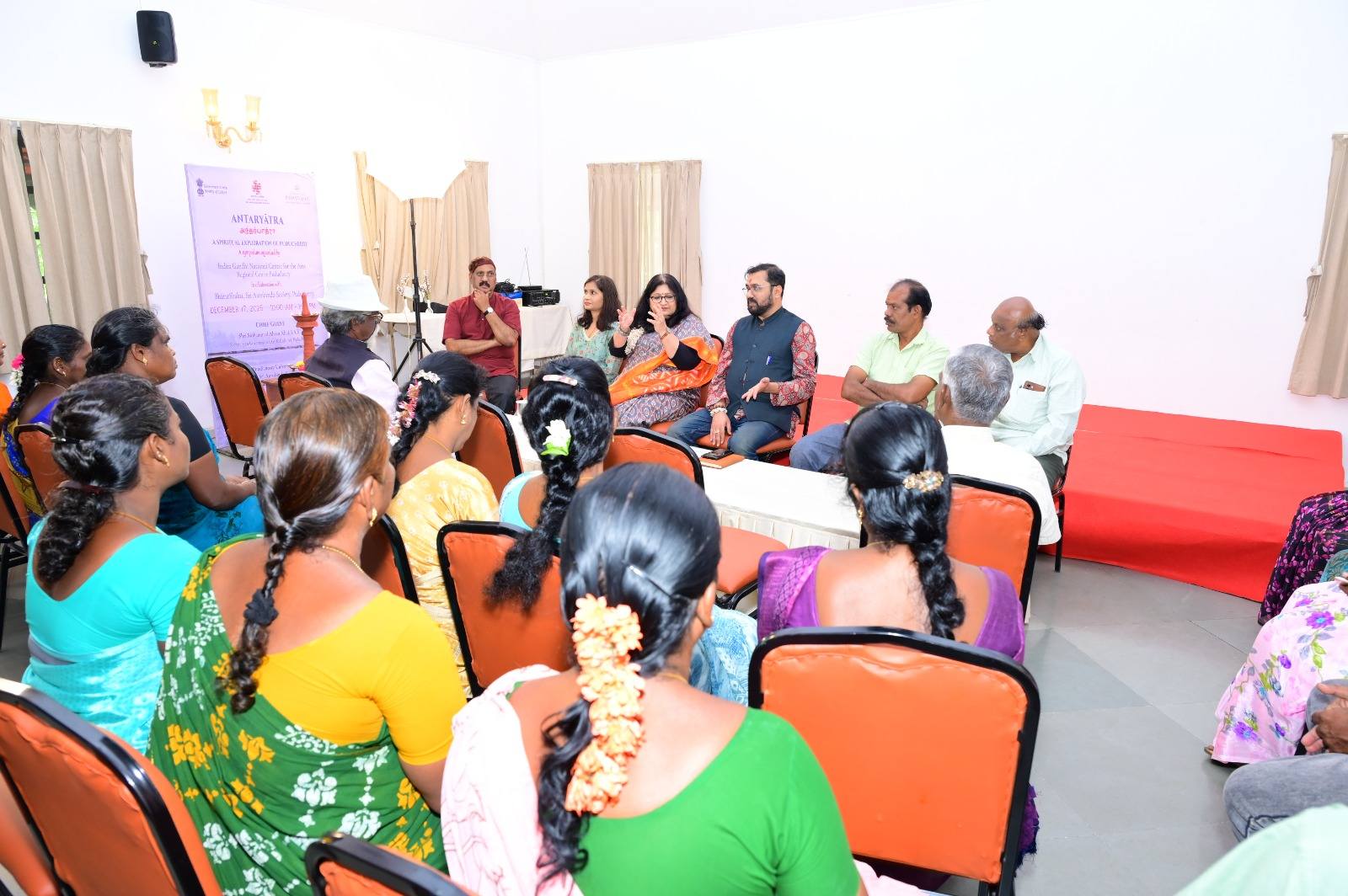
The participants found these details engaging as this was all new information for most of them. Dr. Mehra spoke about Sri Aurobindo’s secret support to the armed revolutionaries and about his journalism in Bande Mataram, Karmayogin and Dharma; his inner command to leave the British India; his sojourn under a false identity to Pondicherry and his arrival on 4th April, 1910; the places where he stayed initially before the Ashram was formally established in 1926; other nationalists who helped him and about his special friendship with Subramania Bharati and how he learnt Tamil; studied and translated some Tamil literary works with the help of Bharati and other such details.
The second speaker Professor B. Ravikumar from Pondicherry University spoke in Tamil about the sant tradition of this region, with a special focus on Vallalar. Vallalar, the 19th century Tamil saint and poet is well-known for his divine poetry, Thiruarutpa, and advocacy for universal love, compassion and the unity of all souls.
Prof. Ravikumar also spoke about Vallalar’s work in establishing the Society for True Universal Brotherhood to fight casteism and feed the hungry, and also establishing the Free Food Hall in Vadalur. He also spoke a little about the connection between Sri Aurobindo and Subramania Bharati and Bharati’s work for Tamil renaissance.
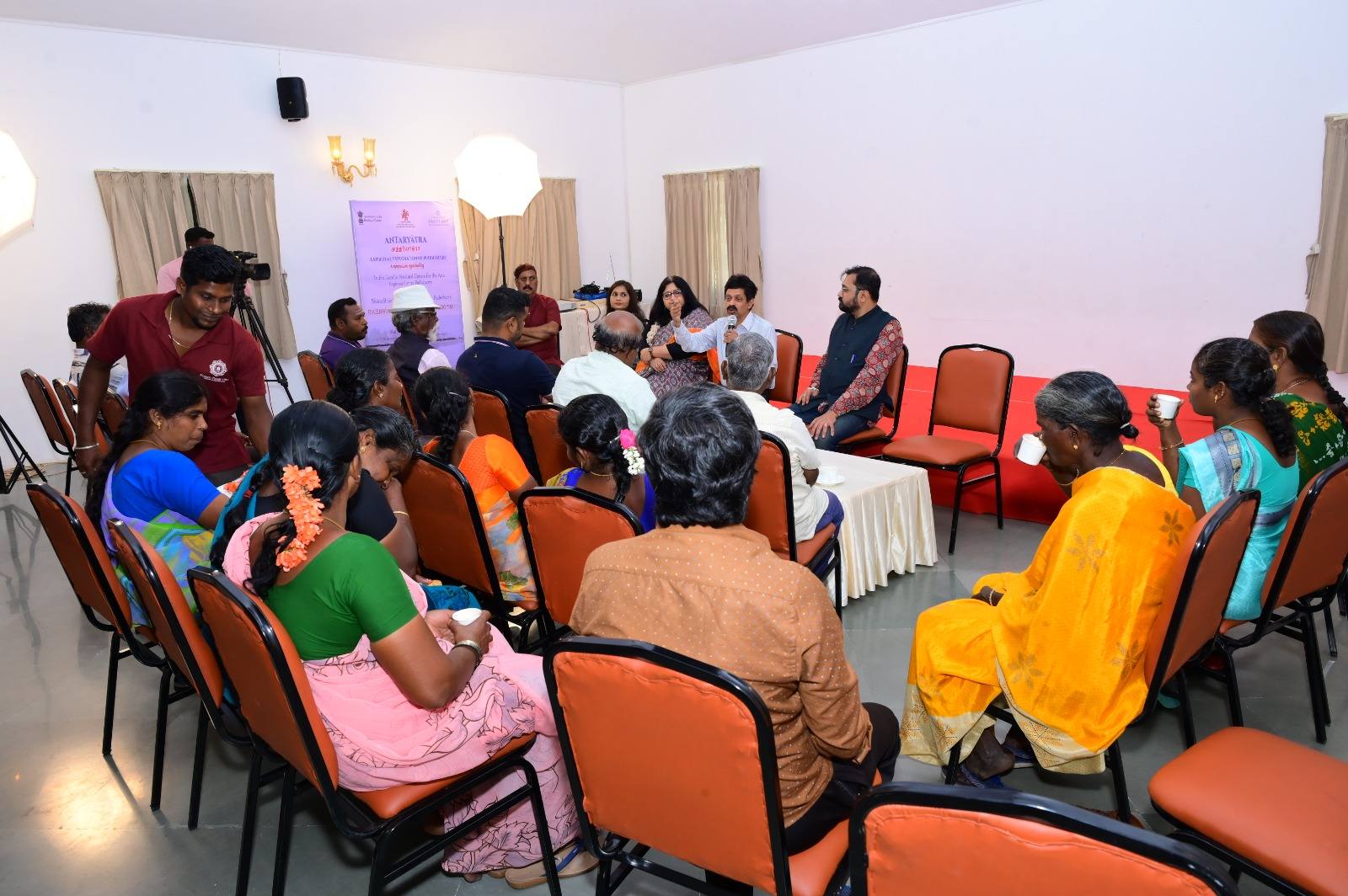
Thereafter Mr. Narendra Murty told the audience about the early history of Manakula Vinayagar temple situated within a stone’s throw from Sri Aurobindo Ashram both of them being the most famous landmarks of Puducherry. He told the audience a few interesting facts about how the temple got its name, the initial enmity shown by the French governor Dupleix who wanted to destroy the temple but was thwarted in his efforts, the connection the Mother had with the deity of the temple whom she called “a friend” and his assurance to the Mother that the Ashram would never want for financial resources, how a part of the Ashram land was donated to the temple to facilitate Pradakshina and such interesting facts.
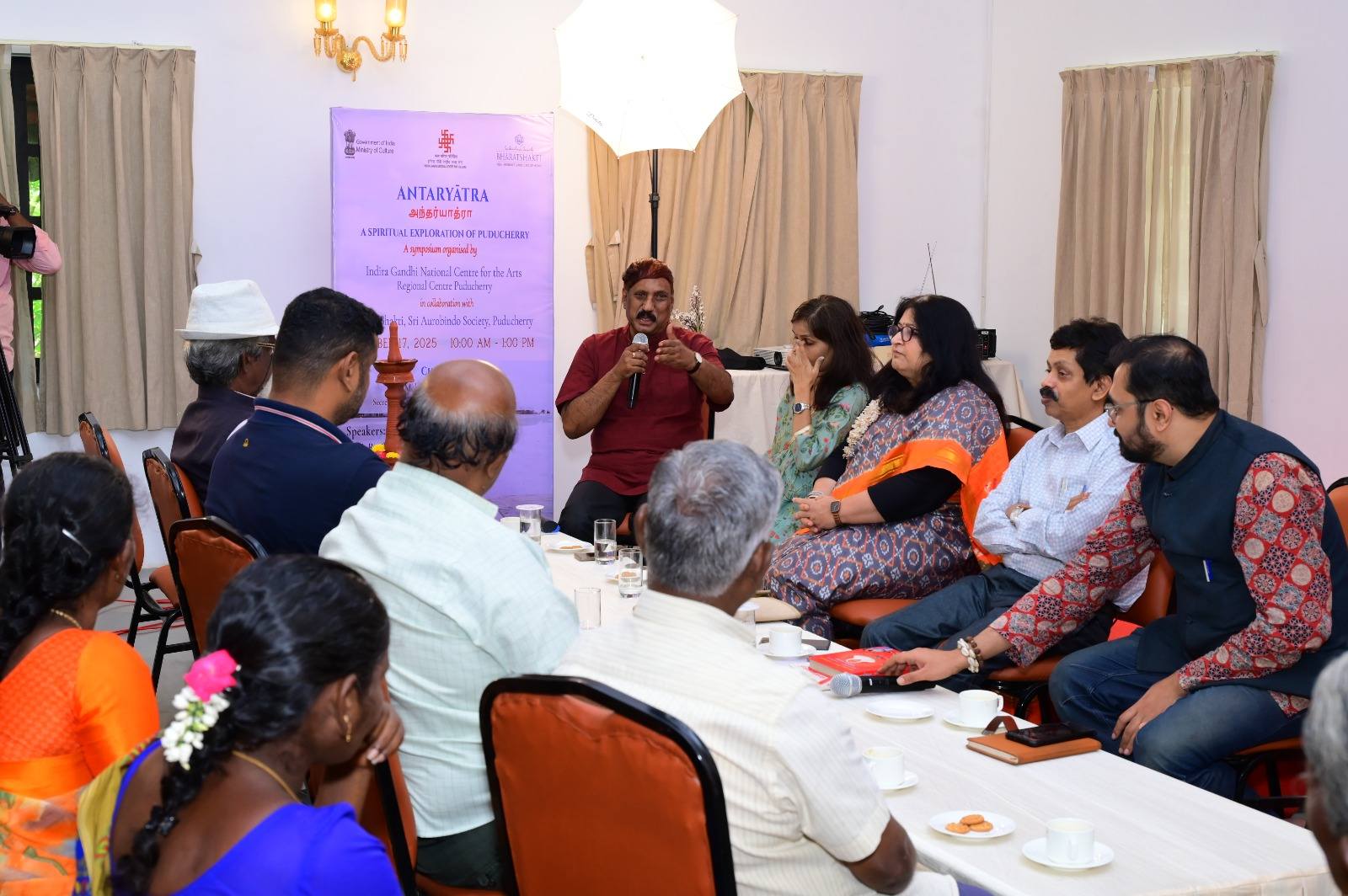
He also briefly touched upon the philosophy behind image worship and explained a few aspects of Ganesha’s symbolism such as his large ears and head, his broken tusk and about his vahana, the mouse. His remarks were also translated in Tamil by Prof. Ravikumar for the benefit of the audience.
The programme concluded with a vote of thanks by Dr. Sumit Dey.